
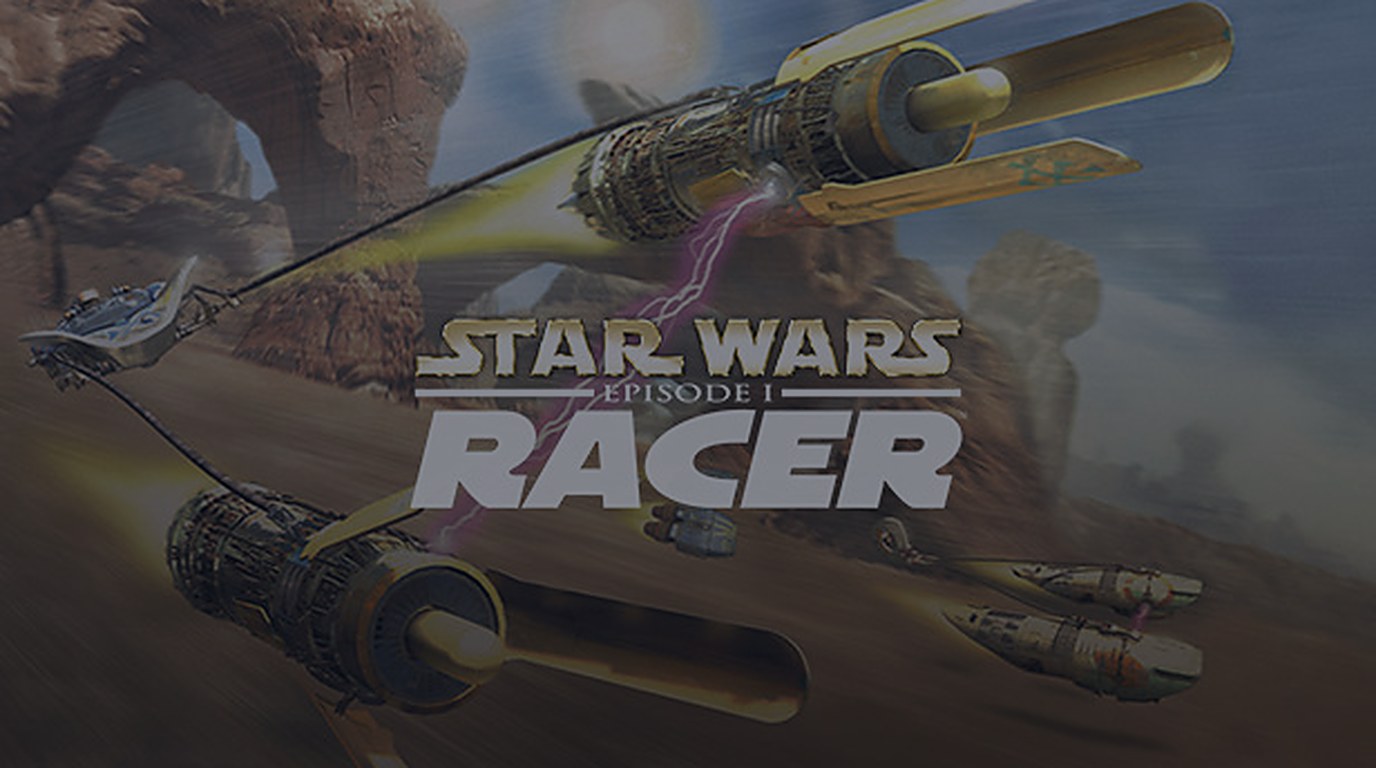
I bought this game the week it landed in 1999 and burned through every circuit on my parents’ PC. The chase cam sold the speed; the flat screen never sold the seat. Twenty-seven years later, a community mod finally closes that gap — and it does it properly, not with a wobbly injection hack that paints a flat game onto a floating rectangle.
This is the podracing fantasy the original could only approximate. You’re not watching a podracer from behind. You’re in it.
The Star Wars Episode I Racer VR mod, explained
The VR support comes from a community project by Game Or Die — free, Patreon-funded, and built on the long-running SW_RACER_RE decompilation effort that’s been quietly preserving this game for years. It hooks the original 32-bit executable through a custom DLL and rebuilds the renderer for stereoscopic 3D with full 6DOF head tracking, a cockpit view, and motion-controller input, with tuned seat positions per pod.
That last part matters. This is not a UEVR profile and not an injection driver. Episode I Racer runs on LucasArts’ old GNOME engine — a 32-bit Direct3D build from 1999 — so none of the usual framework shortcuts apply. There is no Unreal or RE Engine to attach to. The only realistic way to get real VR here is a source-level hook into the game’s own code, and that’s exactly what shipped. It’s the difference between a mod that puts you inside the world and one that just stretches the screen around your face.
The project is alive. It went through eight releases in roughly two months, with same-day patch pairs that read like a developer actually reading bug reports and turning them around. It’s listed in both of the big curated PCVR-mod directories, which is how you know it’s a real, maintained artifact rather than a forum thread that died after one build.
It’s a PCVR mod. Quest owners can run it by tethering or streaming to a PC VR runtime — there’s no standalone port — but the headset you actually wear is just a PCVR client.
The 32-bit OpenXR runtime the mod requires
One thing will break your install faster than anything else, and it’s worth saying before you launch: this mod needs a 32-bit OpenXR runtime, and you have to point it at SteamVR. Set SteamVR (2.17 or newer) as the active OpenXR runtime before you start the game. The Meta/Oculus PC runtime does not work with the current build — it registers a 32-bit entry but fails to actually create a session, so you get a black screen and a confused shrug.
The installer now does most of the heavy lifting. It’s effectively one click and it auto-detects Steam and GOG installs, so you don’t need to go hunting through folders. But it still can’t pick your runtime for you, and a few other gremlins will stop it cold: a stale ReShade API layer, or the game silently launching on integrated graphics instead of your discrete GPU. Get the runtime right first and the rest tends to fall into place.
Episode I Racer VR mod controls and cockpit
Once you’re in, the cockpit is the whole point. The head tracking is proper 6DOF — the engine’s view-culling now follows your head, so you can glance down at the pod’s bodywork or crane your neck toward a closing competitor without the world clipping out. The cockpit view seats you in the frame with the twin engines screaming behind your shoulders, and there are tuned seat positions so each pod’s layout actually lines up with where your head sits.
Controls are controller-mapped, not hand-tracked. Left stick steers and navigates menus, left trigger brakes, left grip boosts, right grip repairs, and the face buttons flip you to a look-back and a camera change. A wheel and a standard gamepad both work too, and for a lot of players the gamepad ends up being the pragmatic pick: analog motion-controller steering is flagged as experimental by the author, so it’s there, it’s bound, but don’t expect it to feel final. It’s a seated podracer, so the reference frame stays stable — the mod even adds nose-bob smoothing to tame the pod’s constant nose pitch that used to drive straight into your eyes. One practical note — start at 72 Hz. The original physics are tied to frame rate, and the 32-bit game goes CPU-bound at higher refresh, which makes the pod handle like it’s skating on oil.
Why podracing works in VR
The headline is presence, and it’s not a small thing. Flat Episode I Racer gave you a chase cam and asked you to imagine the G-forces. In the headset you’re strapped into the chassis with the desert rushing past your peripheral vision and two engines rattling your skull. The sense of speed in true stereoscopic 3D, with your own head free to look, is a different experience from the flat chase cam — the canyons on Tatooine and the other circuits stop being backdrops and start being spaces you’re moving through.
That transformation is the reason this mod exists. Episode I Racer was always a game about the seat you couldn’t have, and the VR version hands it to you. For anyone who wore out the 1999 disk, that’s a genuine hit of nostalgia that isn’t just repackaged — it’s the version the game was reaching for. The circuits are still tight, the AI still decks you on the first corner if you overcommit, and the throttle still feels like it’s trying to kill you. None of that changed; all of it finally has a cockpit around it.
The maintenance story is the other quiet win. A mod this responsive, this early, with this many releases, tends to keep getting better. The cockpit camera work in particular was measured rather than guessed at — the author described tuning it against the pod’s actual pitch behavior. That’s the kind of care that signals the rough edges are on a list, not a graveyard.
Episode I Racer VR mod shortcomings
It looks like 1999, because it is 1999. The pod models, the canyon textures, the flat-shaded crowds — none of it got a remaster, and the mod isn’t in the business of repainting the game. If you need modern VR visual density to stay invested, the low-poly charm will wear thin faster than the throttle. It’s a preservation project, not a remake, and it shows.
A few rough edges are baked into the current build. The menus and HUD render on a single shared panel rather than separate per-eye panels, which reads slightly off in stereo. The port hides the overhead position numbers because they don’t render correctly across both eyes — you lose a small bit of race-readout information. And the analog motion-controller steering is, by the author’s own description, experimental, so your hands-on dream of wrestling the stick may end with you grabbing the gamepad anyway. None of these break the race, but they’re the seam you feel when the spectacle dips.
The setup gotcha from earlier is the other honest catch. It’s one runtime setting, but it’s a hard gate, and if you’re the kind of player who installs and launches without reading, you’ll hit it. That’s a one-time tax, not a recurring one, but it’s real.
Who should play Episode I Racer in VR
I liked it, and I have notes. The cockpit is real, the head tracking lets you actually inhabit a podracer, and the speed finally has a body around it. The visuals are retro, the steering is a work in progress, and you have to set one runtime flag before it’ll even boot — but those are caveats on top of a genuinely fun thing, not warnings that the fun isn’t there.
If you ever wanted to sit in a podracer instead of watching one, this is the closest the headset gets, and it’s free. Grab it, set SteamVR as your OpenXR runtime, and hold on. The 1999 disk never let you look over your shoulder at the guy trying to clip your engines. Now you can.
If you want more Star Wars cockpit time after this, Star Wars: Squadrons is the officially supported option, and Star Wars: Galactic Racer covers the newer podracing game that runs through UEVR instead.