
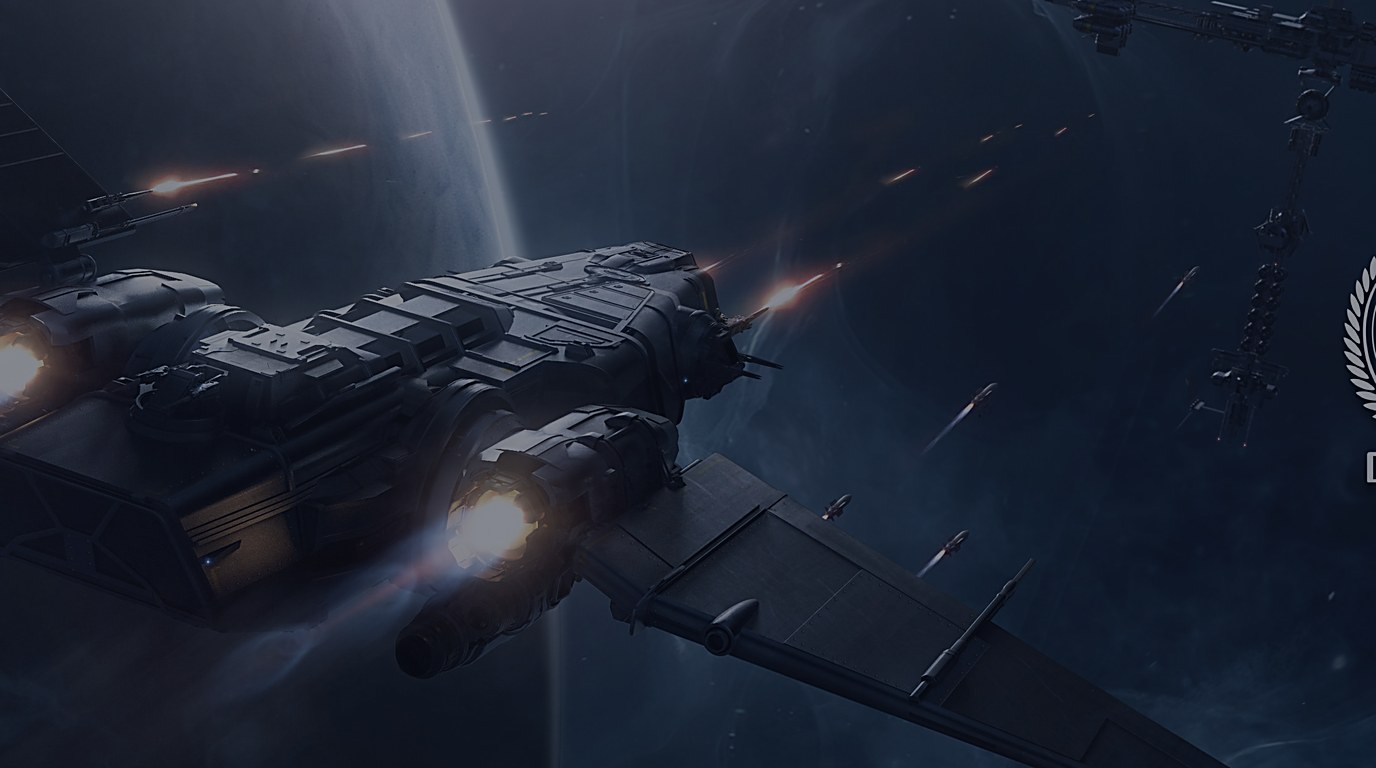
I spent a weekend in the headset, and somewhere around hour three, dogfighting above a space station, I stopped thinking about the fact that this is still an alpha. I was craning my neck to check a pylon on my left wing, swinging the camera around to line up a docking collar, and the station wall I was about to kiss was a hundred meters of steel that felt a hundred meters away. That’s the part no flat-screen capture ever sells.
What This Is, and How Long It Took
Star Citizen’s VR support isn’t a mod, a wrapper, or a community hack. It’s a native OpenXR mode Cloud Imperium shipped in Alpha 4.5 — full-session stereo rendering that covers the main menu, on-foot sections, and ship flight under one pipeline. A small engine team built it, and they labeled it experimental on purpose. This is a foundation-for-feedback build, not a finished feature.
The VR promise is old enough to have its own lore. It was a 2012 crowdfunding stretch goal, back when the Oculus was a developer kit. Then it sat deferred for over a decade while the community hacked around it. What changed is that Cloud Imperium shipped a real native mode in Alpha 4.5 — a proper stereo pipeline, not a TrackIR conversion.
Getting Set Up
Getting in takes a couple of minutes if your system is already aligned, longer if it isn’t. You flip VR on in the RSI Launcher, make sure the Vulkan renderer is active — DX11 doesn’t do VR, so if you’re on the old path you’ll get nothing but a log full of “OpenXR” errors — and confirm your headset is running an OpenXR runtime. The VR settings panel only appears once a headset is connected, which is a small thing that trips people up. Toggling in and out of VR during a session is bound to Numpad Slash; Numpad 5 snaps to the standard view; Left Alt plus Numpad 5 drops you into Theater Mode.
Flight and the Cockpit
The flight itself is where this earns its keep. The cockpit wraps around your peripheral vision, and the scale of the world outside the canopy does the work flat screens never could. Checking a pylon means turning your head, not tapping a key to pan a camera. Docking a freighter means leaning forward to read the collar alignment, then nudging the stick. For a seated cockpit sim, that head-driven spatial read is the change this mode needed, and flying by head-look instead of a fixed chase cam is the natural endpoint for a ship like this.
On Foot, and What You Can’t Reach
On foot, the same head-tracked presence carries over, and walking a station concourse in first person feels like being there rather than watching a screen of a concourse. But be clear about what this is not: there’s no hand presence here. You fly and shoot through your existing peripherals — HOTAS, HOSAS, gamepad, or keyboard and mouse. CIG shipped head-tracked 6DOF, not tracked hands, and no setup guide I’ve seen documents motion controllers. If you came expecting to reach out and grab a crate, that’s not in the build. For a HOTAS owner this is the dream; for someone hoping to wave virtual hands at the bar in Lorville, it’s a disappointment worth knowing before you put the headset on.
Theater Mode: The Safety Valve
Theater Mode is the safety valve. When you’re staring down a long haul or need to dig through inventory without the full cockpit wrapped around you, Left Alt plus Numpad 5 throws a big virtual screen into the void so you can play flat-style inside the headset. It’s a genuine comfort and performance escape hatch, and the fact that CIG built it in tells you they know this mode lives on the edge of what a heavy rig can sustain.
What’s Turned Off, and What Breaks
This is experimental, and CIG says so out loud. Some things are turned off in VR: ship holographic radar displays render as flat or absent, weather and water overlays — frost on the canopy, rain, surface water interaction — don’t show, and impairment or sickness status visuals are gone. None of that broke my session, but it’s the kind of thing you notice at the wrong moment, like realizing your radar is a smeared blob while someone is lighting up your shields. The mode also carries a heavier crash rate than the flat client during the PTU-to-LIVE edge, so save your hauler before a long station run. That’s not a dealbreaker for a builder-in-public alpha; it’s the honest cost of playing a foundation release in VR.
Performance: The Real Wall
Performance is the wall most people will hit before they hit any bug. This is not a potato-PC experience. You want a strong GPU and ample VRAM, and you should plan to run DLSS rather than treat it as optional — I’d call it effectively mandatory for a stable frame. The tuning is where your evening goes: aligning the pip layouts to your headset, dialing visor and lens parameters, and chasing framerate consistency over peak visuals. If you’re on a Quest 3 running through Link, kill ASW in the Oculus Debug Tool — leaving it on introduces artifacting that looks like the game is melting. None of this is hard, but it is fiddly, and the payoff rewards the person who treats tuning as part of the experience instead of a chore.
The VorpX Years, and Why They’re Over
The community spent a decade running Star Citizen in VR through VorpX. That approach worked for the dedicated: a TrackIR-style head-look conversion bolted onto stereoscopic 3D, sometimes with a Reshade depth pass, that never gave you real 6DOF depth and eventually got locked out when CIG’s anti-cheat update stopped the hook from attaching. It was a clever survival trick for an alpha that wouldn’t officially commit. The native 4.5 mode makes all of it history. If you remember the VorpX days, this is the thing you were waiting for; if you’re arriving fresh, you skipped the struggle and landed in the good era.
The Bottom Line
Star Citizen’s VR mode is an A-tier experience for the right person. The universe is genuinely worth inhabiting from the pilot’s seat, and the head-tracked cockpit presence is the transformation the game needed for a decade. It asks for a strong rig, a HOTAS, and patience with experimental rough edges, and it gives back a persistent space sim you finally feel inside. If you already fly Star Citizen, turn the VR toggle on and clear an evening. If you’ve been waiting for a reason to start, this is a better first flight than the flat client ever offered.