
EVE: Valkyrie in VR: A Launch Title Pioneer That Didn’t Survive
EVE: Valkyrie was supposed to be VR’s first killer app. A space dogfighter designed from the ground up for virtual reality, built by CCP Games — the studio behind the famously complex MMO EVE Online. It launched alongside the Oculus Rift in March 2016, bundled with every headset pre-order, promising the kind of visceral cockpit combat that could only exist in VR.
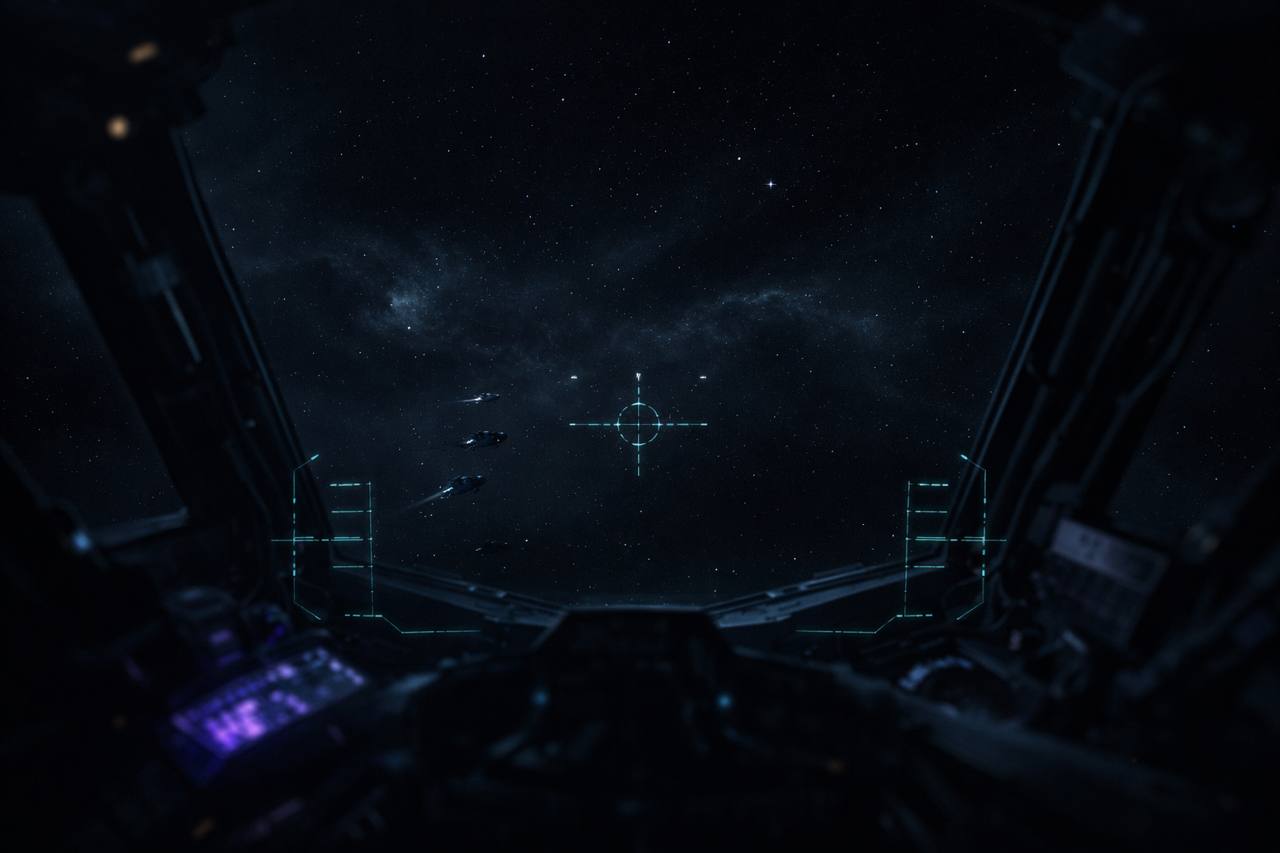
For a while, it delivered. The head-tracking targeting system, where you lock onto enemies by looking at them, felt genuinely transformative. The sense of presence inside a cramped fighter cockpit was unlike anything else available. This was one of VR’s first “AAA” experiences — a real budget, a real studio, a real game built to sell headsets.
Then the servers shut down in August 2022. The game is now functionally dead, kept alive only through community workarounds that unlock limited solo content. What remains is a historical artifact, not a playable experience.
What This VR Option Actually Is
EVE: Valkyrie is a Native VR — a native VR game that later expanded to include non-VR play. It launched as VR-only and remained that way for 16 months until the Warzone update in September 2017 added support for flat-screen play on PC and PlayStation, with cross-play between VR and non-VR players.
The key distinction: this was designed for VR first. The cockpit layout, the head-tracking targeting, the spatial audio, the sense of confined space — all built around what a VR headset could do that a monitor couldn’t. The flat-screen version was an adaptation, not the other way around.
As of August 5, 2022, CCP Games shut down all servers. The multiplayer mode — the entire point of the game — is gone. The limited single-player content (tutorials, some exploratory missions, and a brief campaign called “Chronicles”) was also inaccessible because it required server authentication.
However, a community-discovered workaround exists. By adding specific launch options, players can access solo content offline. This requires manual configuration and varies in reliability depending on platform and headset. It’s a preservation effort, not an official feature.
What’s available now:
- Solo mode via launch options workaround
- Limited tutorial and practice content
- No official support or future updates
What’s gone:
- All multiplayer matchmaking
- Cross-platform play
- Official servers
- Carrier Assault mode
- Progression systems that relied on server persistence
How It Played
EVE: Valkyrie was built around a simple premise: you’re a cloned pilot in a space dogfighting arena. The VR implementation focused on presence and intuitive control.
Controls: The game was designed for gamepad input — Xbox controller at launch, with Oculus Touch support added later as a gamepad-mapped alternative. Motion controls were explicitly rejected by the developers, who stated that “motion controls simply don’t give you the precision you need” for dogfighting. The game also supported HOTAS (throttle and stick) setups for players wanting a more sim-like experience.
Head-Tracking Targeting: The signature VR mechanic. You’d lock onto enemies by looking at them while holding a targeting button. This felt natural in a way monitor-based games couldn’t replicate — you’d instinctively track enemy fighters as they zipped past your cockpit, then engage missiles with a glance.
Cockpit Presence: The game rendered your pilot’s body inside the cockpit, visible when you looked down. The canopy, instruments, and confined space created a strong sense of being physically present in the ship — something reviewers consistently praised as the game’s strongest element.
Comfort: Seated VR with no artificial locomotion beyond the ship’s movement. Motion sickness was minimal for most players because the cockpit provided a stable visual reference frame. However, combat intensity varied — some players reported discomfort during chaotic dogfights.
Performance: Efficient. As a launch title built for the original generation of consumer VR hardware, the game ran smoothly on mid-range systems. Visuals were polished for the era, with detailed ship models, convincing lighting, and clean UI elements designed for VR legibility.
What Worked Well
VR-Native Design: Every element was built around the headset. The UI floated naturally in cockpit space, targeting used head tracking organically, and spatial audio helped players locate threats. This wasn’t a flat game with VR bolted on — the VR was the entire point.
Cockpit Immersion: The sense of presence was genuinely exceptional. You’d sit inside the fighter, see your virtual hands on the controls, glance around at the instruments, and feel the confined space around you. It was one of the most convincing “you are there” experiences in early VR.
Intuitive Flight: The game prioritized arcade-style accessibility over simulation complexity. Controls were tight and responsive, making it easy to pick up and start flying. The gap between “I want to go there” and “the ship goes there” was small.
Cross-Reality Gaming: The Warzone update’s ability to let VR and non-VR players compete together was technically impressive for its time. It demonstrated that asymmetric play between headset users and monitor users could work — though it also diluted the VR-focused vision.
What Didn’t Work
Server-Dependent Design: The entire game was built around online multiplayer. Even the single-player content required server authentication. When CCP shut down the servers, they killed the game — not just the multiplayer, but everything. This is a fundamental architectural flaw for any VR title that players might want to return to years later.
Shallow Content: Even at launch, critics noted the limited scope. The single-player “Chronicles” mode was short and repetitive, serving mostly as a tutorial for the PvP mode. The core 8v8 multiplayer dogfighting loop was fun, but maps and modes were limited. The game relied on the thrill of VR presence to paper over thin gameplay.
Population Problems: Within months of launch, matchmaking times were already increasing as the initial player base thinned. The cross-platform play added by the Warzone update helped briefly, but the fundamental problem remained: a multiplayer-only game without enough players.
Abandonment: CCP exited VR development entirely in October 2017, just over a year after the Warzone expansion. The game received no meaningful updates after that. It lingered in maintenance mode until the 2022 shutdown.
Platform Differences
EVE: Valkyrie launched on Oculus Rift first (March 2016), then PlayStation VR (October 2016), with HTC Vive support added later. The core experience was similar across platforms:
- PCVR: Best visual quality, HOTAS support, most customizable. Touch support added later but as gamepad mapping.
- PSVR: Slightly reduced visuals, same core gameplay. Comfort mode options were more prominent given console audience.
- Cross-platform play: Available between all VR platforms and later non-VR players after Warzone.
All platforms now share the same fate: servers offline, requiring the same workarounds for solo play.
Who This Is For
Not recommended for:
- Players looking for an active multiplayer game
- Anyone expecting a full single-player campaign
- New VR users wanting a “working out of the box” experience
- Preservation-conscious players who avoid always-online games
Potentially interesting for:
- VR historians wanting to experience a launch-era title
- Existing owners curious about the workaround
- Developers studying early VR design patterns
The Verdict
Tier: D
Game Quality: C+ The underlying dogfighting was solid — tight controls, satisfying combat, good moment-to-moment gameplay. But it was thin. The single-player content was minimal, the multiplayer maps were limited, and the progression was shallow. Without the novelty of VR presence, the game underneath was unremarkable.
VR Implementation Quality: B+ For its era, this was excellent. Head-tracking targeting, cockpit presence, spatial audio, VR-native UI — all built around what VR could do that monitors couldn’t. The developers understood the medium. But the implementation was also conservative: gamepad-only controls, no hand presence, seated-only play. It was the right design for 2016, but it didn’t push boundaries beyond what was necessary.
Overall Tier: D The tier is low for one reason: the game is dead. Server shutdown killed the multiplayer, which was the entire point. The single-player content that remains via workarounds is minimal — tutorials and practice modes that were never meant to stand alone. This isn’t a game you can meaningfully play anymore. It’s a historical artifact, a cautionary tale about server-dependent VR design, and a reminder that “always online” has a cost that compounds over time.
EVE: Valkyrie was important. It proved that VR could deliver experiences that felt genuinely new, and it helped justify early headset adoption. But it also demonstrated what happens when a VR game requires infrastructure that won’t exist forever. The servers are gone. The game is gone. What remains is a lesson about preservation in a medium that’s still figuring out its relationship with history.