
London Looks Huge When It Wraps Around You
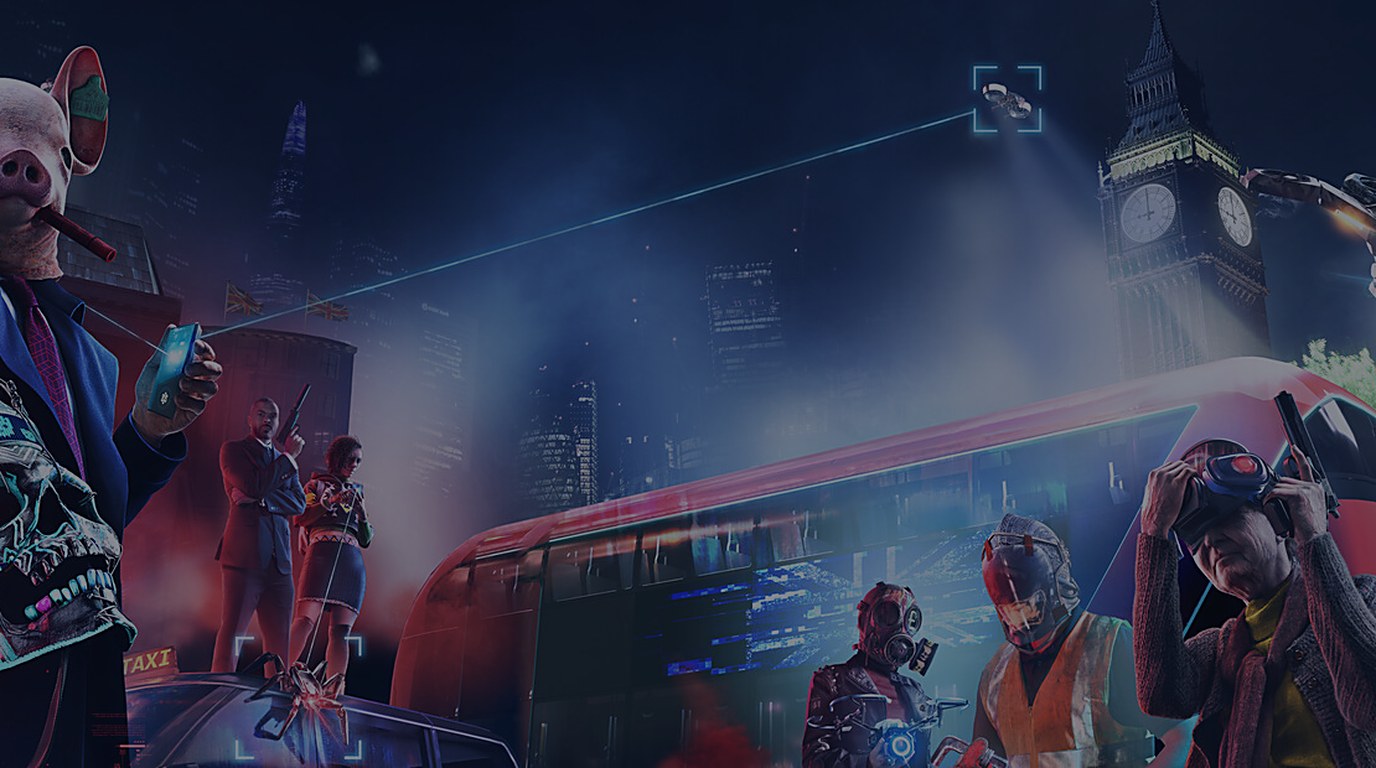
I’ve walked through a lot of fake cities in VR, but there’s something specific about Watch Dogs: Legion’s London that lands when the skyline wraps past your peripheral vision. The game’s near-future, post-Brexit version of the city is dense — double-decker buses, glass towers, rain-slicked intersections — and when Luke Ross’s R.E.A.L. injector pushes it into stereoscopic 3D, the scale stops being a screenshot and starts being a place. You’re still watching your operative from behind, third-person, but the depth sells the block you’re standing on.
Here’s the catch, and it’s the one that defines the whole experience: that’s roughly where the transformation ends. R.E.A.L. doesn’t rebuild Legion for VR. It takes the game you already own, bolts on head tracking and depth, and leaves the rest — the controls, the perspective, the interface — exactly as Ubisoft shipped it. What you get is a very good way to look at London. What you don’t get is your hands in it.
The R.E.A.L. Route: An Injector, Not a Port
Let me be precise about what this is, because the label matters. Watch Dogs: Legion runs on Ubisoft’s Disrupt engine — proprietary, not Unreal, not RE Engine. That rules out UEVR and REFramework entirely; there is no community profile that can drop you into a 6DOF, hand-tracked conversion the way those frameworks do for supported titles. The R.E.A.L. injector is the highest-quality route available, and it’s an injection tool, not a port. Think stereoscopic 3D plus head tracking, with the original third-person camera intact.
That’s the honest expectation to set: this is not a game where you reach out and pinch a guard’s neck, or physically aim a pistol. Your hands stay on a gamepad. The injector renders the world in depth and lets you look around naturally, and that’s the ceiling. For a third-person open world, that ceiling is higher than it sounds — you’re inside the 3D space, not watching a flat screen — but it is a ceiling. VorpX also carries a Legion profile as a fallback, though its G3D geometry mode is broken for this title; Z3D is the play, and it lands in the same gamepad-and-head-tracking place.
Getting it running is moderate, not brutal. You run the flat game once to confirm your Ubisoft save and services are happy, drop the framework files next to the executable, run the RealConfig batch file, then launch normally and tune the VR overlay. The one thing you must do before installing: confirm the game version matches what the current profile expects. The R.E.A.L. Legion build is version-sensitive, and a mismatch is the fastest way to a black screen. Strip out competing injectors, ReShade, and overlay tools first — they fight the framework. The tool itself is paid, distributed through Luke Ross’s Patreon, so budget for that on top of the game.
What Actually Survives in the Headset
The pleasant surprise is how much of Legion’s systems stay usable when you’re peering in through an injector. The “play as anyone” operative-switching works — you can still recruit a pie-fetcher or a bare-knuckle boxer and swap between them on the fly. Hacking, the spiderbot, cargo drones, and the vehicle systems all function with the original controls intact. Nothing here was rebuilt for VR, but nothing was broken either, and that’s a real mark in the injector’s favor compared to conversions that leave half the game’s verbs unreachable.
Driving is where the third-person view earns its keep. Legion’s London is a driving city — boroughs strung together by roundabouts and motorways — and watching your car carve through Trafalgar Square with proper depth is the moment the format justifies itself. The third-person camera also means you’re not strapped into a first-person cockpit dodging motion discomfort on every corner; for long sessions this is the comfortable way to tour the map. The Ubisoft overlay and a few 2D UI elements can sit awkwardly in the headset, and the setup guidance is to flip those to a flat view when they bite — a minor friction, not a wall.
One community tweak worth knowing: a first-person vehicle camera mod from Nexus, built originally for flat play, works underneath the VR injector to put you behind the wheel in first person for driving runs. It doesn’t add motion controls — it’s still gamepad — but it raises the driving presence if third-person ever starts to feel like a spectator cam. That’s the whole theme of this route: layers of community effort that deepen the view without ever handing you tracked hands.
The Strengths
The world is the strength. Legion’s version of London is detailed and believable, and stereoscopic depth makes the scale legible in a way a monitor never quite manages. Rooftop-to-rooftop drone hops feel spatial. Crowded Oxford Circus feels crowded. If your itch is “I want to stand inside a near-future London and look around,” this route scratches it better than any video I’ve seen of the flat game.
Comfort is the other quiet win. Third-person injection means no forced first-person smooth-locomotion discomfort profile — you’re floating a camera behind a character, which most VR stomachs handle for long stretches. The controls you already know from the flat game are the controls you use here. There’s no relearning curve, no new binding scheme, no “now remap your entire loadout for VR” tax.
Where It Falls Short
The weakness is the one that caps the whole thing: you are not in the game, you are watching it in 3D. Every action — shooting, hacking, melee, drone piloting — happens through a gamepad at a remove. For a series that lives on tactile, close-quarters chaos, the distance is felt. The operative system that drew criticism at launch (thin characters, a story that never quite coheres) is exactly as present here as on a monitor, because nothing about the VR layer addresses it.
Performance is the second honest catch. Legion’s London is heavy — crowds, reflections, ray tracing, traffic — and dense city scenes push a PC hard under the injector’s overhead. The baseline move is to disable or reduce ray tracing before you start; even then, a high-end rig is the realistic floor for clean framerates in the busy districts. If you’re on a mid-range machine, expect to trade visual density for steadiness. Quest 3 and similar headsets work as PCVR displays, but wireless encoding can buckle under the same dense urban scenery that stresses the GPU.
Then there’s the support footprint, and this is where Legion diverges from its siblings. The R.E.A.L. framework has covered the Watch Dogs line before — Watch Dogs 1 and 2 both have solid injector treatment and a real community following — but Legion is the quiet cousin. Dedicated VR coverage is thin: a handful of niche test videos with view counts under a thousand, no appearances in any best-of VR roundup, and almost no chatter on the VR mod subreddits. The big VR channels that covered the earlier entries didn’t show up for this one. That doesn’t mean it’s broken — it runs, and the version-matched profile is maintained — but it means you’re largely on your own if something goes sideways, and the “is this still working on the current patch” question leans on you checking the framework’s current page rather than a loud community telling you it’s fine.
Who This Is Really For
This is a completist’s route, not a gateway. If you already loved Watch Dogs 1 and 2 in VR and want the trilogy’s London finished in your headset, the R.E.A.L. injector is a clean, comfortable way to do it. If you’re a London-in-VR tourist who wants to crane your neck at landmarks in depth, it delivers that specific thrill. But if you came to VR for hand-tracked presence — for reaching, aiming, and physically inhabiting a world — Legion through an injector will leave you outside the glass. The flat game is just as good a game; the headset mostly adds a better view, and for most people that view isn’t worth the paid tool and the version-matching homework. Put the headset on if you’re already a Watch Dogs person. Everyone else, play it flat and spend the VR time on something that was built to be inside.