
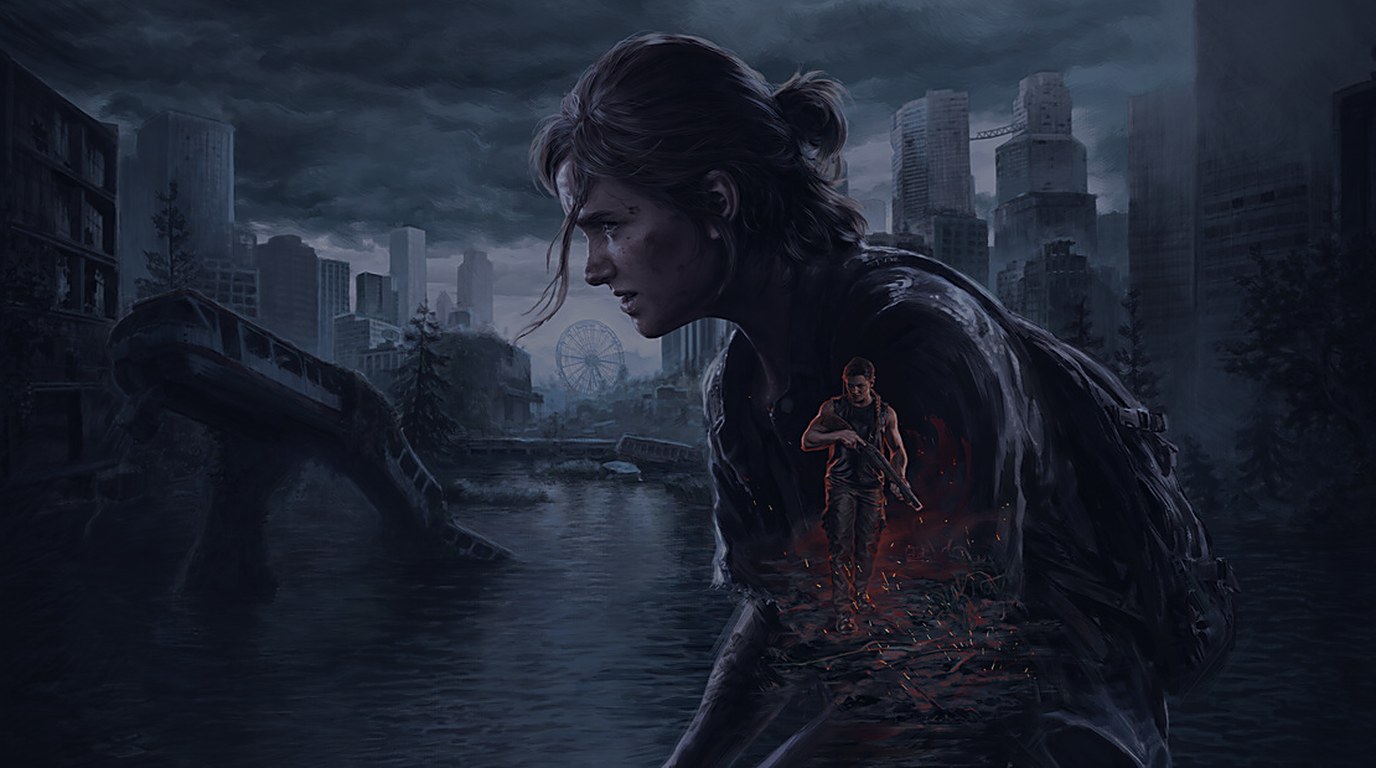
I’ve finished The Last of Us Part II twice on a monitor and called it done both times. The thing nobody warns you about with this game in a headset is that Naughty Dog already built it as a chain of tight, hand-authored rooms — Seattle apartments, overgrown theaters, flooded hospitals — and the moment the stereo image kicks in, you’re standing inside one. Not watching a cutscene pan across it. Standing in it.
That’s the whole pitch, and it’s a real one. Luke Ross’s R.E.A.L. VR framework is what makes it possible, and for a game this considered, the difference between a flat screen and a head-tracked third-person view is the difference between reading a diary and walking the house it was written in.
What Luke Ross actually delivers
R.E.A.L. is a stereo-VR injection framework, not a port and not a from-scratch VR rebuild. For The Last of Us Part II Remastered it takes the running PC game, renders it in proper stereoscopic 3D, and ties your headset’s orientation to a third-person camera that sits behind Ellie or Abby. You look around the space naturally. The game stays third-person — you’re not suddenly holding the rifle, you’re hovering over the shoulder of the person who is.
What that means in practice: no tracked hands, no motion controls, no VR-optimized menus. You play with a gamepad, exactly as the flat game expects. The framework preserves the original control scheme because that’s what it does on every title it touches — it is not in the business of rebuilding input. If you came hoping to physically draw a bow or slam a shiv into a Clicker’s skull, that path does not exist here. The community has a separate, motion-control rebuild in progress, but as of now the only working way to be in this world is gamepad-driven, over-the-shoulder, head-tracked.
Setup is the usual framework dance rather than a one-click install. You run the flat game once so shaders compile, drop the R.E.A.L. archive beside the executable, run the config bat, and launch normally. Moderate, not expert — but it is a framework you acquire through the creator’s Patreon rather than a store page, so the first step is knowing where to look. The entry is alive and current against recent game patches, which matters more than it sounds: this engine is patch-sensitive, and a framework build that lags the game breaks the illusion fast.
The perspective is the quiet win. Third-person is exactly the right call for a game this cinematic — you keep the framing the directors intended while gaining the depth and scale a flat panel crushes out of the shot.
Being inside Seattle
Here’s what actually lands. The game’s famous set pieces — the snow-blind prologue, the flooded basement where a Clicker drops from the ceiling, the long quiet walks through a city that grew over itself — read completely differently with depth. A flat screen flattens Naughty Dog’s art direction into a pretty picture. The headset restores the volume. You notice the height of a doorway, the way light cuts across a hallway, the distance to the infected you’re trying not to wake. Stalker encounters, which are the game’s best tension, become genuinely tense because the space is now a space you occupy instead of one you’re shown.
Horror content hits harder at headset scale, and that’s not a vague praise-word — it’s a specific property of this game. Dark interiors and close-quarters infected are reported as significantly more intense when they fill your field of view. If you’re here for the atmosphere, that’s the upgrade. If you’re here for comfort, note it: the framework keeps you in third-person, but a Clicker lunging out of blackness two feet from your face is a different animal than the same moment on a TV.
Performance is the honest tax. This is a modern AAA title pushed to stereo resolution — you are rendering the full frame twice, with overhead, on a game that was already demanding flat. Start at moderate resolution with shadows pulled down and a stable refresh, and measure frametime during combat rather than trusting the open-world strolls. A high-end rig handles it; a mid-range PC will reproject its way through the quiet bits and struggle in the firefights. The framework won’t save you from the GPU bill.
What it doesn’t give you
The biggest caveat is also the defining one: you are a spectator with a gamepad, not a participant with hands. For an action game this is a real limit. Melee, which is a core part of how Part II feels on a pad, becomes something you trigger rather than something you do. The camera does its job — it tracks your head, it frames the action — but your body is absent from the loop. That’s the framework ceiling, and for this particular game it’s a genuine one, because so much of the experience is about proximity: getting close enough to a Runner to use the environment, feeling cornered in a stairwell.
None of that is a bug. It’s the trade of every injection-class VR path: presence of place, not presence of body. The third-person framing actually softens the blow — you’re watching a beautifully directed character action scene from inside the room, not from a floating camera outside it. But if your personal VR line is “I need to hold the weapon,” this stays on the wrong side of it.
The other practical note is distribution. This isn’t on a store shelf with a green Install button. It lives behind the creator’s membership, it’s patch-sensitive, and the access tier for newer titles can shift between public and early-access builds. None of that is hard, but it means the person who wants a zero-friction evening with Ellie should know the friction exists before they start.
The bottom line
This is a B-tier experience and I mean that as a compliment to the game, not an apology for the method. An exceptional story worth standing inside, delivered through a framework that gives you stereoscopic depth and head-tracked third-person presence but no motion controls. Put the headset on if you’re already a fan and you own a strong PC — you’ll see a game you thought you knew from a vantage the directors never intended but clearly built for. Skip it if you need hands-on interaction or a one-click install; the flat version is right there and it’s still one of the best action games of its generation. For everyone in between, this is the rare framework path where the world is good enough to justify the window.