
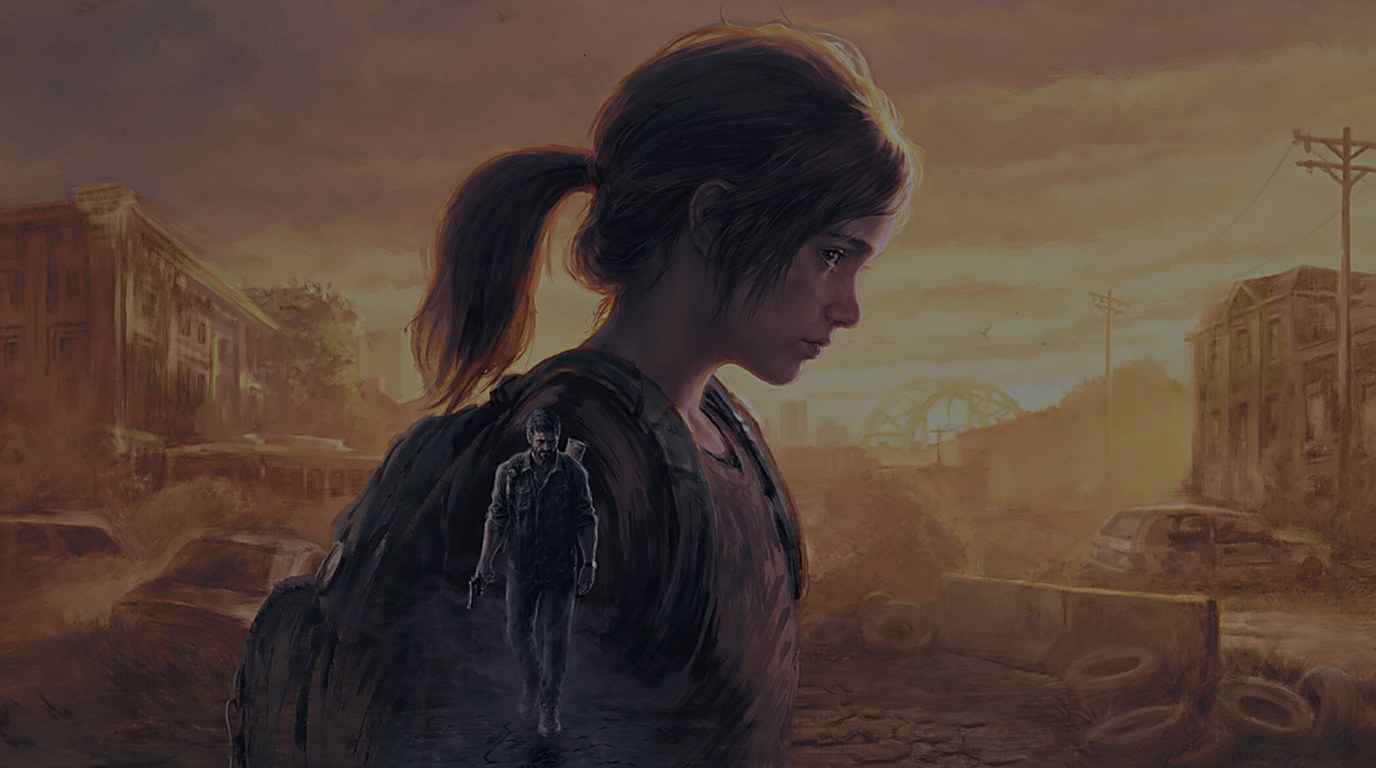
I slipped the headset on for the prologue and the first thing that landed wasn’t the clicker in the dark — it was the moss. The way morning light cuts through the collapsed overpass in Boston, now with genuine depth between the rust and the weeds, turns a game I’d already finished twice into a place I’m standing inside rather than a rectangle I’m watching. The Last of Us Part I was always going to be a tough one to bring to VR. Naughty Dog’s remake is a tightly directed, third-person, over-the-shoulder story about two people crossing a dead America. It is not a game built to be lived in first person. So when the headset version showed up, it arrived the only way a game like this can: through Luke Ross’s R.E.A.L. framework, a hand-built conversion that bolts stereoscopic rendering and head tracking onto the flat PC release.
The R.E.A.L. conversion
This is the part you need to understand before you get excited or dismissive. The R.E.A.L. mod is not a from-scratch VR port and it isn’t a community project that rebuilt the game’s systems. It’s an injection-style conversion: it takes the flat game you already own on Steam and renders it in two eyes with head tracking, preserving the original third-person camera. You play with a gamepad, exactly as you would on a monitor, except now the world has parallax and your head moves the view.
You get it through Luke Ross’s Patreon — this is a paid conversion, not a free download on a mod site. You need a legally owned Steam copy of the PC game plus the R.E.A.L. framework files. Setup is moderate, not brutal, but it’s a manual job, not a one-click installer. Once it’s running, it holds up — the conversion is verified playable, and people running it describe it keeping a clean framerate with DLSS doing the heavy lifting.
What it does not give you matters as much as what it does. There are no motion controls. You are not reaching for Joel’s rifle or physically drawing a bow. There’s no hand presence, no VR UI, no reworked interaction layer. You’re watching a masterfully directed third-person game through a headset, with the camera floating behind the characters and your head free to look around the scene. That’s the deal, and it’s the right deal for this specific game — but be clear-eyed about what you’re buying.
What it actually feels like
The headline sensation is scale. The Last of Us Part I is a game about small people in enormous, overgrown ruins, and that composition pays off in stereoscopic 3D in a way flat screens flatten. The giraffes in the museum, the flooded subway tunnels, the long walk through a snowbound Colorado — these set pieces were built for depth, and the mod delivers it. The world reads as physically larger and more lived-in than it ever did on a monitor.
But the third-person framing is a ceiling you feel immediately. The camera sits behind Joel and Ellie, so you’re a spectator with a head that can swivel, not a participant. When you round a corner into a hunter ambush, you’re watching Joel take cover from a few feet above and behind his shoulder. It’s still tense — the game’s direction carries it — but it is fundamentally the same experience you’d have on a very good ultrawide monitor, with presence bolted on.
Controls are the game’s own. Aiming, sneaking, and crafting all happen through the gamepad, mapped exactly as Naughty Dog designed them. If you’ve played the flat version, there is zero relearning. That’s a strength for accessibility and a limitation for anyone who came to VR for physicality — there is none here. You will not duck a bullet or draw a bowstring. You will press a button and watch Joel do it beautifully.
Performance and the framerate tax
This conversion is heavy, and it has a specific technical quirk worth knowing before you commit. The R.E.A.L. framework uses Alternate Eye Rendering, which means it renders one eye at a time to keep GPU load manageable. That technique demands a consistent framerate — if your frametime spikes, you get eye-flips and rendering artifacts that are far more nauseating than ordinary VR stutter. So the stability of your framerate matters more than its raw ceiling.
The base game’s PC launch was notoriously rough, with shader-compile hitches and crashes that took patches to smooth out, and VR gives you no room for the kind of micro-stutter the flat version could hide. You want a high-end rig and DLSS enabled, and even then you should expect to tune. Weaker cards in the 2080 Ti class may need to drop to half-rate AER to hold steady. This is not a mod you throw at a mid-range PC and forget about.