
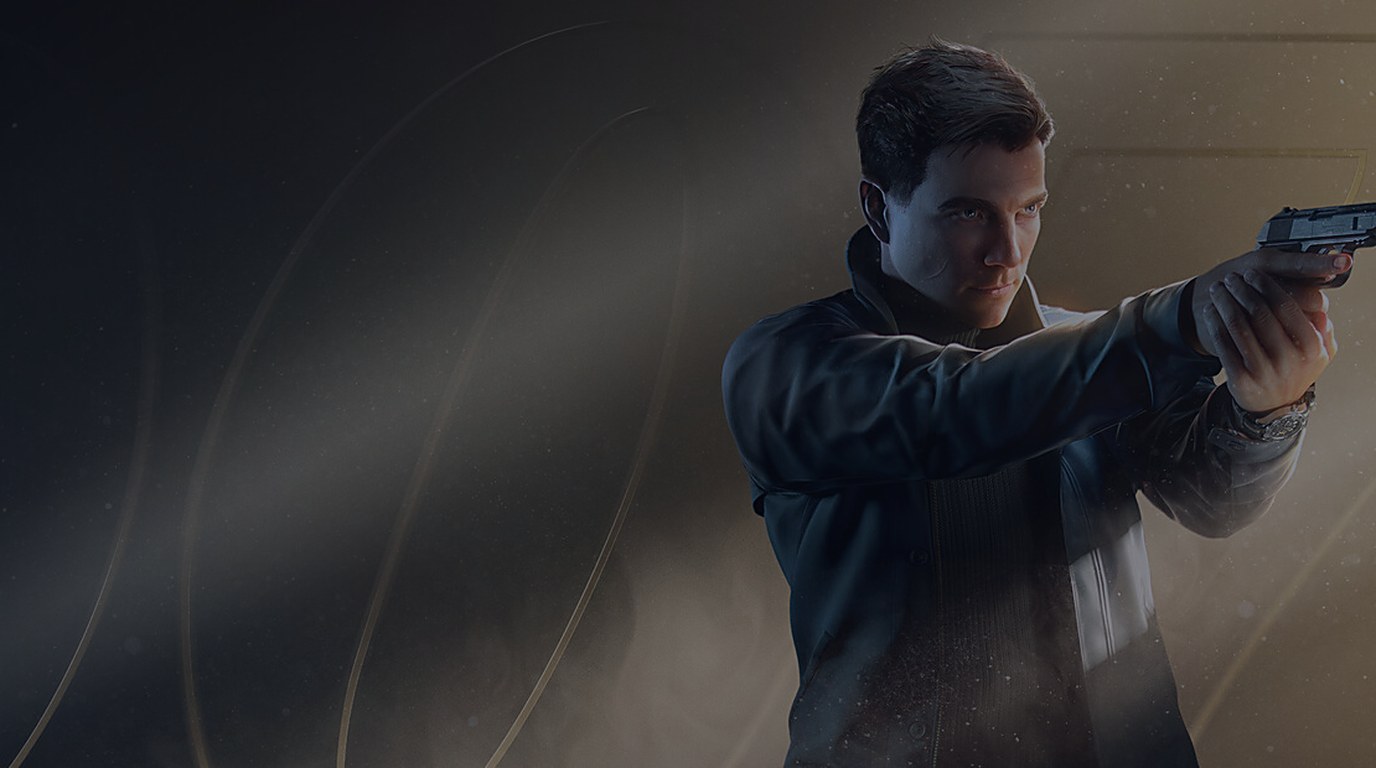
I spent a Tuesday evening in a safehouse in Prague, watching a younger James Bond slip a listening device under a diplomat’s desk. I was standing in the room, craning my head to track the chandelier as he worked the crowd. That’s the trick IO Interactive’s 007 First Light pulls off in VR, and it’s a better trick than you’d expect from a game that was never built for a headset.
The Bond origin story, now with depth
First Light landed at the end of May as a third-person action-adventure — IO Interactive’s take on how a reckless kid becomes 007, running on the studio’s Glacier engine, the same lineage that powers Hitman: World of Assassination. It’s a globe-trotting spy fantasy with social stealth, set-pieces, and production values that punch above most licensed games. It shipped on PC, PS5, Xbox Series, and Switch 2. There is no official VR mode, no PSVR2 build, no Quest port. None were ever announced.
The way into a headset is Luke Ross’s R.E.A.L. framework — the same hand-built conversion line he’s run for years across GTA V, Red Dead 2, Cyberpunk 2077, Elden Ring, and Indiana Jones. For First Light it’s distributed through his Patreon at the paid VR Friend tier, early access. What it does is wrap the existing flat game in stereoscopic 6DOF with full head tracking and keep the original controls intact. You play seated, gamepad in hand, the same campaign now wrapped around your head instead of a screen. The third-person perspective is retained — you’re not suddenly Bond’s eyeballs, you’re the camera behind and above him. It’s PCVR only: the Steam PC build piped through SteamVR to whatever headset you own. A Quest 3 works, but only as a PCVR display over Link or Air Link, never as a standalone port.
Watching 007 from inside the frame
This is the part that surprised me. Third-person in VR is rare — most of what we put on our faces is first-person, so your body is the avatar. Here the camera lives just behind Bond, and you look around the world with your own head. In a Prague apartment stuffed with guests, that means you can lean to watch a guard’s patrol path, or tilt up to take in the architecture while Bond schmoozes his target. The depth of stereoscopic 3D makes these locations feel inhabited in a way the flat frame never does — you’re a guest at the party.
The draw is the spy spectacle, not the gunplay. First Light leans on Hitman-style systems: read the room, pick your approach, let the set-pieces escalate. Car chases, shootouts, exotic rooftops — the kind of production IOI is good at — land harder when the skyline has real parallax and the helicopter above you actually occupies space. You feel the globe-trotting because the places have volume now. The weakness is baked into the format. You’re directing. Bond does the work; you watch him do it with your head free to roam. For a spy fantasy that’s a smaller sacrifice than it sounds — being inside a Bond location is most of the fantasy — but it is a different thing from standing in his shoes.
What you’re actually holding
You are holding a controller, full stop. R.E.A.L. conversions keep the flat game’s input map, so every move Bond makes — drive, shoot, sneak, social-engineer — comes through the gamepad, not your hands. There are no motion controls here, no reaching for a pistol, no physically ducking under a thrown punch. The headset tracks your head; your hands stay on the sticks. That’s the trade for getting a current-gen AAA campaign into VR at all, and it’s the same deal Ross has shipped for years. If you came expecting Half-Life: Alyx physicality, this isn’t it. If you came wanting to be inside a Bond movie with a gamepad, it delivers.
Comfort sits at a moderate intensity by nature of the format: a third-person camera that follows a moving avatar, plus the usual smooth-motion spectator feel of a seated R.E.A.L. session. It’s not a sickness machine, but it’s also not a static cockpit. The R.E.A.L. overlay (the Pause/Break key, or a back-button combo) lets you recenter and tune the head-tracking to taste — standard for the framework, worth learning in the first ten minutes so the camera stops drifting when Bond sprints.
Heavy demand, but it pays off
First Light is a 2026 AAA Glacier title, and it asks for a serious PC. The R.E.A.L. conversion renders the full flat game in stereoscopic 3D, which more than doubles the pixel work the engine was already doing. Plan on a high-end rig if you want dense crowds and bright set-pieces at a steady frame rate; anything potato-tier will reproject itself to death on the big action beats. The good news is the framework gives you the usual levers — alternate-eye rendering with a mono fallback if ghosting or performance bites, and a resolution-optimize step after you change render scale. The video coverage I watched ran it on RTX 4080 Super and 5090-class hardware through a Quest 3, and those held up; lighter cards will need to drop scale and accept some softness on the spectacle moments that make the whole thing worth doing.
Stability is the part I can’t fully vouch for from the seat. No headsets-tested reports are logged yet and the build’s version is unconfirmed, so treat the early Patreon build as living software. Ross’s line has a long track record of fixing its own rough edges post-launch, and the framework is actively maintained — but the First Light profile is new enough that you should expect the occasional tweak rather than a frozen, finished product.
What to know before you dive in
Two things stand between you and Bond in a headset. First, the Patreon gate: this is paid early-access through Ross’s VR Friend tier, not a free download, so budget for the subscription if you want the profile. The R.E.A.L. line went free for older titles this year, but First Light is brand-new and priced as such — confirm the current access terms on the Patreon post before you assume it’s open. Second, you need the legally owned PC copy of First Light plus SteamVR and a wired or wireless PCVR path to your headset. The install is moderate, not beginner — you’re dropping a framework onto a live Steam game, not clicking a store button — but it’s the same routine Ross has documented for years, and it’s well worn by now.
The honest ceiling is that this is a great spy game you watch from inside, not a VR game you play with your body. That’s a real limitation, and if your bar for VR is physical presence and hand-tracked interaction, this won’t clear it. But the spy fantasy was always about being in the world — and a globe-trotting IO Interactive production with real parallax and a head you can move is a stronger way to be there than a flat screen.
If you already own First Light on PC and you’ve got a high-end card and a gamepad, this is an easy yes: a genuinely better way to spend an evening with the campaign you already paid for. If you’d need to buy the game, build a VR-capable PC, and subscribe to Patreon just to get here, the math gets personal — the spectacle is worth it for Bond diehards, less so for the merely curious. I’d hand this to anyone who’s finishing the flat campaign and thinking “I wish I could stand in that room.” You can.