
Meta Connect 2026: VR Glasses, Muse AI and everything else announced
Meta's Connect 2026 keynote delivered a 100-gram VR headset, a camera-free pair of Ray-Bans, and Muse, a personal AI agent baked into everything. Here's the full haul and what it means.
Meta just closed out Connect 2026, and if you only read one sentence about it, make it this: the company that spent the last decade telling us the metaverse was the future spent this week telling us an AI agent named Muse is. That isn’t a redesign of the old pitch. That’s the old pitch thrown out, and a personal AI agent put in its place.
Mark Zuckerberg took the keynote stage on September 23 — day one of a two-day event that ran through the 24th — under the tagline “the future is for everyone.” The phrase is doing real work. What got shown on stage was a slate of wearables and one personal AI agent meant to sit at the center of all of them. The through-line here isn’t “VR for everyone” the way Quest was sold. It’s “Muse for everyone,” with the hardware as the vehicle that gets Muse onto your face and into your day.
What Meta announced at Connect 2026
Here’s the whole haul in one place:
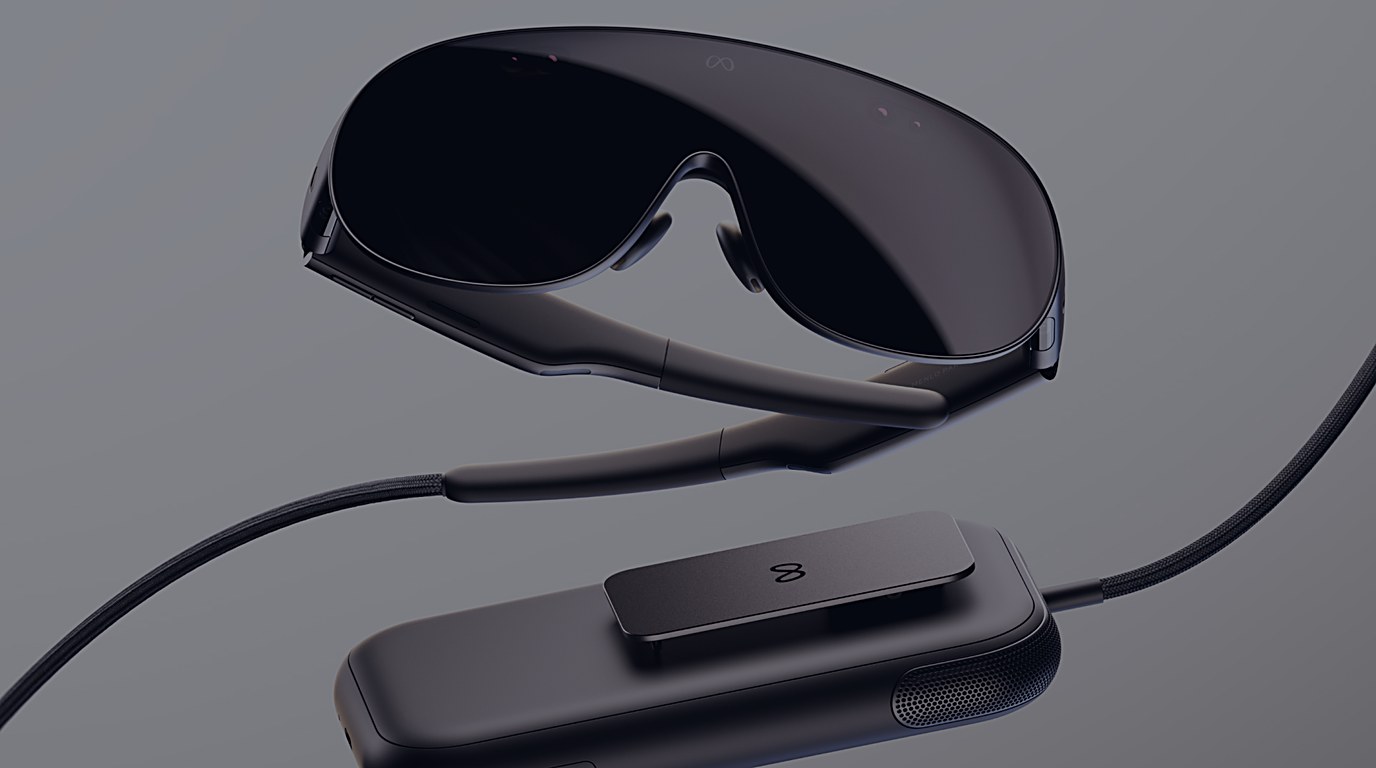
- Meta VR Glasses — 100-gram glasses with a compute puck, $1,299.99, launching spring 2027
- Ray-Ban Meta Gen 3 — $449, updated battery and design, built with EssilorLuxottica
- Ray-Ban Meta Audio — $349, camera-free, 12-hour battery
- Base audio glasses — $249, plus a hearing-aid mode across the range
- Muse — Meta’s personal AI agent, cross-device, shipping now
- Muse Charm — pocket-sized agent, December 2026, price unconfirmed
- Holograms — realistic avatars, arriving on Ray-Ban Display first
Meta VR Glasses: 100 grams, a compute puck, and a Spring 2027 launch
This is not a Quest. I want that stated plainly, because a good chunk of the YouTube coverage spent its runtime explaining that this is not the Quest 4. Meta’s own framing calls it “our most advanced device yet” — a cinema, a courtside seat, a workspace, and a console, all in a pair of glasses that weigh about 100 grams.
That weight is the entire pitch, and it’s the one number worth seeing next to what you wear today:
- Meta VR Glasses: about 100 g on your nose
- Quest 3: 515 g, strapped to your face
If you’re still getting value out of the Quest you already own, our Quest game optimizer guide is where to start — the weight gap is an argument for replacing it eventually, not today.
The problem is the launch window: Spring 2027. The device Meta is calling its biggest hardware swing in years won’t reach anyone’s hands for roughly six more months. It’s priced at $1,299.99. PCMag, which got hands-on time, framed it as something that could take on Apple’s Vision Pro — and at that price, the comparison isn’t a stretch.
Under the hood, the architecture is a compute puck: the processing lives in a separate device rather than the glasses themselves. That’s how you hit a 100-gram frame — you move the heat and the silicon off the face. Meta is also calling it the first IMAX Enhanced certified VR device, with 3D movies and courtside seats for 100-plus live US sports events a year through partnerships with ESPN and TNT Sports. The rest of the wearable lineup lands now, not next spring.
Ray-Ban Meta Display: what the first hands-on coverage says
Worth being precise here: we have not tested Meta Ray-Ban Display. What follows is what reviewers who did have found.
Meta’s display-equipped Ray-Ban is a first-generation heads-up device — a small screen fixed somewhere in your vision, visible to one eye, leaning on your phone for connectivity rather than replacing it. UploadVR, which bought a pair at retail and wore them daily for about a month, called it an early glimpse of a future where mobile computing doesn’t mean looking down and pulling something out of your pocket. Their verdict on the hardware itself was more measured: comfortable enough to forget at 69 grams, but noticeably bulkier than the regular Ray-Ban Meta glasses, and socially conspicuous in a way the camera-free models aren’t.
The part reviewers consistently singled out wasn’t the glasses at all — it was the Neural Band, the sEMG wristband that ships with them, which UploadVR described in its hands-on as the standout of the package.
It earns a place on this page for one reason: Meta said at Connect 2026 that Ray-Ban Display gets Holograms first, ahead of any VR device.
Ray-Ban Meta Gen 3, Ray-Ban Meta Audio and the $249 base model
Ray-Ban Meta Gen 3 comes in at $449. If you’ve worn the earlier Ray-Ban Meta smart glasses — the second-gen line we covered — this is the successor, built with EssilorLuxottica. Alongside it, Meta showed the Ray-Ban Meta Audio: $349, camera-free, with a 12-hour battery. The camera-free design is a direct answer to years of criticism over covert recording, and it’s the more interesting move of the two. Meta is reading the room on privacy and shipping a pair of AI glasses that can’t take a picture of you.
There’s also a base audio glasses model at $249, and the whole glasses range includes a hearing-aid mode. Meta says it plans a global range of 100-plus styles by year-end. That’s the volume play — not one hero product, but a wall of frames at every price point from $249 up, all of them Muse-compatible.
Muse AI: Meta’s personal agent, explained
Muse is Meta’s personal AI agent, and the company is calling it the world’s first personal AI agent built for everyone. It runs on what Meta describes as a Muse Secure VM — a dedicated virtual machine meant to keep it private and sandboxed. It’s not locked to one device; it’s on your phone, your desktop, and your AI glasses, where it wakes on a voice command and helps with workouts, meal logging, bookings, and purchases. Social Media Today’s read on the keynote was blunt: Muse was the centerpiece of Meta’s broader pivot from the metaverse to AI. Zuckerberg didn’t just show an agent. He repositioned the company around one.
There is already an AI tool called Muse — Unity’s Muse, announced back in 2023 for game developers. That is not this. Meta’s Muse is a separate product announced at this event, and conflating the two is an easy mistake that several write-ups have already made.
Muse Charm closes out the AI side: a pocket-sized, keychain-form AI agent launching this December. PCMag described it as a keychain device. The pricing wasn’t locked in the coverage I have, so treat the cost as unconfirmed until Meta publishes it.
Codec avatars and everything else shown on stage
The demo that got the fewest headlines may matter most: the one about faces. Meta finally put a timeline on Codec Avatars — its long-running realistic-avatar research, first shown publicly back in 2015 and kept in the lab ever since while its shipping products used cartoon avatars instead. At Connect 2026 the company said they’re finally shipping, under the name Holograms.
The rollout is staged. A shoulders-up version arrives on Meta Ray-Ban Display first, for WhatsApp video calls, in US Early Access this fall. A full-body version ships alongside Meta VR Glasses in spring 2027, and on the glasses it’s driven by headset tracking including face tracking, not just audio.
On Ray-Ban Display the implementation is a real-time generative model running on Meta’s servers: it takes your microphone audio and produces a synthetic video of you that the person on the call sees. UploadVR, which tried it at the event, found it plausible enough to be startling — and also questioned whether people actually want a synthetic version of a friend on a phone screen. That skepticism is fair. Realistic avatars earn their keep in VR and AR, and that’s exactly where the full-body version is headed.
Our verdict: what’s actually worth buying
The $1,299.99 VR Glasses are the headline because they’re the most ambitious thing Meta has shown in years, but they’re also the least relevant to you today — Spring 2027 is a long way out, and the spec sheet you’d actually buy on isn’t written yet. Muse is the real story. It’s the product Meta built the event around, it ships across the devices you can buy now, and it’s the clearest signal of where the company is pointed. The camera-free Ray-Ban Audio at $349 is the quiet winner: privacy-forward, affordable, and the most likely thing here to actually land on normal faces.
If you’re deciding what to care about, rank it like this:
- Muse — the strategic centerpiece, cross-device, ships now across phone and desktop. This is the pivot, not a feature.
- Ray-Ban Meta Audio ($349) — camera-free, 12-hour battery, privacy answer. The most sensible buy in the lineup.
- Ray-Ban Meta Gen 3 ($449) — the mainstream smart-glasses successor, built with EssilorLuxottica.
- Meta VR Glasses ($1,299.99) — the halo product. 100 grams, compute puck, Spring 2027. Ambitious, unproven, far off.
- Muse Charm (December 2026) — pocket-sized agent, price unconfirmed. A curiosity until we know what it costs.
- Base audio glasses ($249) and hearing-aid mode — the volume layer that makes the “future is for everyone” tagline mean something at the low end.
Meta bet the last decade on the metaverse and spent this week betting it on you and an agent. The VR Glasses are the proof they still dream big in hardware. Muse is the proof they think the future is an assistant, not a world. Six months from now, when the glasses actually ship, we’ll find out whether the halo was worth the wait — but the pivot itself is already done.