
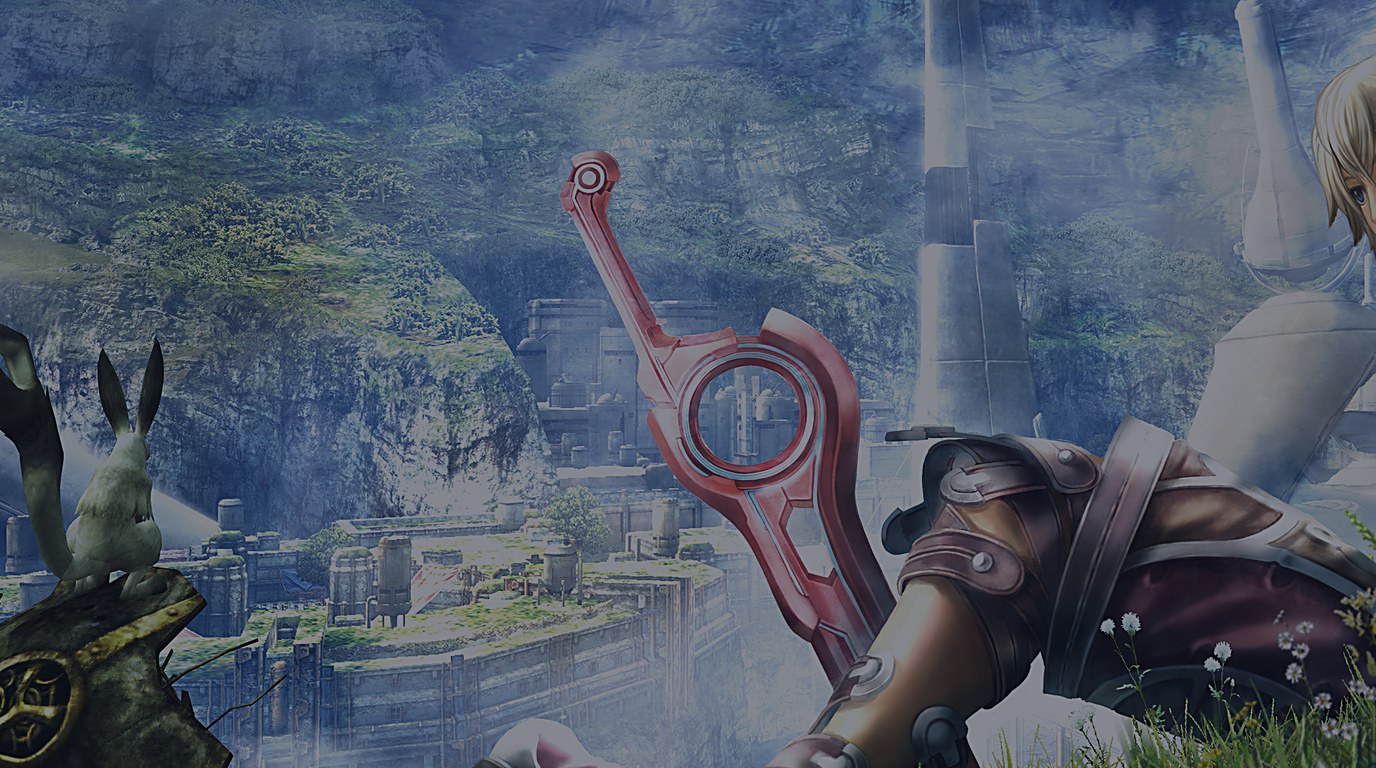
I’ve lost count of how many hours I spent on the Wii version of Xenoblade Chronicles, but the moment I got it running in a headset, the opening stretch on the Bionis hit completely differently. The cliff you stand on at the start of the game isn’t a backdrop anymore — it’s a drop, and your brain knows it.
What the emulator actually delivers
What you’re getting here is the Wii original running through Dolphin VR, the community emulator fork that wraps GameCube and Wii titles in stereoscopic 3D with head tracking. This isn’t a port and it isn’t a mod with rebuilt systems. It’s the flat game, rendered with real depth and a camera you can look around from, played on a standard gamepad. There are no motion controls, no hand presence, no VR-specific UI. You’re still driving Shulk and company with a controller; the headset just puts you inside the space instead of in front of a TV.
That distinction matters before you invest the time. Dolphin VR gives you presence — you can crane your neck to take in the scale of a fallen titan’s shoulder, or lean forward as a Mechon stomps toward you — but it does not give you a redesigned game. If you came hoping to physically swing the Monado, this isn’t that.
Setup is the real gate. You need a VR-ready PC and a legally owned copy of the Wii game, either disc or dump. From there it’s the usual emulator dance but with extra steps: a specific Dolphin VR build, then per-game configuration that hides the black overlay boxes the engine draws around the screen, plus a framerate pull-up setting that nudges the game’s 30fps cap toward a smoother VR frame rate. An optional HD texture pack sharpens the Wii-era art if you want it. None of this is hard if you’ve emulated anything before, but it’s a committed afternoon, not a download.
Once you’re in, it plays exactly like the game you remember. Auto-attacks fire on their own timer, your Arts light up on cooldown, and you’re managing a party of three through real-time battles that reward positioning more than twitch. The third-person camera sits behind Shulk, and in VR that camera is your window into the world rather than a flat frame — you look around the battlefield, not just at it. The comfort load is mild; third-person with a stick-driven camera tends to sit easy compared to first-person injection jobs. Performance is the other thing to manage: the game is a Wii title, so a VR-ready PC handles the bulk of it, but VR rendering plus an HD texture pack adds weight, and that framerate pull-up setting exists for a reason. Expect to tune rather than forget.
The Bionis is the real draw
The reason to do any of this is the world. Xenoblade’s Bionis and Mechonis are enormous, layered spaces — a whole ecosystem built on the corpses of warring gods — and seeing that scale with depth is the entire point. Flat screens flatten it; a headset restores the vertigo of standing at the edge of a living, breathing cliffside. The art direction, all sweeping vistas and impossible geography, was built for exactly this kind of gawking.
The story holds up the spectacle. Shulk’s arc, the mystery of the Monado, the slow reveal of what the world actually is — this is a JRPG that earns its length, and playing it in VR makes the quiet campfire moments land harder because you’re sitting in the space with the party. The music does a lot of the heavy lifting too, and it surrounds you now instead of pumping out of a TV speaker.
The ceiling, though, is the ceiling of emulator VR for a third-person game. You are a spectator with a controller. Shulk does the moving; you watch and direct. That’s fine for an RPG, but it means the presence is observational, not physical. You’ll never feel like you’re the one on that cliff — you’re the director standing behind the lead actor.
And then there’s the friction. Every session starts with emulator overhead: the right build, the right config, the right settings. If a Dolphin VR update shifts something, your Saturday afternoon can turn into a troubleshooting session. The visual is also unmistakably a Wii game upscaled — gorgeous art direction, but you will see the age in character models and texture density no matter how good the HD pack is. For a game this pretty, that gap between vision and pixels is the honest catch.
Here’s the thing: Xenoblade Chronicles is one of the best RPGs of its generation, and Dolphin VR lets you finally inhabit its world instead of admiring it from a couch. That’s a real, if observational, upgrade — the scale and the story come alive in a way a flat screen can’t fake. But you have to want it badly enough to wrangle an emulator and own the game already, and you have to be okay with watching your hero rather than becoming him. If you’re a Xenoblade fan with a VR-ready PC and a taste for emulator tinkering, this is a weekend well spent. Everyone else should play the flat version and know what they’re missing.