
There’s a specific moment in VTOL VR that ruins flat flight sims for you. You spawn cold on the ramp, reach down with your actual hand, and grab the throttle. The throttle is a physical object in a cockpit you’re sitting inside, and when you push it forward the engines spool up and the airframe shudders under you. Twenty minutes later you’re flipping a half-dozen switches with one hand while you crane your neck to keep a bandit in sight, and you realize your body is doing the job a four-hundred-dollar HOTAS was supposed to do.
VTOL VR is a combat flight simulator built from the ground up for VR by a single developer, Boundary Dynamics. There is no flat version. This was conceived as a headset experience, and that difference is the entire story. If DCS World is the spreadsheet of military aviation, VTOL VR is the part of that fantasy you can actually reach out and touch: multi-role jets, hostile airspace, carrier traps, and aerial refueling, all operated from a cockpit your hands live inside.
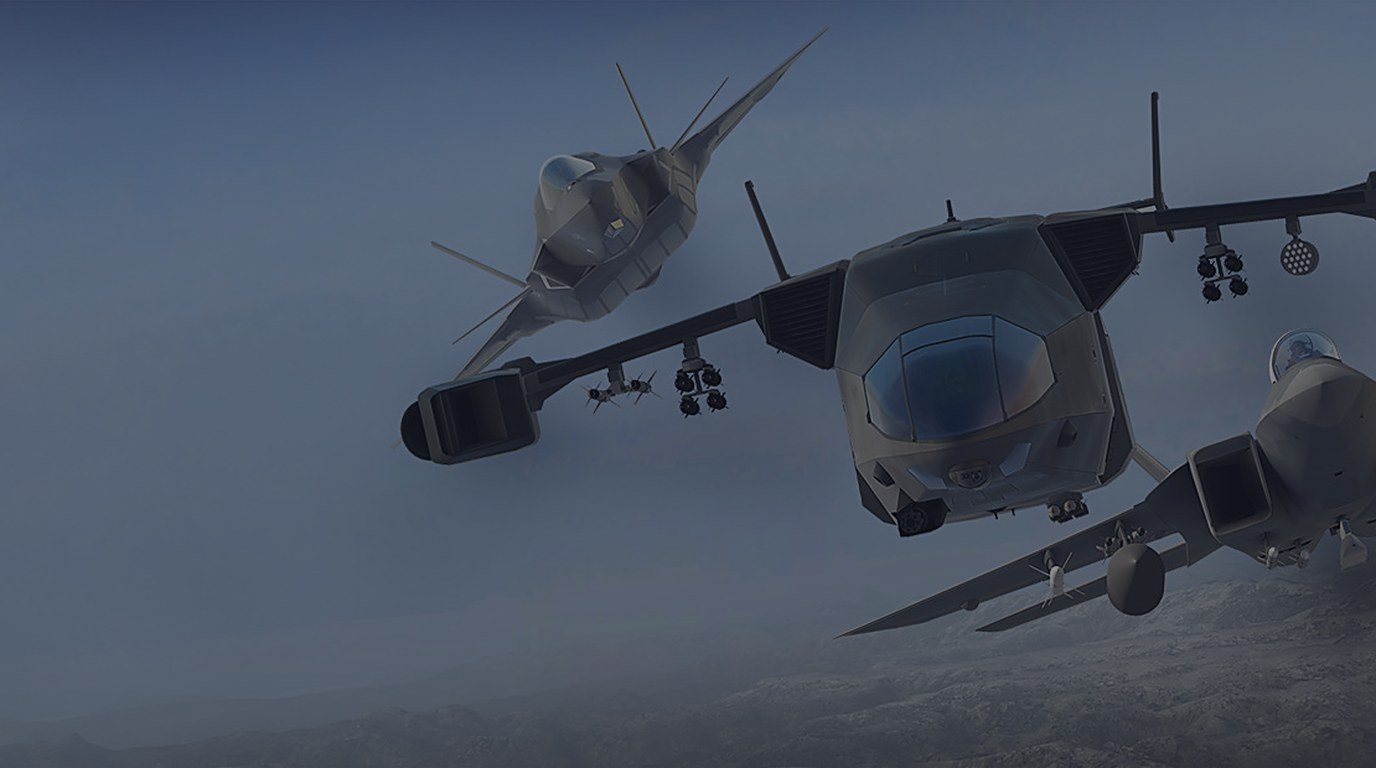
Every switch, guard, button, and stick is a real object you manipulate with tracked controllers. The AV-42C tilt-jet, the F/A-26B, the stealthy F-45A — each has a fully interactable pit, and the training scenarios build the muscle memory instead of dumping a manual on you. One detail I keep coming back to is the head-mounted cueing: you turn your head to slave a heatseeker or walk a gimballed cannon onto a target. Your neck becomes a sensor. That’s the kind of input you only get when a game is born in VR, never retrofitted into it after the fact.
You start with training that teaches you to start the jet, navigate, and put ordnance on target without embarrassing yourself, and then the leash comes off. There’s a campaign, there are single missions, and there’s a mission editor that lets you build the exact engagement you want to fly. Multiplayer runs co-op and PvP, and the radio with voice-recognition comms means you’re actually talking to your wingmen rather than hotkeying them. Comfort-wise, the seated cockpit frame keeps your stomach referenced to the airframe, so it’s one of the gentler VR genres even through hard maneuvers. Performance sits at moderate demand — it runs clean on a mid-range PC, which is a small relief for a sim with this much happening in the air.
The depth is the headline. This is a real simulation with real systems — radar, countermeasures, weapon employment, refueling, carrier ops — but it respects your time by teaching instead of hazing. The physicality is the hook that keeps you coming back: you feel like a pilot because your hands are doing real pilot work. And it doesn’t stop at the shipped content. Steam Workshop campaigns and the VTOLVR-ModLoader community keep bolting on aircraft and missions, and the community F-22 and A-10 builds have become fixtures of VR flight content in their own right, so the hangar you’re flying a year from now isn’t the one you bought. It’s routinely named the best VR-native flight sim in best-of roundups and sits at Overwhelmingly Positive on Steam with a community that won’t shut up about it, in the best way — that’s staying power most VR titles never approach.
Be honest with yourself about the genre, though. This is a study sim with real systems, and they have weight. If you want to jump in and frag enemies in ninety seconds, the startup checklist will feel like a wall. A single developer means the pace of new content is whatever one person can sustain, and some rough edges in UI and certain aircraft behaviors linger between updates. None of that breaks the experience — it’s the tax you pay for a sim this deep from an indie shop — but it filters the audience. You either want to learn the jet, or you don’t, and there’s no shame in the second answer.
It’s a Steam PCVR title, and it’s forgiving about how you get in: any PCVR headset through SteamVR or OpenXR, and Quest owners fly just as happily via Link. No extra hardware, no basestation anxiety — if you’ve got a headset and controllers, you’ve got a cockpit.
If you’ve ever looked at a flight sim and thought the cockpit was the point, this is the purest version of that idea in VR, and it’s the standard every other VR flight title gets measured against. Strap in, grab the throttle, and the headset earns its place on your shelf the second the engines light.