
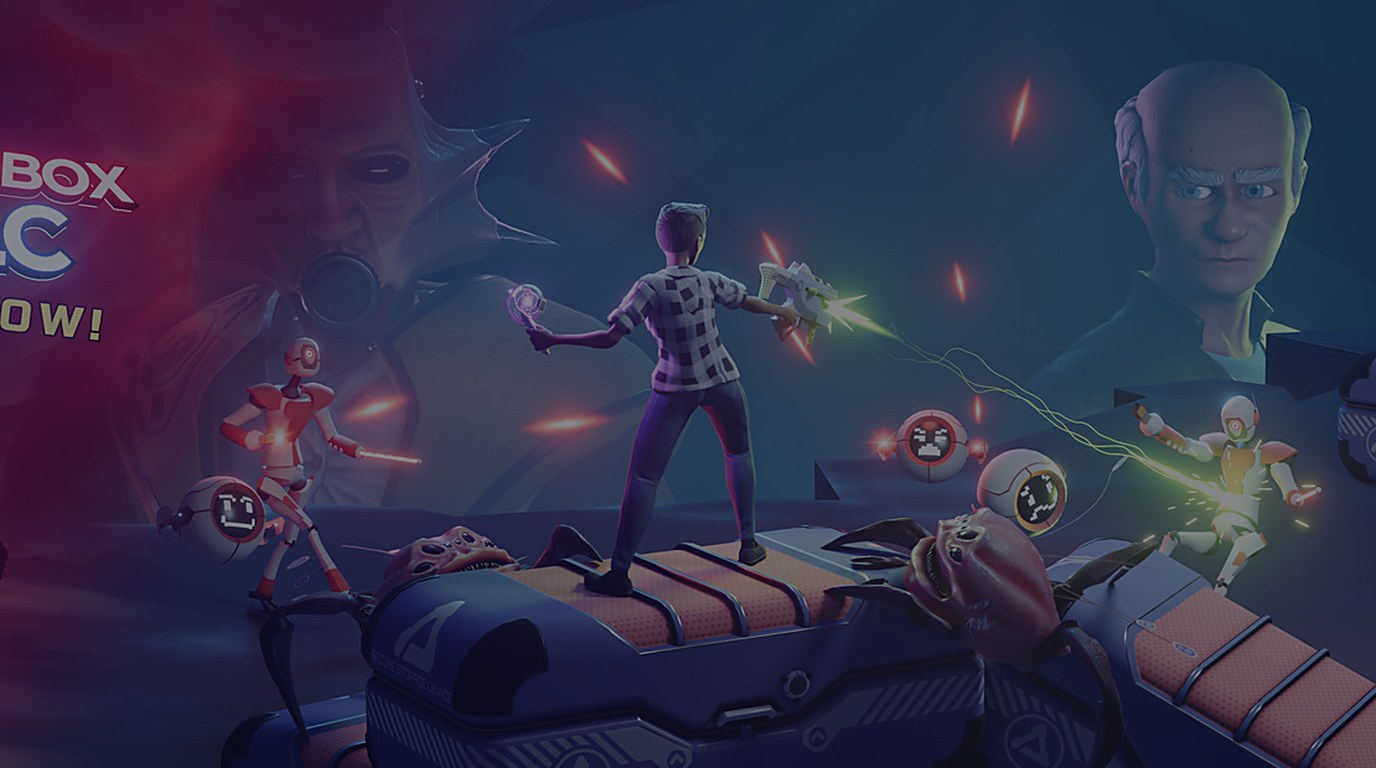
I reached out, wrapped my hand around the grip of a pistol floating in mid-air, and it was just there — weight, angle, the slide under my fingers — before I’d thought about a control scheme. That’s the Vertigo Remastered trick. There’s no “equip weapon” prompt. You grab, and it’s yours. Five minutes later I yanked a lever, the floor dropped out, and I spent the fall genuinely unsure whether my stomach was going to keep up. A flawed, thrilling, completely VR-native ride — and one of the better arguments that a single developer can out-design a studio.
Vertigo has been a VR game since the start. The original shipped on SteamVR back in 2016; this Remastered edition is a full rebuild — new visuals, new enemies, a reworked upgrade tree, extra story — not a flat game with a headset bolted on. It launches straight from Steam with a PC VR headset and nothing else: no injection frameworks, no mods, no emulator. If you have a Vive, Index, Rift, or WMR headset, you’re in. It’s PC VR-only by design, and it’s the better for knowing exactly what it’s for.
What makes it stick is the physics. Every weapon is a real object you pick up, cock, reload, and fire with your hands. The hidden-blade-style gadgets, the bows, the throwables — all of it responds to how you actually move. Combat isn’t a reticle and a trigger so much as a series of small physical commitments: brace the pistol, line the shot, pull. When it clicks, it feels better than most VR shooters that fake the weight. When it doesn’t, a reload fumbles and you’re swearing at your own grip — but that’s the trade for a system this tactile, and I came down on the side of loving it.
The campaign is the surprise. UploadVR called it “a Half-Lite adventure born from love and winning design,” and the comparison lands: Vertigo Remastered paces itself like a Valve level, handing you a problem, a room, and the tools to break it your way. It’s story-driven without drowning you in cutscenes, and at a few hours of focused play it respects your time while still feeling complete. There’s a real arc, real stakes, and a studio’s-worth of ambition from one person (Zach Tsiakalis-Brown, under the Zulubo name). The Steam Workshop layer adds community-made levels on top, so the campaign isn’t the wall.
Locomotion is hybrid teleport-and-smooth with a settings toggle to force teleport-only, which keeps the fast vertical drops from wrecking your stomach. Beyond that one clause, the game moves on — and so should you.
The cracks are the ones you’d expect from a passion project. The physics that make the guns sing also make some interactions finicky: things you want to grab slide out of reach, a ledge catch whiffs, a puzzle piece refuses to seat until you angle your wrist just so. None of it broke my run, but it reminds you this is a small team’s VR game, not a polished AAA build. The scope is intimate — a handful of locations, a tight enemy roster — and if you came wanting the spread of a mainline shooter you’ll feel the ceiling. And the comfort load is real on the vertical sequences; the toggle helps, but this is a game that will test motion-sensitive players more than Alyx did.
Where it lands is easy for me. Vertigo Remastered is a complete, physical, genuinely clever VR shooter that cost one person a mountain of work and plays like they cared about every room. It’s not the best VR game ever made — the polish and the scale aren’t there — but it’s the kind of experience that makes you glad the medium exists, and it’s a confident recommendation for anyone with a PC VR headset who wants a campaign that respects the hardware. Grab it, grab the gun, and watch your footing on the way down.