
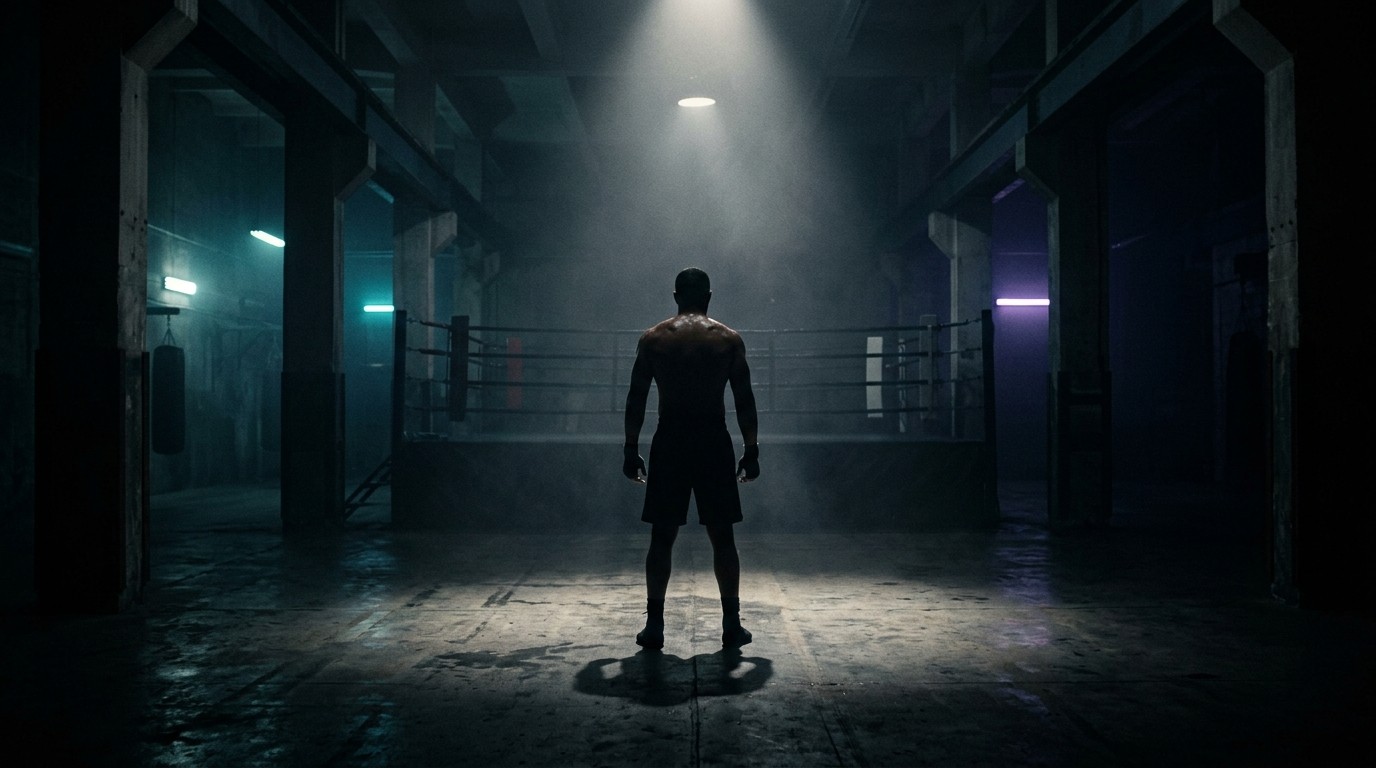
I’ve thrown enough fake punches in rhythm games to know the difference between looking active and actually working. The Thrill of the Fight doesn’t dress anything up. You stand in a virtual gym, wrap your knuckles around the controllers, and fight. By round three your shoulders burn, your shirt sticks to you, and you’re reminded that VR fitness works best when it stops trying to be fun and just lets you hit things.
This is a native VR boxing sim from Sealost Interactive, with the sequel and publishing now handled by Halfbrick Studios. It launched on PC VR on July 1, 2016, then came to Oculus Quest on October 24, 2019. There’s no flat version, no injection route, no modded VR conversion. You buy it for VR or you don’t buy it. That alone is refreshing.
What it actually is
The Thrill of the Fight is room-scale only, and it means it. You need about two meters by two meters of clear space. The game tracks your real punches, blocks, ducks, and weaves against a series of AI opponents, each with their own style, guard habits, and willingness to punish your laziness. There’s no stamina bar you manage with a button press; your actual body does the managing. Swing wild for thirty seconds and you’ll understand why real boxers pace themselves.
On PC VR it runs through SteamVR and supports the usual headset families. On Quest it’s a standalone download from the Meta store, and it’s probably the version most people should play. Same core experience, no cables to trip over, no PC to wake up. You put the headset on, clear the guardian, and start bleeding calories.
Controls are exactly what they should be. Your hands are your gloves. Punch high or low, lean to dodge, raise your arms to block. The physics aren’t cinematic; they’re functional. You don’t get slow-motion knockout flourishes every other swing. Land a clean hit and the opponent reacts. Miss and you pay for it. After an hour you stop thinking about the tech and start thinking about foot placement, which is the whole point.
Why it still holds up
The game has been on Steam for years and still sits at Overwhelmingly Positive. That isn’t nostalgia. It’s because nothing else in VR fitness feels this direct. Beat Saber makes you move, but it’s choreography. Supernatural has production value, but it’s a service. The Thrill of the Fight just gives you a ring, an opponent, and a reason to mean it.
The fitness value is real. The VR Health Institute rates it among the most intense VR workouts, and after a few rounds you won’t need a lab to confirm it. Heart rate spikes, shoulders light up, and the sweat is your own. The motion is all natural — no artificial locomotion, no smooth turning to make you queasy. The comfort tradeoff is physical intensity, not nausea.
It also scales well. Lower the opponent count, shrink the rounds, or just fight until you gas out. There’s no narrative gating you from the actual game. You’re never ten hours away from the good part; the good part is the first fight.
The honest downsides
It’s ugly. The gym is plain, the character models are simple, and the audio is functional at best. If you need production value to stay engaged, this will feel like a fitness app from 2016 because, in many ways, it is.
The solo-only structure can feel thin after a while. There’s a campaign ladder of opponents and an endurance mode, but no multiplayer in the original. If you need social pressure to train, the first game won’t provide it. That’s where the sequel comes in.
The Thrill of the Fight 2 arrived on Quest in early access on November 21, 2024, with a full release on November 19, 2025. It adds multiplayer and a proper single-player campaign, and it’s the version I’d point a new player toward today if they own a Quest. It’s Quest-only, though. PC VR players are still best served by the original, which remains a better value than most fitness subscriptions.
Platform notes
On PC VR the game is light. It’ll run on hardware well below the current mid-range bracket. On Quest it’s one of the store’s best-selling fitness titles for a reason: it works, it loads fast, and it doesn’t care what generation of Quest you own. The standalone version is the cleanest way to play, and the one I keep coming back to when I don’t want to deal with a PC.
Small content mods exist for the PC version via BepInEx — adding opponents like the referee, custom gloves, that sort of thing. They’re optional flourishes, not required to play in VR, and they only work on PC. Quest users get the developer-curated experience, which is fine.
Bottom line
The Thrill of the Fight isn’t trying to impress you. It’s trying to make you work, and it succeeds. The punches feel honest, the exhaustion is earned, and the value proposition is simple: ten dollars, a cleared living room, and twenty minutes of intensity that beats most gym machines. It’s one of the few VR games I recommend without needing to add “if you like this specific subgenre.” If you own a headset and can swing your arms without hitting a wall, this belongs in your library.