
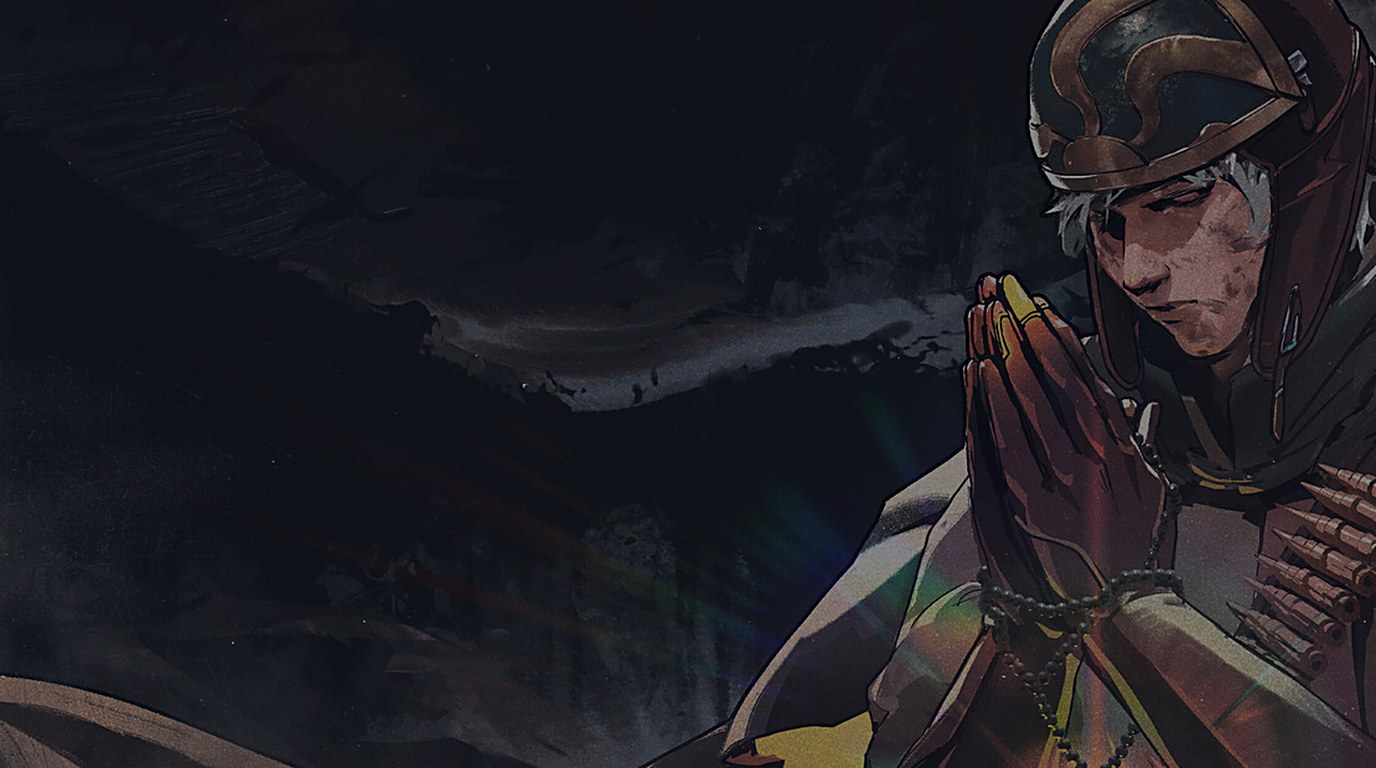
The first death teaches you the game
I died on the second staircase. Not to a sniper, not to a trap — to my own bolt-action rifle, which I’d left empty because I was too busy watching the fog for movement. I stood there, fumbling a magazine into the well with my actual hands, and the thing that had been shambling toward me since the last room closed the distance and took me down. That death was me, in the headset, failing to do something the game had taught me to do with my own two hands.
The Light Brigade punishes one specific failure: forgetting that in here, reloading is a thing your body does. When the magazine runs dry, the gap between empty and ready is the most important distance in the fight, and the next run is smarter for having learned it.
Built VR-first, and it shows
Funktronic Labs built this VR-first and VR-only, and that shows in every interaction. There is no flat version to buy and later mod into a headset — the headset is the only place this game has ever lived. It launched on the same February 2023 day on Quest 2, PSVR2, and PC VR, and every system in it assumes tracked controllers and a face full of darkness.
That origin matters more than it sounds. Most VR shooters are flat games wearing a headset; their menus, their aiming, their reloads all betray where they started. The Light Brigade never had a starting point to betray. Praying to open a door is a gesture. Casting a shield is a motion. Cycling a bolt is a motion. Nothing here was translated — it was authored for the space.
Gunplay you do with your hands
Start as the Rifleman and the first ten minutes are pure motor learning. You grip the rifle, pull the bolt, chamber a round, line up the iron sights against a target half-swallowed by fog, and fire. Miss, and the recoil shoves the muzzle off target the way a real rifle would. The manual reload is the spine of the combat: every exchange bends around whether your hands are ready, not around a cooldown you wait out.
The WWII hardware is the star — bolt rifles, revolvers you load one round at a time, automatics with their own rhythms. Each class hands you a different weapon and a different problem. The Scout rewards patience. The Breacher wants you close. The Sniper makes the fog a personal enemy. You don’t just pick a gun; you pick a relationship with the reload.
Movement is teleport-based, which the game calls a dash: you aim a point in space and blink to it. That keeps the headset calm during fights that would otherwise spin you, and it fits the tactical, hold-your-ground feel. You’re not sprinting through arenas. You’re choosing where to stand and paying for the choice.
Prayers, tarot, and the deck you build
Between fights the game loosens its grip and hands you decisions. You pray at shrines for light-magic prayers — a shield that eats a hit, a poison that turns a shot into a lingering wound — and you draw tarot-card-style upgrades that bend the run. Those cards are the roguelike engine: one run gives you splash damage on every spell, the next hands you souls on kill and turns death into currency.
The classes are where the build actually forks. There are nine of them — scout, pistoleer, rifleman, assault, militia, sniper, breacher, engineer, hunter — each a distinct loadout and a distinct way to survive the dark. The class system is the game’s best argument for itself: NME noted it forces real choices about what to develop, and after a few runs you stop picking the gun you like and start picking the gun that covers the hole in your build. That’s the roguelike loop doing exactly what it should: the next run is a different game because you are a different player.
Death is the progression
You get two self-revives per run, and when those are gone, death sends you back to the blacksmith with whatever souls you carried out. Spend them, and the next Rifleman starts a hair tougher, a hair better armed. The meta-progression is the point of the loop, not a side menu — you lose, you bank, you come back differently.
That’s the part that hooked me past the novelty. A flat shooter lets you retry a level. The Light Brigade makes the retry itself the reward: every death teaches you the gun, the fog, the reload, and the soul economy all at once. The loop earns its repetition by making each failure legible.
Where it wears thin
The loop is also the game’s ceiling. Runs are built from the same pieces rearranged — same prayers, same cards, same fog with the volumes turned differently — and after a long session the variety thins. It’s mood, not narrative: there’s no story pulling you forward, just the next descent and the next death. That’s honest roguelike design, but it means the game lives or dies on whether you like the core fight. If the manual reload stops thrilling, the runs start to blur.
The other honest gap is melee. Road to VR called the absence of close-quarters combat a missed opportunity, and they’re right — when something reaches you, your only answer is the gun in your hand. For a game this physical, the lack of a swing or a butt-stroke is a visible hole. You adapt, but you feel the missing option every time the dark gets close.
The art direction is deliberately plain. Funktronic chose a simpler style so the thing runs on a Quest 2, and it reads as functional rather than beautiful — fog, silhouettes, and muzzle flash doing most of the work. It’s a trade I respect on the hardware, but nobody’s putting this on a “best looking VR” list. The look serves the tension, not the screenshot.
It kept growing after launch
This isn’t a game that shipped and went quiet. Funktronic ran it for three-plus years — stealth came in Update 4.0, and the final blowout, Update 5.0, renamed it The Light Brigade: Definitive Edition and closed the book in August 2026. That last update added the Lebes biome (a close-quarters European town built for doorway clears), 38 new tarot cards taking the total to 99, crystal attachments that hang effects off every shot, and custom and challenge runs. If you’re arriving now, you’re arriving at the finished thing — complete, stable, and not getting any bigger. The studio’s next project is flat, so this is the whole story, and the whole story is a good one.
A roguelike worth the headset
The Light Brigade is easy to hand a newcomer and deep enough to punish a veteran — a rare combo. It’s for the VR owner who wants a real loop to chip away at, not a spectacle to watch once. If you like earning your progress through failure, the manual gunplay and the death-and-learn rhythm will keep you in the headset longer than the plain visuals suggest. If you need story or melee or constant novelty, the repetition will find you.
I went in skeptical that a WWII roguelike could justify the headset. I came out having died on a staircase enough times to respect it. Reload with your own hands, pray for the shield, and go again — that’s the whole game, and it’s more than enough.