
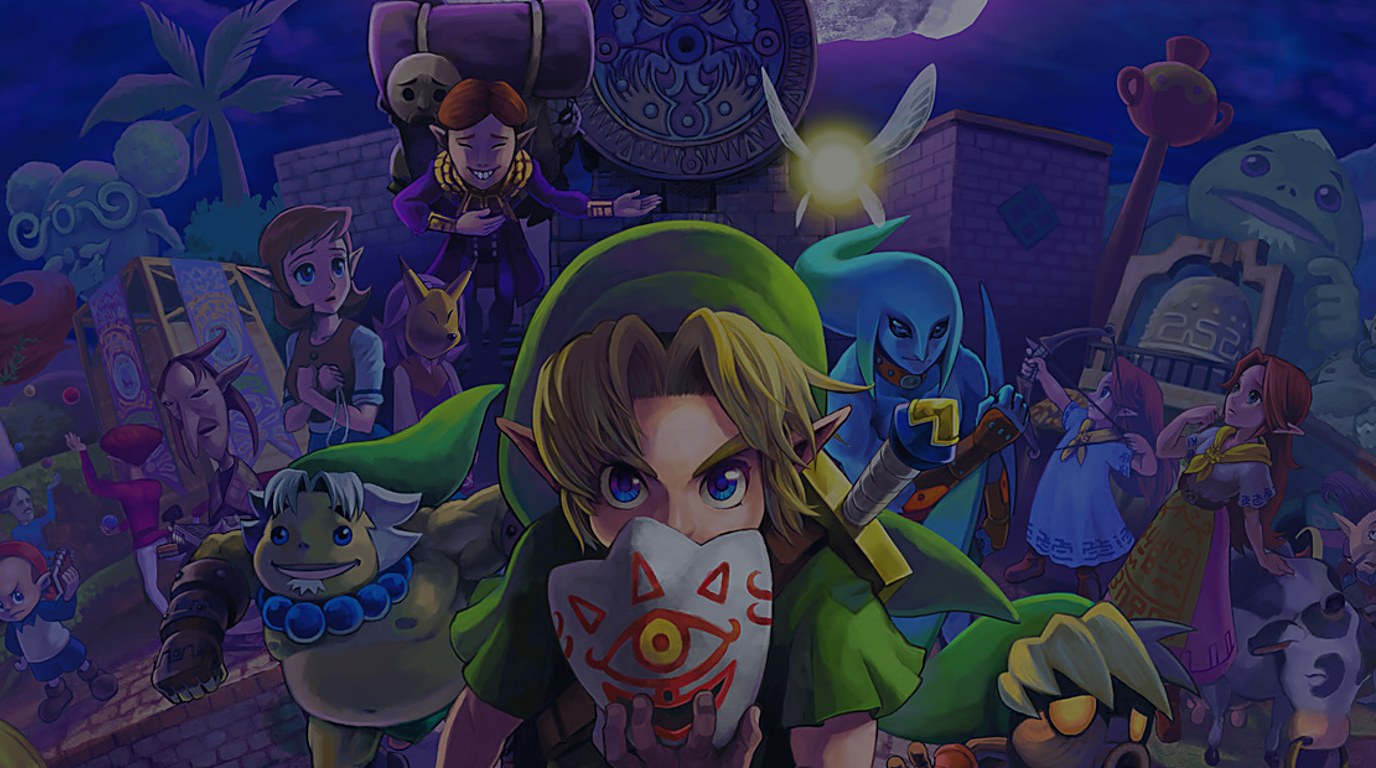
The moon is actually falling on you
I spent the weekend in Termina with the moon counting down, and for the first time the three-day loop felt like it was happening to me instead of a character on a screen. Majora’s Mask has always been the Zelda that understood dread — the slow, gnawing realization that the world is ending and you keep resetting it. In VR, standing in Clock Town as that grinning moon creeps closer every cycle, the dread lands in your chest. The mod is a from-scratch full-motion conversion, and it commits to the bit.
What this actually is
FullDiveGames’ Majora’s Mask VR is a community mod built on 2Ship2Harkinian, the native PC port of the N64 original. The game runs as compiled code, not through an N64 emulator, so it stays crisp and stable on hardware that should never struggle with a 2000 release. One repo ships two builds: a Windows PCVR version that talks to any OpenXR headset, and a sideloaded Quest APK that runs the whole thing standalone, no PC, no cable. Saves transfer between the PCVR and Quest builds, so you can start on one and pick up on the other.
Nintendo ships nothing, and that’s the one wrinkle worth naming up front. You supply your own clean dump of the US Majora’s Mask ROM (rev 1.0) — or pull it from a US Collector’s Edition GameCube disc — and the mod extracts the assets in-headset or on desktop. On PC that’s a folder, a ROM file, and a launch script. On Quest you sideload the APK, push the ROM to /sdcard/Download, run the extraction in-headset (the app may close; relaunch it), and you’re playing standalone. It’s a fan project, free, unaffiliated with Nintendo, and the author is upfront that it’s a public beta built with some AI-assisted coding. I respect the honesty.
Standing in Clock Town
The first ten minutes are the selling point. You wake in that tree, drop into the village, and the scale hits you — Clock Town is a real place you’re standing inside, not a diorama you’re steering a camera through. The tower, the crowd, the masked dancers circling the fountain: it all wraps around you. This isn’t a gaze-or-button approximation of the flat game; the head tracking is full 6DOF and the world has weight.
Picking an item is a wheel anchored to your hand. You reach, spin the wheel, grab what you need, and it’s there. That small piece of tactile ownership — a bottle you tip to your mouth, a mask you physically bring up to your face — is what separates this from “Zelda on a TV in VR.” You’re handling the things, not clicking them.
Wearing the masks
The masks are the whole game, and the mod knows it. You don’t open a menu and select Deku, Goron, or Zora — you raise the mask to your face and push it on. Then the transformation happens on your body: Deku’s spindly arms, Goron’s round bulk, Zora’s fins. Each form maps its moves to gestures instead of button combos. Goron punches with a swing, Zora strikes with fin swipes, and swimming is directed by where you look and how you move your hands. That motion-controlled transformation is the premise finally expressed in the right grammar.
It changes how you read the game. Majora’s Mask has always been a puzzle box about inhabiting other creatures to solve their problems. Doing that by literally becoming them, in your own body, is the version the premise always wanted. The Deku pipestone flight, the Goron rolling, the Zora swimming — all of it stops being a control scheme and starts being a body you’re wearing.
Combat you swing, not tap
Sword fights are physical. You swing the controller to strike, hold the trigger to charge a spin attack, and place the shield to block rather than tapping a guard button. The bow is the one that got me: you draw the string by pulling back, and aiming follows your draw hand. Thrown bombs and Deku Nuts use the same gesture logic, and bottles get a shake-to-dump alongside the drink-at-mouth motion. Climbing is hand over hand, which sounds minor until you’re actually hauling yourself up a wall in first person and your arms remember the rhythm.
None of this is a casual click-through. The combat reads as “real swordplay, slightly loose,” which is exactly where a fan mod should land. It’s responsive enough to feel like you’re fighting, loose enough that you forgive the occasional wild swing. First-person motion is off by default if you’d rather ease in, and there’s a third-person mode when you want to see the body you’ve become.
The loop that VR was built for
Here’s the thing nobody tells you about Majora’s Mask: the three-day cycle is a VR experience waiting to happen. You live a day, learn the town’s rhythms, then reset and use what you know. In a headset, that repetition stops being a UI trick and becomes a place you keep returning to. You remember where the bomber kid hides, which window opens at what hour, which NPC needs you on day two. The town gets denser every cycle because you’re actually there remembering it, not reading a guide.
The urgency is real, too. That moon doesn’t pause because you’re comfortable. When it fills your view and the ground starts to crack, you feel the timer in a way flat play never delivered. It’s the single best argument for this mod: a game about time pressure and recurrence, finally played in a body that feels the pressure.
What’s actually good
Performance is not a concern. This is an N64 game with modern rendering. On Quest 3 it holds a stable 90 fps by default, with an uncapped option if you want to push it. On PCVR, any OpenXR headset cruises. You’re not fighting your GPU to keep a 2000 game alive — you’re just in it. World scale per form is handled, so Goron actually feels huge and Deku actually feels small, which sells the transformations harder than any cutscene.
Comfort options are there if you need them: snap or smooth turning, a vignette under the comfort settings, and third-person as an out. The first-person motion toggle means you can start gentle and ramp up. The delivery is in the details — a mask pulled to your face, a bottle tipped to your mouth, a bow drawn by hand.
Where it’s still rough
This is a three-week-old public beta, and it shows in the edges. Save states are disabled for now, so you live with the in-game owl and menu saves — which, to be fair, is how the game was designed to be saved. Some scenes still have imperfect framing, effects, or transitions; the author says a complete playthrough hasn’t been verified yet, and I’m not going to promise you can beat the whole thing cleanly tonight. Quest 2 is untested, so if that’s your headset, you’re on your own until someone reports back.
That’s a real step. The cadence is the reason I’m not nervous about the rough bits: the project went from v0.26 to v0.36 across roughly ten releases in three weeks, with gameplay, body, mask, and saving fixes landing weekly. This is a team moving, not a one-shot drop that goes quiet. Confirm the latest tag before you install, because the build you grab today may not be the build I played.
The honest frame
This is a fantastic game wearing a brand-new, slightly unfinished VR body. The world is one of Nintendo’s best, the loop is a perfect match for a headset, and the masks — the actual soul of the game — are physical now. The caveats are polish and patience, not a broken core. If you own a Quest 3 or a PCVR headset and you’ve ever wanted to stand in Termina as the moon falls, this is the version that finally lets you.
Download it, give it a few cycles.