
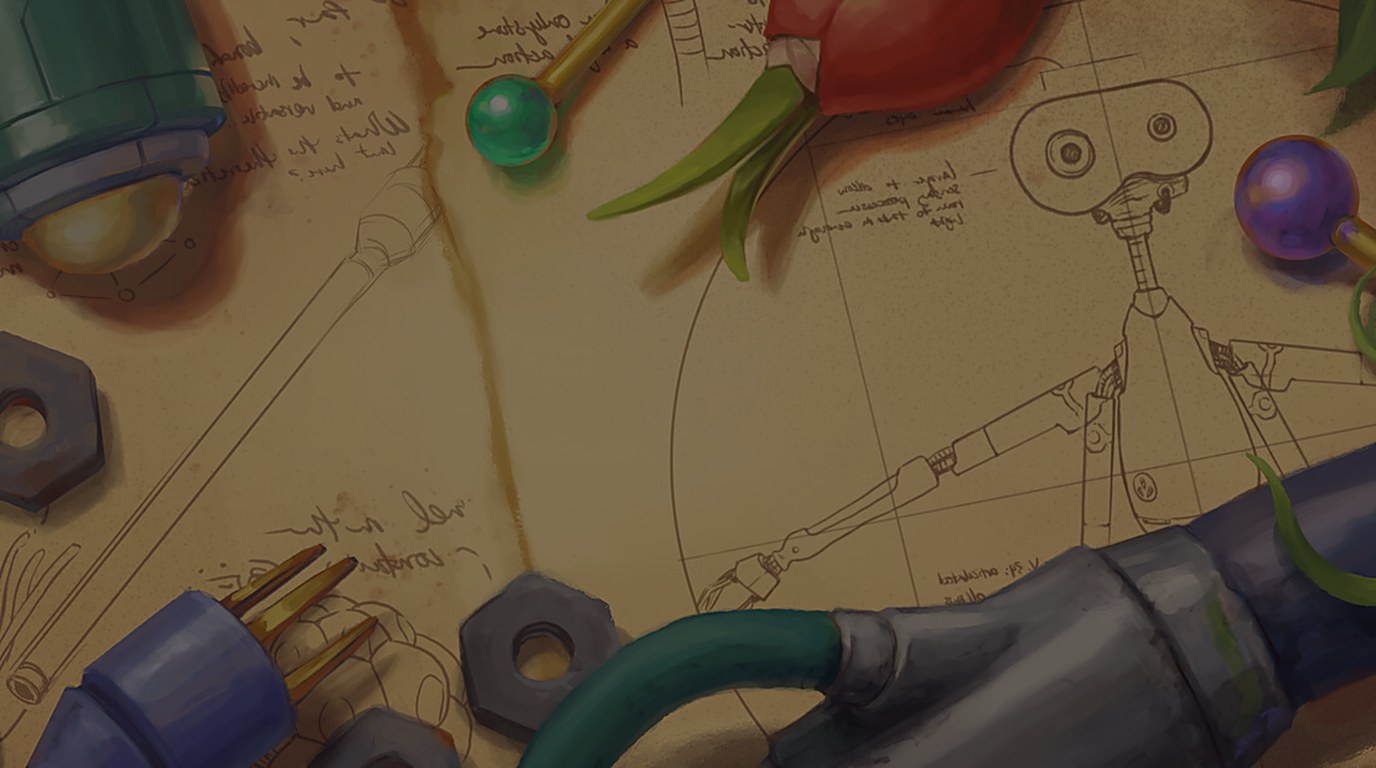
The first time a clone of myself climbed a branch I’d just recorded, then handed a gear to a second clone who passed it to a third, I put the controller down and watched. I’d built a clockwork assembly line out of my own muscle memory, and it was quietly solving the puzzle for me. That’s The Last Clockwinder, and it’s the most clever thing I’ve put a headset on for in a long while.
There is no flat version of this game, and that isn’t a porting gap — it’s the whole point. Pontoco built it as VR from the ground up, and Cyan — yeah, the Myst people, through their Cyan Ventures label — published it. You play a clockwinder who returns to a colossal, dying tree that houses an ancient clocktower. Your tool is a pair of gloves that record whatever you do: reach, grab, pull, place. Hit record, perform an action, and the gloves spawn a looping automaton clone that repeats it forever. Stack a few of those together and you’ve got a Rube Goldberg machine made of yourself, ticking away to repair the tree one mechanism at a time.
It landed on Quest and PCVR at $24.99, and from the first minutes it’s obvious this isn’t a flat game with VR bolted on. The recording mechanic only works because your body is the input. You can’t map “be a human gear” to a mouse.
Here’s how the loop actually feels once it clicks. You stand in a branch chamber, spot a gear that needs turning and a platform that needs reaching. You record yourself walking over, cranking the gear, walking back. Now there’s a you-loop doing that forever. Then you record a second task — maybe ferrying a part across a gap — and a second clone joins the shift. The puzzle isn’t “which button opens the door,” it’s “how do I decompose this repair into a handful of recorded loops that don’t step on each other’s toes.” When it works, you’re not solving a puzzle so much as conducting one. I laughed out loud the first time three of me moved in sync and a whole section of the tree came back to life.
That emergent quality is the game’s real achievement. Most VR puzzles hand you a fixed solution with tracked controllers. Clockwinder hands you a system and gets out of the way. You’ll find absurdly clever solutions the designers probably didn’t intend, and the game is totally happy to let you. That’s rare. It’s the difference between a puzzle box and a puzzle sandbox, and it’s why this thing has been topping best-VR-puzzle-game lists since launch — after a weekend inside that tree, I’m not going to argue.
The world around the mechanic earns its headset time too. The tree is gorgeous in a quiet way: vast wooden chambers, soft light through leaves, mechanisms that whirr to life as you restore them. There’s a story threaded through it, and it’s not just set-dressing — the clockwinder’s journey has an emotional core that lands harder because you’ve physically done the work of bringing the place back. A lightweight Unity build keeps it smooth and cool whether you’re on a PCVR rig or a standalone Quest; I never saw a hitch during long automation sessions, and the whole thing installs like any other store purchase — no mods, no dependencies, no config files to fight.
It’s not flawless, and it’s not for everyone. This is a slow, deliberate game. If you fired it up expecting action, you bought the wrong ticket — there’s no combat, no timer, no fail state that punishes you. For some that calm is the selling point; for others it’ll read as thin. The recording system, brilliant as it is, also has a precision ceiling: when a clone misses a grab by an inch and your whole line stalls, you re-record, and re-record, and occasionally swear at a gear that won’t seat. The friction is low, but it’s real, and it’s the one place the experience reminds you it’s a system with edges.
It’s also a contained experience rather than a sprawling one. You’re restoring one tree, not roaming a continent. The puzzles deepen as you go and the late game asks more of your automation instincts, but nobody’s going to mistake this for a 40-hour epic. For me that’s a feature — it respects your time and ends before it wears out its welcome — but if you measure value purely in hours-per-dollar, know what you’re getting.
Comfort-wise it’s about as friendly as VR gets: you’re largely rooted to a spot, recording gestures and placing clones, with no artificial locomotion to fight. Beginners and VR veterans alike can just sit down and play.
So who’s this actually for? Puzzle lovers, clearly, and anyone who wants a VR game that respects a quiet evening instead of demanding adrenaline. If you like the satisfaction of a system clicking into place — the feeling of programming without writing a line of code — this is squarely your thing. Action seekers should look elsewhere, and that’s the only real filter.
The Last Clockwinder is the kind of game that makes the “why VR” question answer itself. It couldn’t exist without the headset, it uses your body as its core mechanic, and it wraps that in a world worth restoring. That’s a recommended yes from me — one of the smarter, warmer VR-native experiences you can put on this year.