
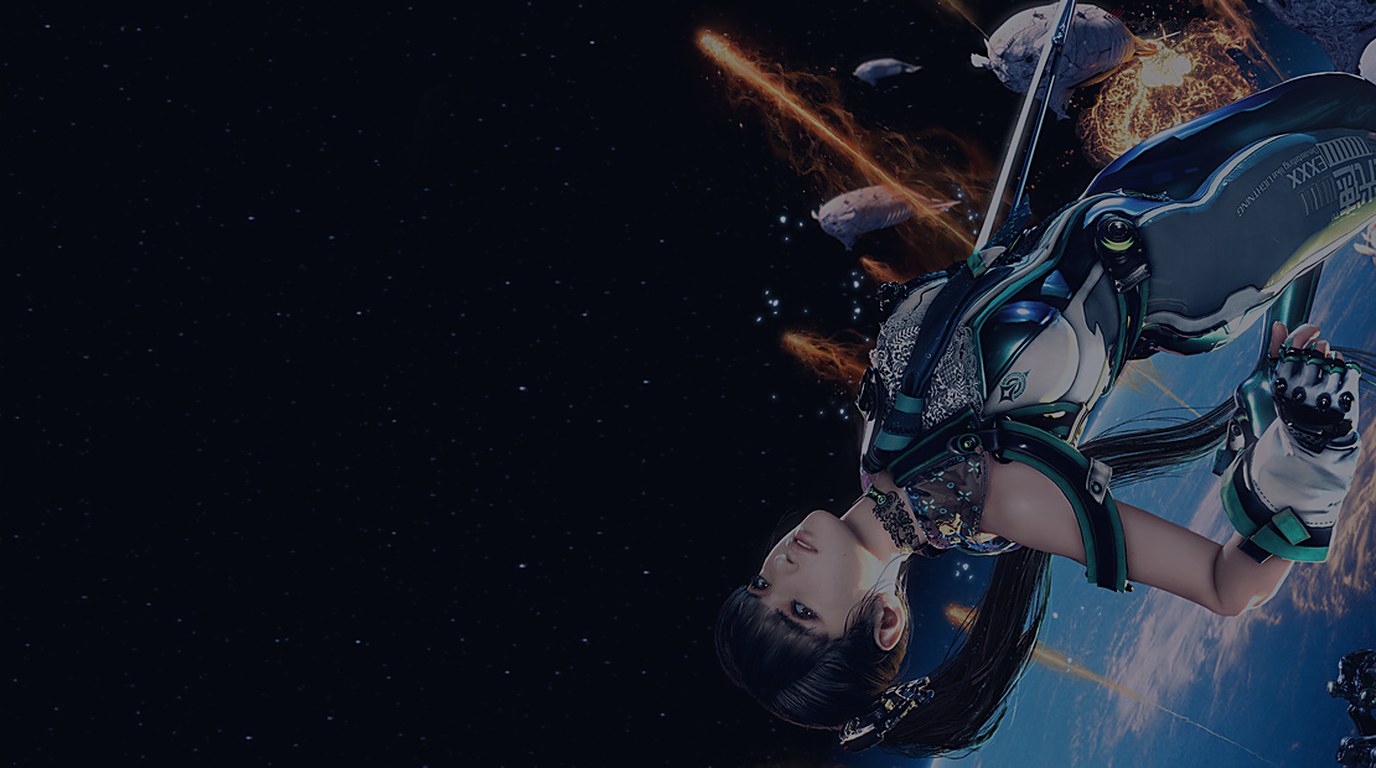
The first time Eve vaults a chasm and the camera swings behind her in real stereo, you stop thinking about the fact that you’re watching a flat game through an injector. Stellar Blade was built as a console action showcase — tight melee, a striking protagonist, environments that lean hard on scale — and on a monitor it’s a great-looking game. In a headset, running through UEVR on the fresh PC build, it becomes something closer to standing on that planet. The world finally has depth, and your head is in it.
What you’re actually getting
There is no official VR mode for Stellar Blade. Sony never positioned it as a VR title, and there is no PSVR2 build, no Quest standalone port, no first-party anything. What exists is the community standard for Unreal Engine 4 games: praydog’s UEVR injector, dropped onto the Windows Steam build right as the PC version shipped. That is the whole path. No bespoke full-VR mod, no Luke Ross treatment, no per-game profile you need to hunt down — the generic injector plus a small community plugin that handles cutscene camera moves is the working setup.
What UEVR gives you here is the good half of its repertoire. Native stereo rendering, true 6DOF head tracking, and the complete game — every combat encounter, every cutscene, every environmental beat — running at full fidelity. Because Stellar Blade is UE4 rather than UE5, it sits in the engine family UEVR knows best, and the injection is stable, with frame rate to spare. You are standing inside the third-person camera, your viewpoint independent of where Eve is facing, watching the action play out in front of you with real parallax.
What it does not give you is embodiment. This is a gamepad experience. The combat is Eve’s combo system, mapped to a controller in your hand, and nobody in the scene has built a motion-control layer that anyone actually plays — the wish for first-person sword work is exactly that, a wish. You are a spectator with a free head. For a third-person action game that framing is the comfortable default rather than a compromise, but be clear about what you are buying: presence of place.
The planet is the point
Stellar Blade’s flat reputation rests on two things — its combat feel and its presentation — and UEVR amplifies the second one into the reason to bother. The ruined-earth vistas, the scale of the set pieces, the way light wraps around Eve as she moves through a half-dead city: these were always the game’s argument, and they land completely differently when they have volume around you. You catch yourself turning your head to follow a passing machine rather than tracking it on a rectangle. That is the transformation UEVR is supposed to deliver on a good UE4 title, and here it actually delivers.
The combat reads cleanly from behind as well. Eve’s kit is parry-and-punish character action, fast and readable, and from a head-tracked third-person vantage the telegraphed swings and dodge windows are easy to read without the camera fighting you. It feels like a spectator sport you happen to be standing on the field of — close enough to the choreography to enjoy the weight of it, far enough back that the injection’s lack of hand presence never becomes a liability. A first-person mod would have exposed every seam. Third-person hides them.
Performance is the part that should reassure anyone with a mid-to-high-end PC. UE4 titles carry UEVR’s overhead lightly, and this one is easier on the frame rate than the UE5 games crowding the injection scene. I ran it comfortably without flirting with reprojection, and the headset image held steady through crowded fights. For a modern AAA-looking action game in VR, that is a genuine pleasant surprise.
The cost of the ceiling
The spectacle is real, but it is not free, and the friction is the kind that lives in the setup and the HUD rather than in the play. Getting in is a standard UEVR job — launch the game, inject into the running process, sort your headset runtime — but this particular title asks for two housekeeping steps that are easy to miss. You need to disable HDR on your primary monitor or the VR session crashes on launch, and the HUD does not reliably bind to the headset, which means the bits of interface you expect to float in front of you sometimes just don’t. I hit both myself, and the HUD problem in particular has recurred across builds, which tells you it’s a durable characteristic of the injection, not a one-off patch break.
The cutscene camera is the third wrinkle. In a third-person injection, the game’s own cinematic camera moves are exactly the moments the headset framing fights hardest, and Stellar Blade’s story beats are generous with them. The community plugin that detects cutscene playback and re-seats the camera is what makes those sequences watchable rather than a chore to view; run without it and you’ll be reaching for the recenter button more than you’d like. None of this is exotic — it’s the normal tax of a framework injection on a game nobody at the studio built for VR — but it does mean the first hour is a troubleshooting hour. A guide walkthrough earns its keep here.
None of that touches comfort. Third-person spectator framing is the least nauseating posture injection VR offers. The discomfort, such as it is, is the administrative kind: a missing HUD number, a camera that drifts when you rotate with the stick, a launch crash you could have prevented. I never felt queasy across a long session — the friction is the administrative kind, not the physical kind.
Where it lands
Stellar Blade through UEVR is a genuinely great game world you can finally stand inside, with the seams of the method showing in predictable, fixable places. The HUD and cutscene wrangling are real and recurring, and the experience never escapes its spectator posture. But it clears the bar that most head-tracking injections don’t, because the game underneath is worth the trouble and the engine carries the headset gracefully.
If you already wanted Stellar Blade and you own a PCVR rig, this is one of the stronger arguments the UEVR scene currently makes for itself. If you don’t care about the game, the method won’t convert you; it’s a window with depth. Grab the guide, disable HDR, install the cutscene plugin, and give it an afternoon.