
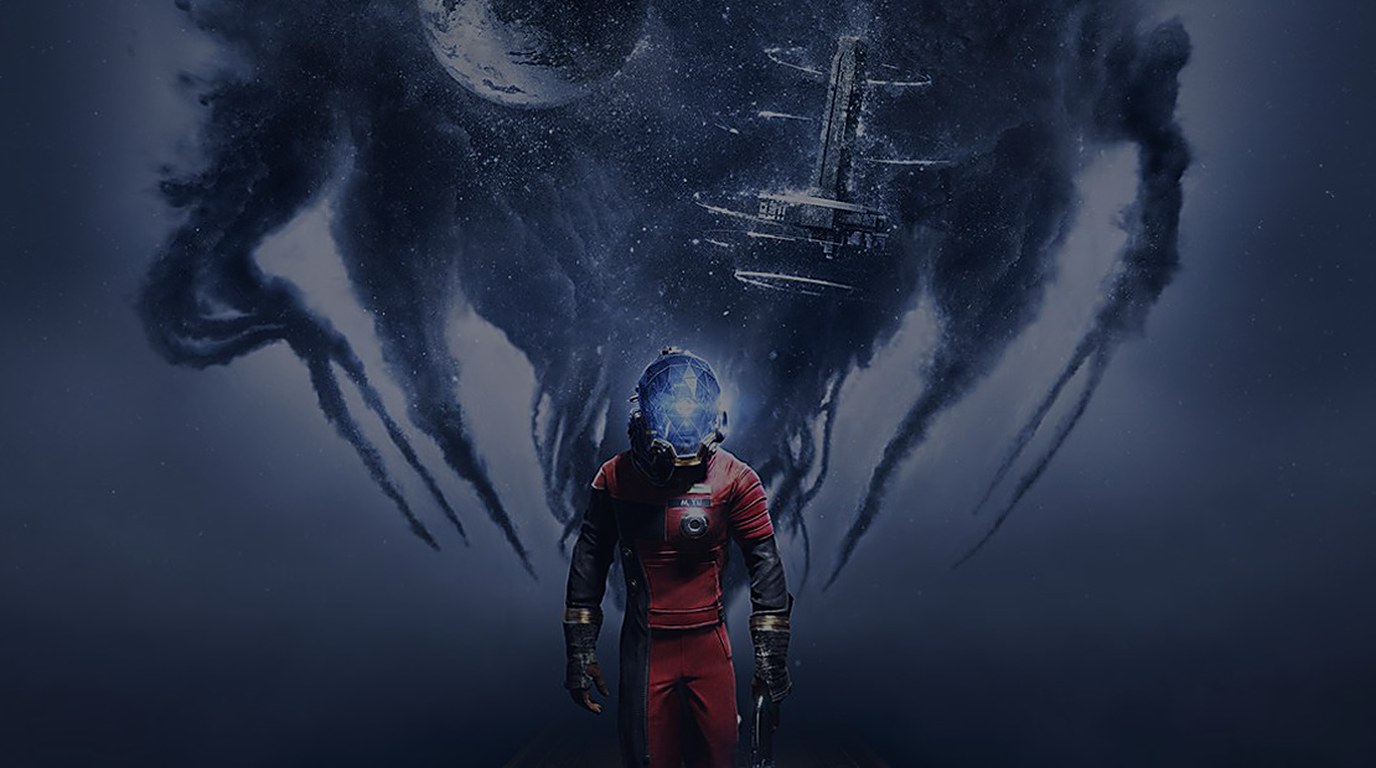
Prey’s best trick is making you trust a space station that’s lying to your face from the first minute. You wake up in an apartment that isn’t yours, pour a coffee that isn’t real, and the floor drops out. On a monitor that’s a great opening. In a headset, with the ceiling a foot above you and the window showing an Earth that may or may not exist, the lie lands closer.
Here’s the thing: there is no single “Prey in VR.” Bethesda and Arkane shipped official VR support in December 2018 as part of the free Typhon Hunter update — but that’s a standalone asymmetric multiplayer mode, a hide-and-seek prop game, not the campaign. If you want to actually play through Talos I, the typhon, the neuromods, the moral rot of “do I recycle my neighbor,” you go through VorpX, the PC injection driver that wraps the flat game in stereoscopic 3D and head tracking.
So you’re choosing between two different experiences, and neither is the full game you bought.
The campaign, through VorpX
This is the one most people want: the campaign, in your headset, via injection.
What you get is real depth. Talos I is a ring station built as one continuous architectural puzzle — crew quarters flow into labs flow into the arboretum — and seeing it in proper stereoscopic 3D changes how you read the space. Corners hide things. The gloo gun’s splats cast actual shadows. When a mimic tears itself out of a chair across the room, your eyes track the distance instead of guessing. That’s the win: you’re inside the station instead of looking at it.
What you don’t get is the part of VR that makes VR matter for a shooter. No motion controls. You’re holding a gamepad, aiming with the right stick, the gun a fixed reticle in the center of the screen. No hand presence, no reaching for the recycler, no physically wrenching a panel off the wall. The menus are flat panels floating in space — readable, but they break the spell every time you open one. And because this is an injection driver and not a port, expect to spend real time in VorpX’s settings per machine: resolution, 3D mode, head-tracking calibration. Some rigs come up clean; others need a session of fiddling before the depth locks in. It’s a very good window with a tracking sensor bolted to it, not a conversion.
Why it’s still worth a tinkerer’s afternoon
The reason this earns the effort is the world itself. Prey is one of the densest, most readable game spaces I’ve walked through, and the station’s storytelling is in the walls — notes, blood trails, a coffee mug someone left running. In 3D that readability gets sharper. The typhon abilities, the shift, the glide, the mimic, are still a joy to chain together, and the slow burn of realizing what Talos I actually is lands harder when you’re standing in it.
Typhon Hunter, the official half
The official VR mode is the other piece, and it’s genuinely clever. One player is a typhon mimic hiding among the environment as an object; everyone else hunts. In VR you crouch, peek, and scan as a human, or you go still as a coffee pot and pray nobody picks you up. It’s a smart, funny take on prop-hunt that uses the headset the way it should be used — spatial awareness, leaning, reading a room. If you can find a lobby, it’s a better pure-VR toy than the campaign injection.
Where it falls apart
The catch that decides everything: Typhon Hunter is multiplayer-only. No bots, no solo, no way to inhabit that mode when the lobbies are empty. It’s a great party trick with strangers online and a dead end alone. And the campaign — the actual Prey — is stuck at injection-driver quality. No motion controls means the gunplay, never the game’s strongest suit, stays a flat-game abstraction. The flat UI nudges you out of the world constantly. You are watching Prey through a very good window.
Who this is actually for
If you’re an immersive-sim fan who’s been itching to walk Talos I, VorpX gets you there in 3D, provided you already own the driver and don’t expect motion controls. If you came for the official VR, Typhon Hunter is a fun, self-contained prop-hunt that rewards a full lobby and asks nothing of the campaign. What you don’t get, in either path, is a true Prey VR conversion. The station is there. Your hands aren’t.
Prey in VR is two half-measures that add up to a qualified yes for people who already wanted in. The campaign via VorpX is the better value if you own the driver and love the game; Typhon Hunter is the better pure-VR toy if you can find the players. Neither replaces the flat version, but for the right tinkerer, standing inside Talos I for the first time is worth the setup.