
The first time I ducked behind the driver’s seat in The London Heist, a biker pulled up alongside the van window and I fired an Uzi out the door without thinking about it. That’s the moment PlayStation VR Worlds earns its spot on your shelf. You’re not watching a gangster movie — you’re in the passenger seat with brass flying, and your hands are doing the shooting.
PlayStation VR Worlds is a compilation of five VR experiences that London Studio built from the ground up for the original PSVR. It shipped as a launch title, and that birthright shows: this is a box of tech demos that graduated into real, if small, games. One of them is outstanding. The rest range from pleasant to forgettable. You’re buying a sampler platter, not a meal — and that’s exactly the right way to think about whether it’s worth your time.
What you’re actually getting
Five distinct experiences, no flat version, no port, no mod — this is PSVR-native and that’s the only way to play it. You need the headset and the PlayStation Camera. Two PS Move controllers are optional but they change the headline experience completely, and a DualShock 4 works as a fallback if you’d rather not wave wands around.
The London Heist is the reason to own this. It’s a first-person gangster thriller — rob a diamond, get chased by the Russian mob, end up in a face-to-face interrogation with a furious cockney crime boss. With two Moves in your hands, you physically hold the gun, aim by looking, duck behind cover, and reload by slamming a new mag in. The shooting range alone could eat an afternoon once you start chasing high scores. The story campaign runs about half an hour, and maybe ten of those minutes are actual gunplay — the rest is cutscene — but those ten minutes are the best argument for PSVR that Sony put on a disc at launch.
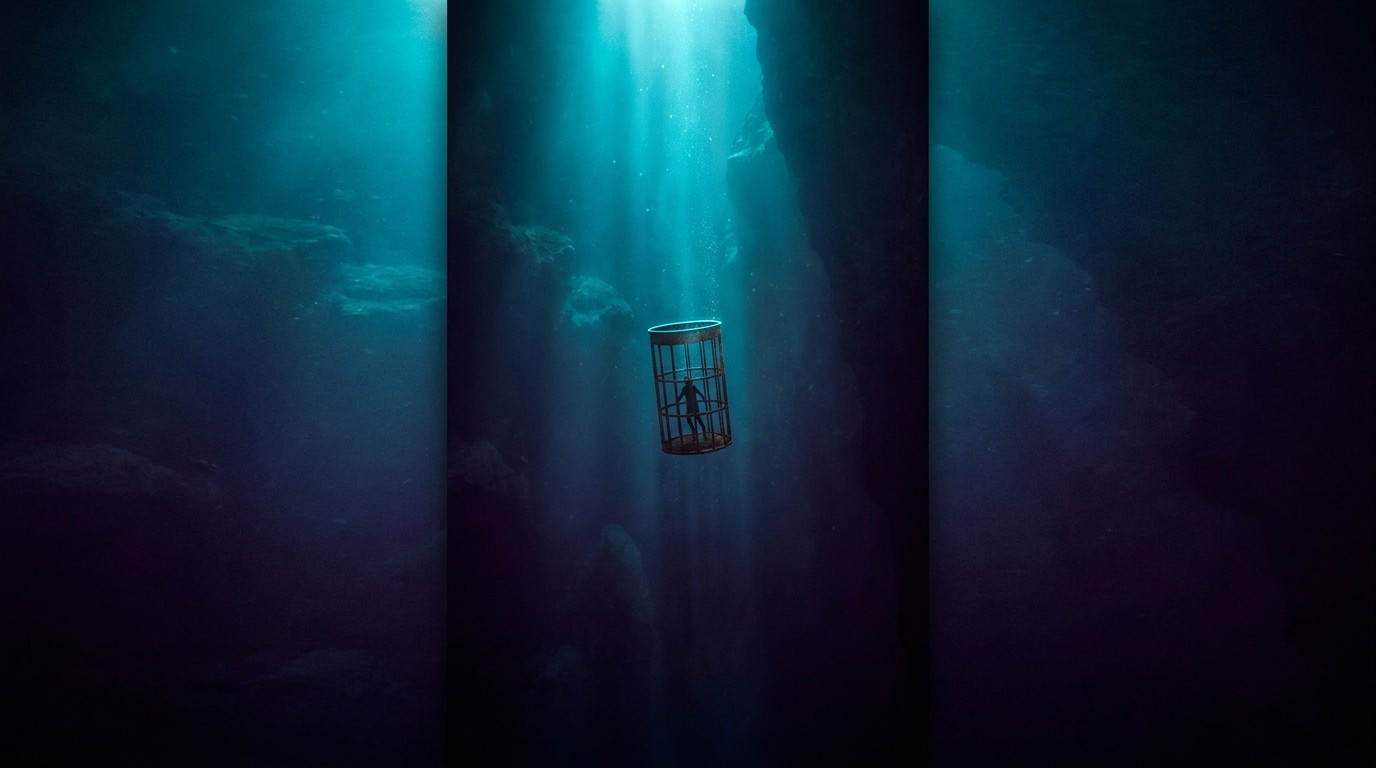
Ocean Descent drops you in a diving cage and sinks you through the ocean. It’s gorgeous and quiet, with one variant that introduces a shark in a way that will make you flinch. There’s no fail state, no objective — it’s a relaxation sim with teeth, and it’s the calmest thing in the package.
VR Luge puts you face-down inches off a highway at speed, dodging trucks. It’s a pure adrenaline rush for about three minutes per run, and then you’ve seen everything it has to offer.
Danger Ball is a futuristic sports thing where you head the ball like a gladiator. It’s fine. It has modes and a tournament bracket, but the core loop is thin and the novelty wears off fast.
Scavenger’s Odyssey is a sci-fi cab-shooter where you pilot an alien mech through wrecked ships. It’s the longest experience after London Heist and the most mechanically busy — you leap, climb walls, and fire pulse cannons — but the missions blur together and it ends on a cliffhanger that clearly isn’t getting a sequel.
What works
London Heist is the real article. The presence is the kind of thing you describe to friends who don’t own a headset: holding the gun, feeling the weight shift when you aim, the panic of a bike pulling up on your left. That’s VR doing something flat gaming can’t. The rest of the package does a genuinely good job of showing off the headset’s range — underwater stillness, high-speed vulnerability, arcade competition, sci-fi combat — which is exactly what a launch title should do.
Performance is rock solid across all five. This is a PS4 game built for the hardware it shipped on, and it never stutters or breaks. Comfort is manageable throughout; the speed-based stuff (Luge, Scavenger’s) will test your stomach more than the sitting-still experiences, but nothing here is a nausea trap.
What doesn’t
The word everyone reached for at launch was “demo disc,” and it sticks. Every one of these experiences is short. Most are done in well under half an hour, and only London Heist has a mode (the shooting range) that pulls you back after the story ends. There’s no free roam, no progression system, no reason to replay Ocean Descent or Danger Ball once the novelty lands.
That wouldn’t matter if the quality were even. It isn’t. London Heist is a genuine A-tier showcase trapped in a B-tier package. VR Luge is a fun rollercoaster with no track after the first drop. Danger Ball is filler. Scavenger’s Odyssey wants to be a game and runs out of ideas halfway through its handful of chapters. You’re paying for five things and getting one great one, two good ones, and two you’ll launch once.
None of this is broken. None of it is a bad VR experience. It’s just thin, and the thinness is the whole story.
The bottom line
If you’re a PSVR owner — especially a new one — this is one of the best ways to feel what the headset is for. London Heist alone justifies the purchase, and the other four give you a tour of what VR does well: terror, speed, calm, competition. Buy it as a sampler, not a game, and you’ll be happy. Expect a full campaign and you’ll feel shortchanged.
It’s a strong starter kit with one essential experience and four that prove the medium’s range. The London Heist is worth putting a headset on for. The rest is worth trying once.