
The Only VR Drumline That Actually Works
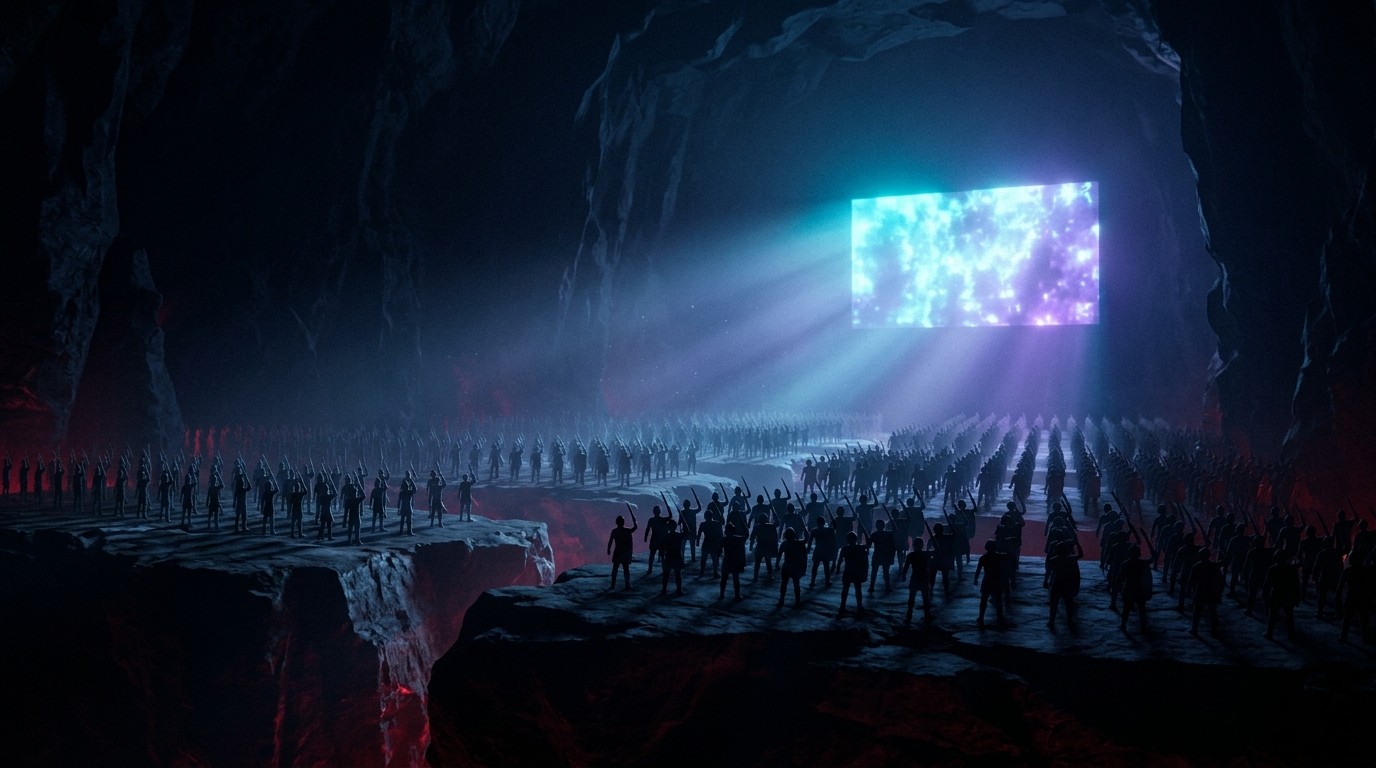
There’s a moment in Patapon where your spear-throwing Yaripons lock rhythm, the screen pulsing red at the edges, and your entire army chants the same four-beat command back at you. In 2007, on a PSP, that was already hypnotic. In a VR headset, with the game’s paper-cutout army filling a theater-sized virtual screen a foot from your face, it feels less like you’re playing a handheld game and more like you’re conducting a tiny, violent orchestra.
That experience is real. It’s just not the VR experience you might expect. Patapon never got a native VR mode, a PSVR patch, or a 6DOF mod. What it got is PPSSPP VR — a standalone OpenXR build of the PSP emulator for Quest and Pico headsets — and inside that emulator, Patapon runs beautifully.
The VR Reality: One Real Path, a Few Dead Ends
If you want Patapon in a headset today, your practical options narrow down to one. The 2025 PC remaster, PATAPON 1+2 REPLAY, is a Unity IL2CPP game, which immediately rules out UEVR — praydog’s framework only hooks Unreal Engine titles. There’s no VorpX profile worth mentioning, no community “Full VR Mod” on Thunderstore or GameBanana, and certainly no official VR support from Bandai Namco. I checked the store pages, the mod communities, the GitHub repos. The field is empty.
What exists is PPSSPP VR, maintained by lvonasek and sideloaded via SideQuest. It’s a PSP emulator wrapped for standalone VR, and it offers two ways to play Patapon. The first is a large, upscaled virtual screen with proper 3D depth and your choice of environment. The second is an experimental 360° “in-game” mode that drops you inside the 2.5D world.
Only one of those two modes is worth your time.
Virtual Screen: The Honest Sweet Spot
The virtual-screen route is where Patapon in VR makes sense. Patapon is a rhythm strategy game built around precise timing and clean visual readability. You issue commands with four drum beats mapped to face buttons, watch the tribe respond, and manage unit composition between missions. None of that needs motion controls. What it needs is a big, crisp screen with no distractions and a gamepad that feels familiar.
PPSSPP VR delivers exactly that. The PSP’s native 480×272 image gets upscaled well past its original resolution, the colors pop, and the audio — the chanting, the drums, the little Patapon war cries — fills the headphones without compression artifacts. I found myself leaning into the beat in a way I don’t on a monitor. Something about the enclosed headset and the giant floating screen makes the rhythm loop more absorbing. The game is already trance-like; VR just removes the rest of the room.
Setup is moderate, not trivial. You need SideQuest, developer mode on your headset, and a legally owned Patapon PSP ISO. The VR build has no on-screen keyboard, so if you want to change multiplayer strings or tweak deep settings you hand-edit ppsspp.ini. The reward is a clean, comfortable, efficient way to replay one of the PSP’s best games.
The 360° Mode: Interesting, Unfinished, Probably Skip It
The experimental 360° mode is where the concept of “Patapon VR” gets ambitious and then immediately trips. It places you inside the game world, so you can look around the flat, layered battlefield with your head. The problem is that Patapon was never built for that perspective. The layered sprites, the fixed camera, the UI anchored to a 2D plane — all of it breaks the illusion as soon as you move. You’ll see artifacts, popping elements, and a scene that wasn’t designed to be viewed from an arbitrary angle.
It’s not nauseating in the traditional locomotion sense — there’s no free movement — but it’s disorienting in a way that fights the game’s rhythm. After ten minutes I went back to the virtual screen and didn’t look back. Consider the 360° mode a tech demo, not a way to actually play the campaign.
What Doesn’t Work (And What Doesn’t Exist)
The PC remaster is the elephant in the room. It looks cleaner, runs at modern resolutions, and bundles the first two games. For anyone hoping UEVR would make it a framework-based VR title, the answer is no — the game is Unity, not Unreal. The mod scene around it is active, but it’s focused on quality-of-life fixes, audio restoration, and input tweaks. Nobody has built a full VR renderer for it, and given the game’s fixed-camera rhythm design, that kind of conversion would be a major bespoke project rather than a profile drop.
VorpX is technically possible in the sense that VorpX can hook a window, but Patapon’s sprite-based rendering doesn’t give VorpX the geometry it needs for meaningful stereoscopic 3D. You’d end up with a big flat screen and a lot of configuration for no real gain. The standalone emulator is a better screen, with better performance and less friction.
There’s also the Paradiddle + BOME + PPSSPP desktop setup some people have shown off — using a VR drum app to hit real drums that map to the PSP’s face buttons. It’s a fun input hack, but the game itself stays on a flat monitor. It’s not a VR version of Patapon; it’s a VR controller for a flat game. Worth a YouTube watch, not worth building unless you already own the drum rig.
Comfort, Performance, and Why It Just Works
Patapon is light on hardware. On a Quest 2 or newer, or a Pico 4-class headset, PPSSPP VR runs the game at full speed without breaking a sweat. The virtual-screen mode is comfortable for long sessions — there’s no artificial locomotion, no camera whip, no motion sickness risk beyond the tiny head-bob of your own posture. Battery life is the real limit; I drained a Quest 3 before the game ran out of missions to offer.
Input is best with a Bluetooth gamepad. The PSP face-button mapping maps cleanly to modern pads, and the timing window for drum commands is forgiving enough that wireless latency isn’t a problem. I would not try to map this to motion controllers; the game wants four discrete buttons hit on the beat, and nothing about waggling matches that.
The Bottom Line
Patapon in VR is not the full conversion I’d love to see. There is no 6DOF mod, no official port, no hand-tracked drumming, no VR UI built around the little eyeball warriors. What exists is an excellent PSP game running on an excellent virtual screen, with an experimental 360° mode you can safely ignore.
For Patapon fans who already own a Quest or Pico, that virtual-screen version is genuinely worth the sideload. The game is timeless, the art style is perfect for a large floating display, and the rhythm-loop becomes more absorbing when the rest of the world is blocked out. It’s not the most transformative VR experience you’ll have this year, but it’s one of the most distinctive handheld classics you can finally play with a headset on.