
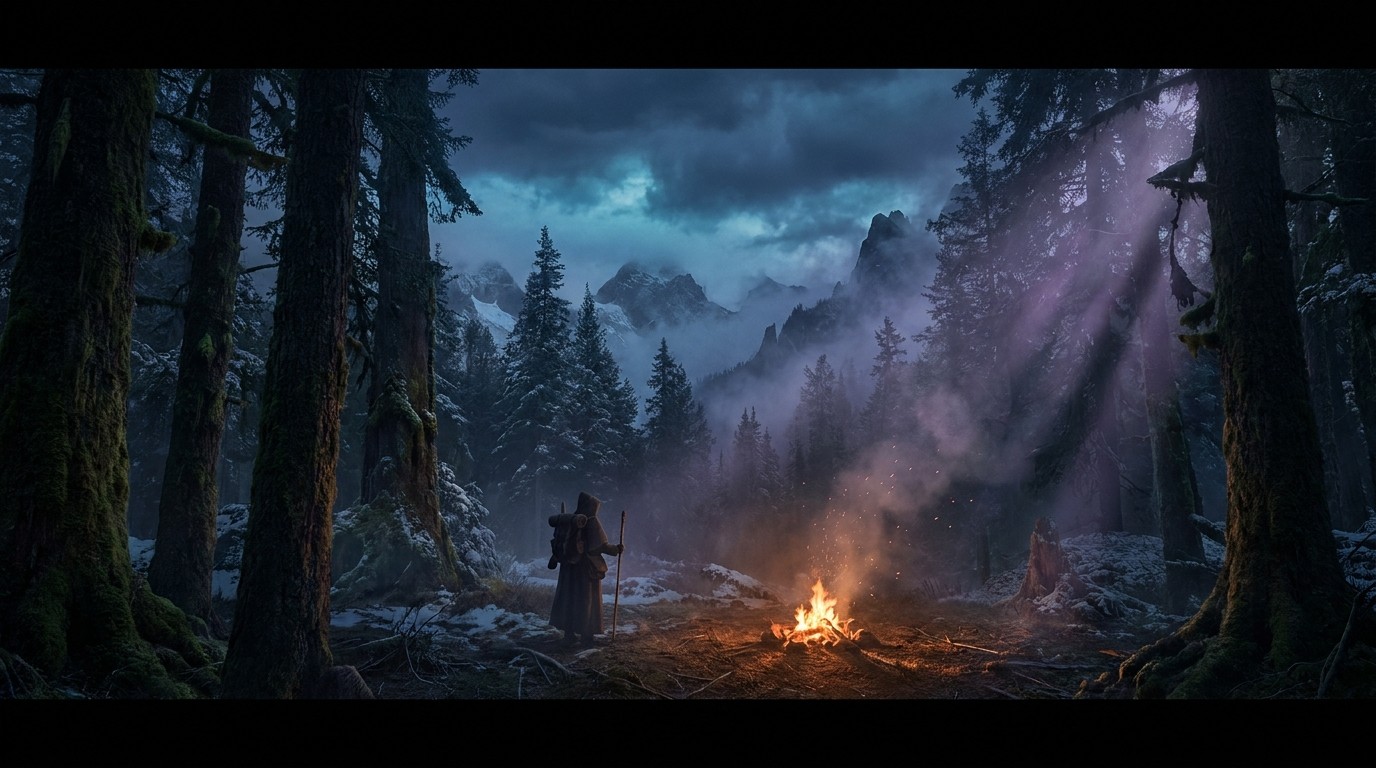
I spent a weekend in the headset getting mauled by a boar because I wound up my sword arm a half-second too early and caught nothing but air. In Outward that miss is not a respawn. It is a night on the cold ground with no torch, shivering, wondering if you will see the map again.
That is the game. And now, thanks to a maintained community fork, that game is not just playable in VR — it is worth playing there.
What the VR option actually is
Outward never got official VR. What it got is the Outward VR mod, a community-built first-person conversion for the Definitive Edition that has since passed into a maintained fork. The original 2023 beta by cybensis was the proof of concept; this current build is the one that actually works on the latest Outward Definitive Edition build, and it has been meaningfully improved.
The fork strips out the old full-body player rig and replaces it with proper hands and held weapons. It keeps full 6DOF head tracking, adds snap turning, tightens the melee response, and fixes a pile of compatibility and quality-of-life issues that made the beta feel like a science experiment. It is still a mod, still built on top of a flat game that was never designed for a headset, but the gap between “technically VR” and “actually good VR” has closed a lot.
Getting it running
Setup is shorter than the game itself suggests. You need Outward: Definitive Edition on Steam and the mod installed through BepInEx. The maintained fork handled the current build compatibility, so the old “opt into the Mono beta branch” dance is not the gate it used to be. Within a few minutes I was squatting by a campfire, physically leaning in to read the kindling prompt.
No step-by-step here — the mod page and community guides cover that. The relevant point is that the friction is moderate, not expert. If you have installed a BepInEx mod before, this is familiar. If you have not, it is a reasonable first project.
How it plays now
Here is the biggest change: the motion controls now feel like Skyrim’s, in the good way. Swinging your arm swings your weapon. Holding a weapon out in front of you blocks. The response is quick enough that combat becomes about timing and spacing, not about fighting the input layer. That alone moves the mod from novelty to legitimate way to play.
The old full-body rig is gone. You no longer look down and see a weirdly puppeteered torso with your real head glued onto it. You have hands. The weapon in your right hand is the weapon you equipped. A lantern, a shield, a two-handed greataxe — it is actually in your grip, not an abstract flag on an invisible body. That change sounds cosmetic, but it rewrites how the survival loop lands. Eating, blocking, lighting a torch, drawing a bow: these are physical actions now, and Outward’s whole design is built around those exact actions mattering.
Snap turning is the other quiet hero. The world is big and you will spend a lot of time walking it; smooth turning in a game this dense gets old fast, and snap keeps the comfort level sane without breaking the first-person presence. Head-bob stays off by default, and there is still a gamepad fallback when your arms need a break. The mod reaches further than the motion-only setup alone.
What survives the conversion
Outward’s whole pitch is that you are a nobody, a commoner who owes a blood debt and will probably die in a ditch. First-person VR makes that landing better than the flat game ever did. The survival loop stops being a checklist of meters and becomes your body’s problem. You feel the cold because the screen is dark and close. You eat because the stamina bar is your arms. You panic when the sun drops because you are actually standing in the woods. There is a specific thrill in physically winding up a two-handed swing against a cave creature that has been hunting you for ten minutes.
The world is the point. Aurai is big, stubborn, and full of factions that remember what you do. Quests have deadlines measured in months, not minutes. For an RPG fan, that is exactly the kind of place worth a headset. The base game also supports two-player co-op, online or split-screen, and while co-op in VR is not the primary selling point, the underlying systems are intact.
What is still jank
It is not native-grade VR. No one is going to mistake this for a studio-built Half-Life 2 VR port. You will still clip through geometry. You will still find a menu that renders too close or too far. You will still occasionally holster a weapon and watch it do something odd. None of it broke my sessions, but all of it reminded me that I was standing inside a conversion, not a ground-up VR game.
The combat is good now, genuinely, but it is not finished-polish good. Some enemies telegraph in ways that were clearly tuned for a third-person camera. Some weapon arcs feel better than others. And while the maintained fork fixed the worst of the beta breakage, Outward itself is a complex RPG with years of patches and DLC — edge cases exist, and the fork will keep chasing them.
Performance and hardware
This is still a modest Unity game underneath. The fork improved performance enough that a mid-range PC handles it cleanly, even with the VR overhead. I never fought the framerate. I fought the boar. That is the right problem to have.
Why it earns an A
The A is not charity. Outward VR is now one of the better full 6DOF motion-control mods on PC, and it is one of the only ones that gives you a real open-world RPG — factions, crafting, survival, co-op, long quests, and consequences — in a headset. The maintained fork did the unglamorous work: compatibility fixes, proper hands, held weapons, snap turning, better performance, QoL. The result is a cold, punishing, genuinely interesting RPG that you can physically stand inside and swing through.
The caveats are still real, but they are honest mod caveats, not lies. If you came for a polished action game, this will frustrate you. If you came for a survival RPG that punishes carelessness and rewards patience, put the headset on, bring a torch, and do not miss the boar.