
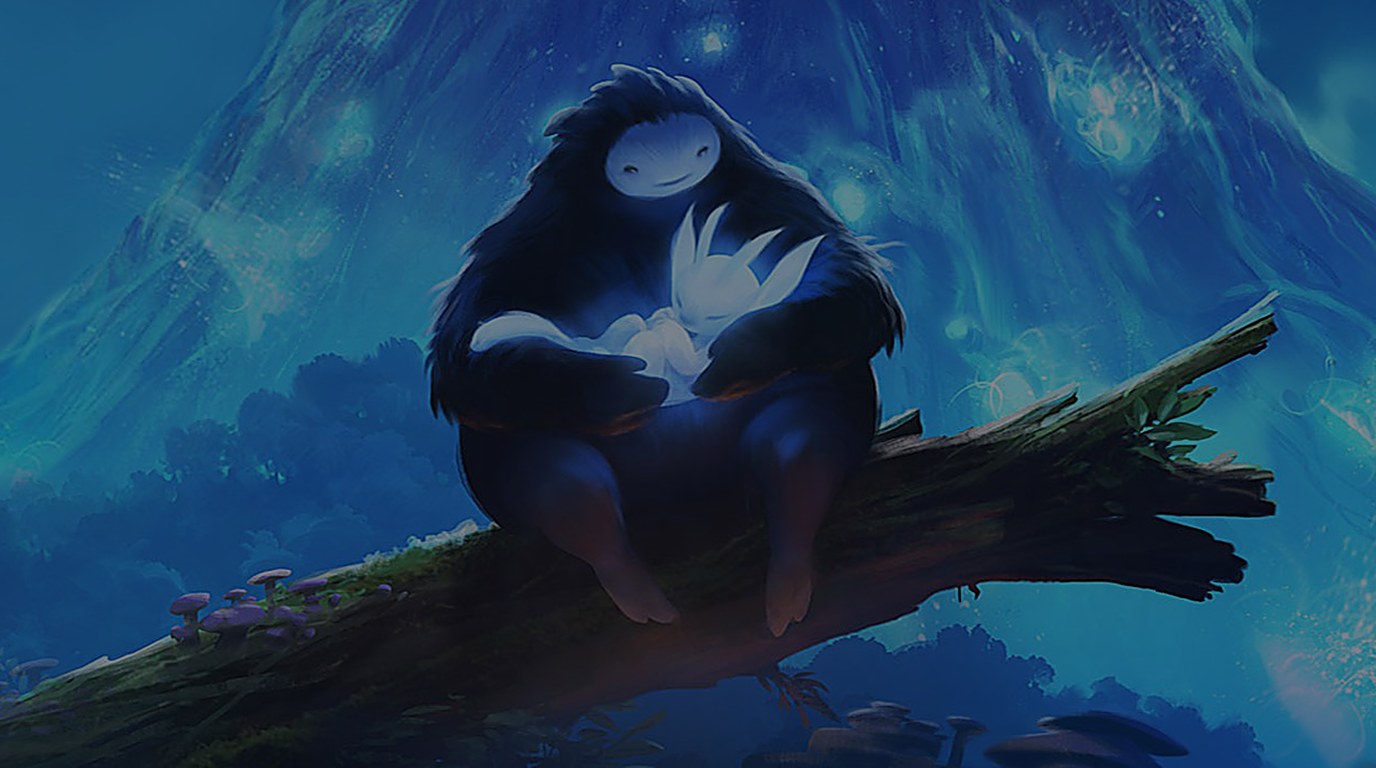
The first time the screen goes black and Ori’s glow flickers to life in the Inkwater Marsh, something clicks that a monitor never delivered. On a curved virtual cinema wrapped around your peripheral vision, that tiny white spirit carries real weight — the darkness of the cave closes in behind you, and the score swells in a way that flat speakers never sold me. I’ve replayed Ori and the Blind Forest more times than I’ll admit, and seeing it this big, this dark, this quiet, reminded me why it landed so hard in 2015.
Here’s the catch, and you need to hear it before you fire anything up: this isn’t Ori in VR. It’s Ori on VR.
What you’re actually getting
The only way to put Ori in a headset is VorpX, and for this game VorpX only manages Virtual Cinema mode. That means the game renders to a large, fixed virtual screen floating in a dark void — not stereoscopic 3D, not room-scale, not a single degree of six-degree freedom inside the world. Geometry 3D and Z-Normal 3D are both unsupported. You get a big beautiful monitor strapped to your face, with head tracking that lets you lean and look around the cinema, not the forest. No motion controls. No hand presence. No VR UI. You’re watching, not inhabiting.
That’s a weaker result than most VorpX jobs, where at least G3D gives you real depth. For Ori, the depth that makes the layers of the background art pop on a flat screen is just… gone, replaced by the flatness of a cinema projection. What survives is scale and isolation — and for a game this painterly, scale and isolation do a lot of work.
Setup is moderate, not scary. Buy VorpX, own the Steam version (the Windows Store / GamePass build will not hook — VorpX can’t inject into its sandboxed DRM, and several people have burned an afternoon trying), launch SteamVR, launch the game, and flip VorpX into Cinema mode with head tracking locked. Controller or keyboard both work; I played with a gamepad and never reached for the mouse.
How it actually plays
The surprise is how little the flatness hurts the look. Ori’s art is built from hand-animated layers and a lighting system that was ahead of its time, and on a virtual cinema those layers still read as depth even without true stereo — your brain fills in what the projection lacks. The Ginso Tree escape, where the water chases you up through a collapsing cavern, plays like a animated short projected fifteen feet tall. The Spirit Tree’s narration lands harder when the voice is coming from everywhere. For a game that’s basically a moving painting with a superb soundtrack, the cinema treatment is a genuine upgrade over a laptop.
The weakness is unavoidable and you’ll feel it the moment you move. Ori is a fast 2D platformer — dashing, wall-jumping, bashing upward into a barrel spin, the camera whipping with you. On a virtual screen that motion stays locked to the projection, so instead of being Ori you’re watching a very pretty video of someone else being Ori, slightly too close to the screen. The Forlorn Ruins stretch, where the whole world flips upside down, is the most disorienting ten minutes in the headset — not because of VR sickness exactly, but because fast 2D camera motion on a fixed screen is its own kind of churn. One caveat for the stomach: if rapid screen movement gets to you, pace those sequences.
Performance is a non-issue. This is a 2D Unity game — it runs at cinema framerates on modest hardware, and VorpX’s overhead is trivial next to a real VR title. I saw a faint screen-door shimmer on Ori’s character when perfectly still, which is just the fixed-screen resolution showing through, but it vanishes the second you move.
The honest trade
Strengths here are the game itself, not the VR. Ori is one of the best Metroidvanias ever made — the platforming tightens from tricky to thrilling, the ability tree opens the map like clockwork, and the ending still earns its silence. Seeing that on a private screening room of your own is a lovely way to revisit it, and for owners of VorpX who love the genre, that’s a real recommendation. The art and Gareth Coker’s score were made for a dark room and big sound.
Weaknesses are everything VR is supposed to add and doesn’t. No presence. No “I’m standing in the forest” moment — you’re in a theater. No reason to reach, duck, or lean into the world, because the world isn’t around you. And because it’s Virtual Cinema only, you’re missing the one thing VorpX usually contributes to make a flat game feel headset-native. If you don’t already own VorpX, this is not the game to buy it for; there are flat-to-VR jobs that actually put you inside the world, and Ori isn’t one of them.
This is a C-tier experience by the only metric that matters: the flat version is just as good or better, and the headset mostly trades a bigger screen for the convenience of your own monitor. It’s a wonderful game seen wonderfully large — but it’s a screening, not a world.
If you’ve already got VorpX and a soft spot for Moon Studios, load it up on a dark night and let the Ginso Tree sequence run. If you don’t, play Ori on the TV it deserves and save the headset for something that lives there.