
I spent a Tuesday night in the headset building a pistol that shoots lightning out of one barrel and shotgun pellets out of the other, then immediately got swarmed by a wall of bullets and had to limbo under them like an idiot. Twenty minutes later I was still grinning. MOTHERGUNSHIP: FORGE doesn’t ask you to be good at VR — it asks you to be willing to move, and rewards the willingness with a gun-crafting toybox that’s worth the price of admission on its own.
What FORGE actually is
FORGE is a VR-native roguelite shooter built by Terrible Posture Games as a spinoff of the flat 2018 PC/console game MOTHERGUNSHIP. The key word is native — this isn’t a flat game with VR bolted on after the fact. It was designed around tracked controllers and room-scale from the first line of code. You buy it on the Meta Quest Store or Steam, put the headset on, and you’re in. No mods, no profiles, no framework. The VR version is the only version.
It runs standalone on Quest 2 and on PCVR through SteamVR or OpenXR, covering Index, Vive, Reverb G2, and Quest via Link. That’s a broad reach for a VR shooter, and it’s the real deal on both — the Quest 2 build isn’t a stripped-down afterthought.
The gun-crafting is the whole point
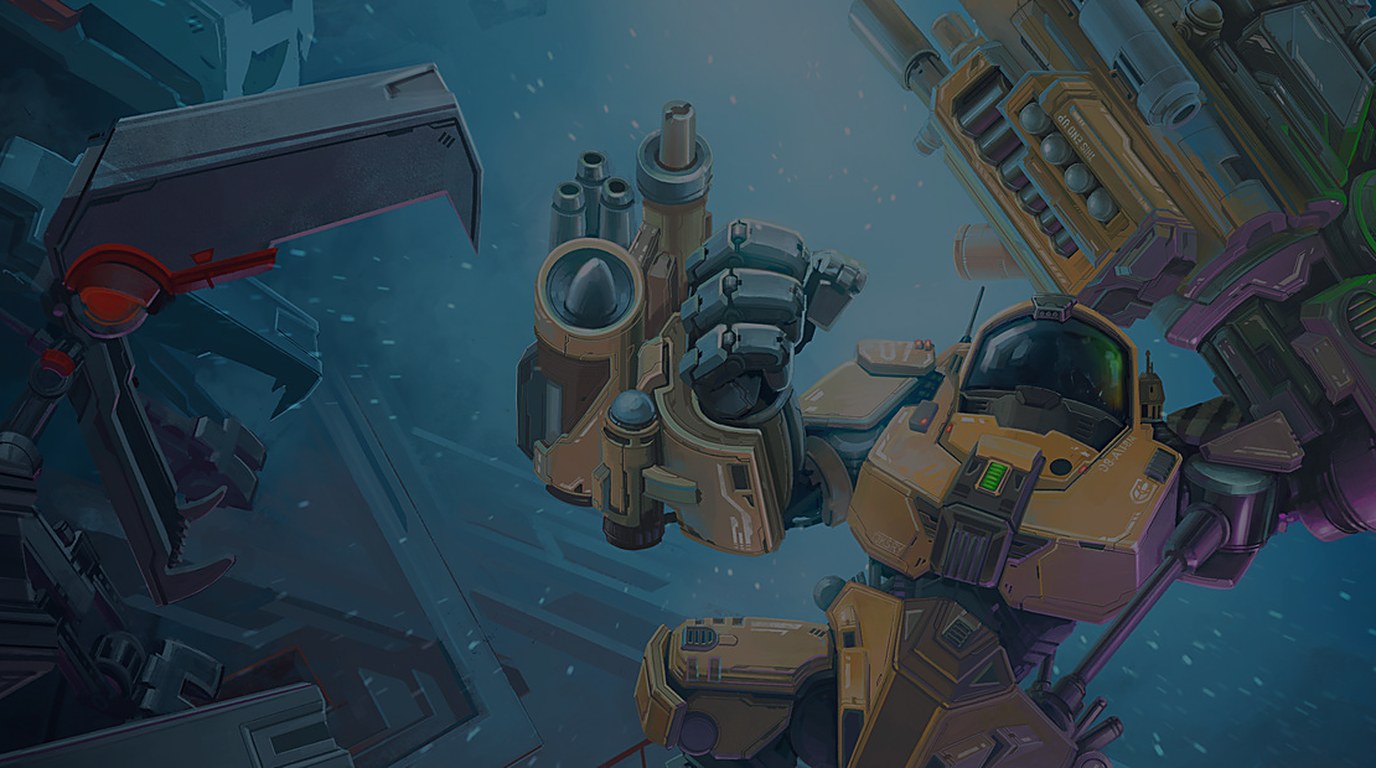
Here’s the hook that separates FORGE from every other VR shooter: you build your guns with your hands. Parts float in front of you — barrels, grips, stocks, scopes, weird energy cores — and you grab them, snap them into place, and watch a functioning weapon assemble in real time. Two barrels? Sure. A shotgun grip feeding a railgun? Go for it. The game hands you a parts bin and says “make something stupid,” and the stupid part is most of the fun.
What sold me wasn’t the novelty of snapping pieces together. It’s that the building happens under fire. You’re in a bullet-hell arena, bullets are coming at you, and between waves you’re reaching out and reconfiguring your loadout with your actual hands. The act of crafting stops feeling like a menu and starts feeling like part of the combat. I rebuilt a janky two-shot pistol into a sustained plasma hose mid-run because the next room looked mean, and that decision felt like mine in a way loadout screens never do.
Then you dodge with your body
The other half of FORGE is the bullet hell, and this is where the room-scale design earns its keep. Enemies spray patterns at you — spirals, walls, sweeping arcs — and you don’t strafe with a stick. You lean, duck, step sideways, limbo under a high shot, and the game even lets you literally punch through slow bullets with your controller when you’re cornered. Your real body is the dodge mechanic. That turns what could be a passive “stand and shoot” loop into something physical and a little absurd.
The game leans on room-scale movement, but a seated mode and a free-movement mode — dodging with the controller instead of your body — are both in the settings if you’d rather stay put.
What’s genuinely good
The physicality is the headline, but the loop underneath holds up. It’s a roguelite, so each run throws different parts, enemies, and room layouts at you, and the randomization kept me coming back for “one more run” in a way that pure arena shooters rarely manage. The gun-crafting means no two loadouts play the same, and discovering a combo that trivializes a room feels like a personal victory.
Co-op landed in a post-launch update and it’s the right kind of chaos — two people building absurd guns and yelling about bullet patterns is better than solo, and the co-op campaign gives the structure some backbone beyond endless arenas.
On the hardware side, this is approachable. It runs on a standalone Quest 2, so you don’t need a beefy PC to play, and the PCVR version isn’t demanding by modern standards. You can hand this to a friend who owns a Quest and they’re playing in under five minutes.
Where it wears thin
FORGE is an arcade roguelite, not a story game, and it doesn’t pretend otherwise. There’s no world to inhabit, no narrative pulling you forward — you’re here to build guns and survive bullet storms, and once that core clicks, what’s left is the loop itself. For some players the randomization stops feeling fresh after a dozen hours and the runs start to blur together. That’s the natural ceiling of the genre, not a flaw unique to FORGE.
The difficulty is also honest-to-god punishing. Bullet-hell means bullet-hell, and early runs will chew you up while you learn enemy patterns. That’s a feature for the people who like it and a wall for the people who don’t. You will die a lot before your builds get good, and the game is fine with that.
Who should put the headset on
If you already like roguelites, horde shooters, or just the feeling of physically doing something in VR rather than pushing a stick, FORGE is an easy yes. The crafting hook is the kind of idea that only works in VR, and the body-dodging gives the shooting real stakes. Skip it if you want a story, a calm pace, or a game that holds your hand — this one wants you sweaty and laughing at your own deaths.