
The Gas Mask Is the First Thing You Touch
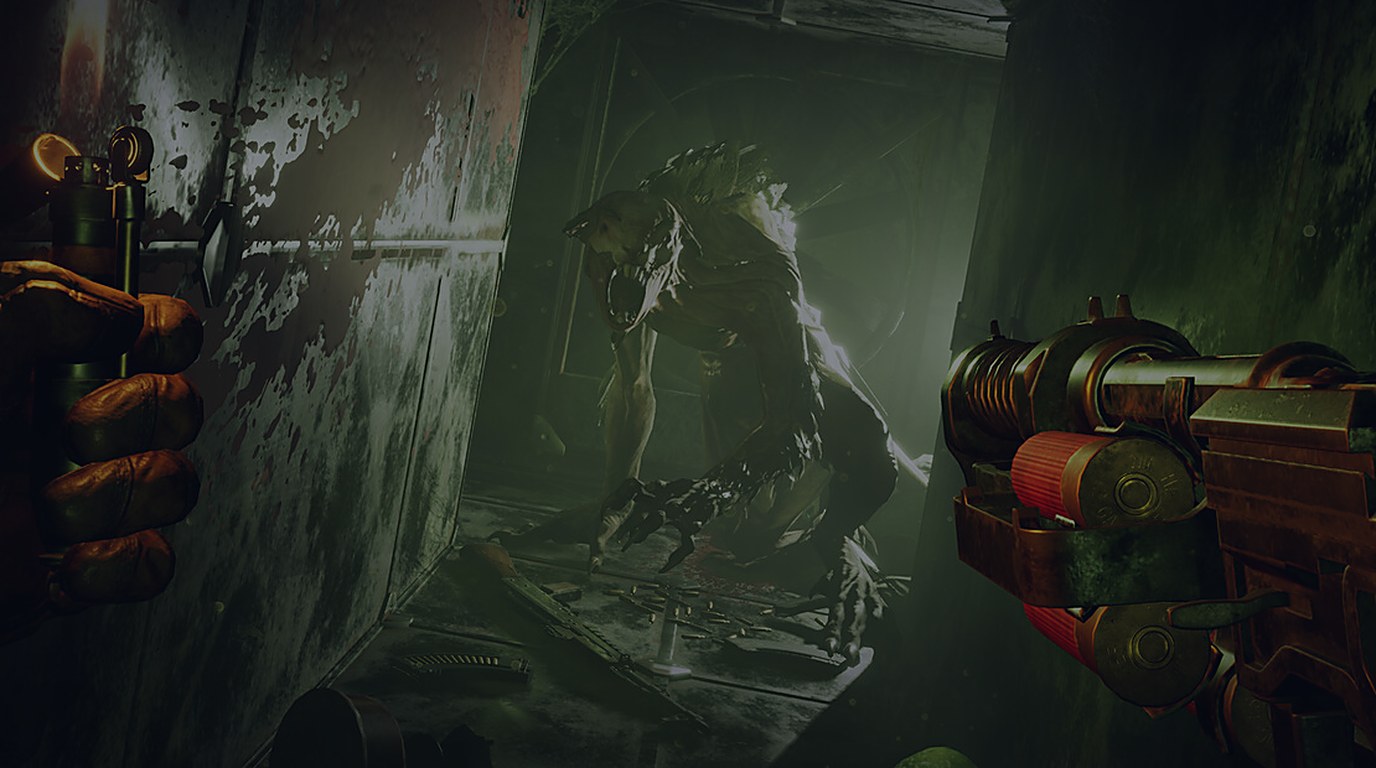
The first time you wipe the inside of your gas mask, you do it with your own hand. Fog has built up on the glass, the tunnel ahead is black, and you drag your palm across the lens to clear it — not a button prompt, not a canned animation, your own hand reaching up and smearing the condensation away. That’s Metro Awakening in one gesture.
It’s a survival horror built from the ground up to be lived inside a headset. Vertigo Games — the studio behind Arizona Sunshine — made it with Deep Silver and Metro novelist Dmitry Glukhovsky, and there is no flatscreen version to fall back on. This is the Metro world filtered through a headset from the first line of code: the Moscow underground in 2028, five years before Metro 2033, where you play Dr. Serdar, a physician hunting for his wife, and the story doubles as the origin of the series’ prophet, Khan.
Metro Awakening doesn’t need the usual retrofit work. You buy it on your platform’s store and you’re in. Three builds shipped at launch — PCVR on Steam and Viveport, PSVR2 on PlayStation, and a standalone Quest 2/3/3S app — all native, all with tracked controllers and full 6DOF. No mod, no injector, no profile to chase. The interesting question isn’t whether the VR works; it’s how different the three versions feel once the lights go out.
Your Hands Are the Loadout
Every weapon reloads by hand. You pull the magazine, fish shells from a chest pouch, thumb them into the tube, and work the charging handle — and the game never takes that away from you to play a cutscene. Road to VR noted you can inspect and articulate your gun however you want rather than being stuck watching a canned animation, and the holster gestures are just as physical: reach over your left shoulder with your right hand to stow a pistol, pat your chest for the round you swear you had.
The flashlight is the same story. Its battery dies, and you crank a hand charger to bring it back — a two-handed gesture that has you winding furiously while something scratches in the dark behind you. The gas-mask wipe is the most human moment in the whole game, but the reload-and-crank loop is what makes you feel like you’re actually surviving instead of clicking through it.
Inventory lives on your body, not in a menu. Pouches, slings, and slots are mapped to physical locations you reach for, which means the tension is real: in a firefight you’re not alt-tabbing to a loadout screen, you’re patting yourself down for the magazine you think is there. The trade is that there’s no visible body — you’re floating hands and a chest rig, and the game never shows you arms or legs. It works, but it’s a reminder that the world is built around what your hands can reach, not what your avatar is wearing.
What the Tunnels Do to You
Horror in VR lives in the weight of a space you can’t see the end of. Metro Awakening is claustrophobic by design — low ceilings, steep stairwells, narrow service tunnels where the flashlight beam dies ten feet out. The first half of the game is the strong one. UploadVR called it mesmerizing and said it would haunt players after the credits; the atmosphere, the audio, and the constant low-grade dread of not knowing what’s around the next bend land harder in a headset than any flat horror game could manage.
The Metro series has always been about scarcity and silence, and VR sharpens both. You hear dripping, distant gunfire, and the breathing of things you can’t see. The stealth works because you’re actually leaning around corners and peering into black space, not watching a third-person avatar do it. When the scares come, they come from presence — something touching your headset-space, not a jump-cut.
Where the Air Runs Out
The back half drags. Road to VR called the second half padded and uninspired, and the structure shows it: station layouts start repeating, the scares thin out, and the object interactivity never deepens past what you could do in hour two. You keep moving through tunnels that look like tunnels you’ve already cleared, and the momentum that carried the first act dissipates. It’s a structural problem, not a comfort one — I never felt sick, I felt like the game had run out of ideas before it ran out of levels.
That repetition is the difference between a great VR horror and a very good one. The world is real Metro, the gun feel is excellent, and the atmosphere is the best the series has managed in a headset. But the second half asks you to do the same things in the same rooms, and the story that opened with a man searching for his wife settles into familiar stealth-shooter beats. A 7.5-to-12-hour spread in reviewer playtimes tells the same story: how much you get out of it depends on how much the back half holds your attention.
The comparison that hangs over everything is Half-Life: Alyx. Both are native VR shooters built by studios who knew the medium, both lean on atmosphere and physical interaction. Metro Awakening doesn’t clear that bar — that’s the gap between Half-Life: Alyx and a very good genre piece. It’s a strong entry, not the defining one.
Three Builds, Three Tunnels
The three launches are the same game with very different picture quality. On PCVR and PSVR2 the lighting, textures, and models are noticeably richer — Road to VR said those two versions look significantly better than the Quest build thanks to better assets and much better lighting. PSVR2 uses the Sense controllers and headset haptics well, and it’s one of the stronger horror titles on that headset. The standalone Quest build runs on Meta’s Application Spacewarp, which keeps it playable but brings visible artifacts; it’s a fair trade for a wireless headset, but it is the softest of the three.
Comfort is handled with a full modern suite: snap, quick, and smooth turning, teleport movement, vignette blinders, seated and standing modes, real and artificial crouch, and adjustable difficulty. The setting does the heavy lifting against your stomach — cramped stairs and scripted horizon shifts can be rough for some players, and the game opens with a mandatory arachnophobia warning because spider sequences put them on your head and face. If spiders in your headset space are a hard no, this one will test you.
Performance sits at a moderate demand. PCVR wants a real gaming rig; the Quest build is tuned for standalone but leans on spacewarp to hold frame rate. No version is unstable in my reading of the coverage — it’s a native title that simply looks best where the hardware allows.
The Verdict From the Dark
Metro Awakening is the real thing: a Metro game that was always going to be VR, with manual survival mechanics that make the underground feel lived-in and a first half that genuinely haunts. The back half coasts on repeated spaces and thinning scares, and the Quest build is the weakest of three, but neither spoils what’s up front. If you’re a VR horror fan or a Metro loyalist, this is an easy yes on PCVR or PSVR2 and a qualified yes on Quest. If you’re on the fence, wait for a sale and go in knowing the second act is where the air runs out. It’s a recommended night underground — just don’t expect it to hold its breath the whole way through.