
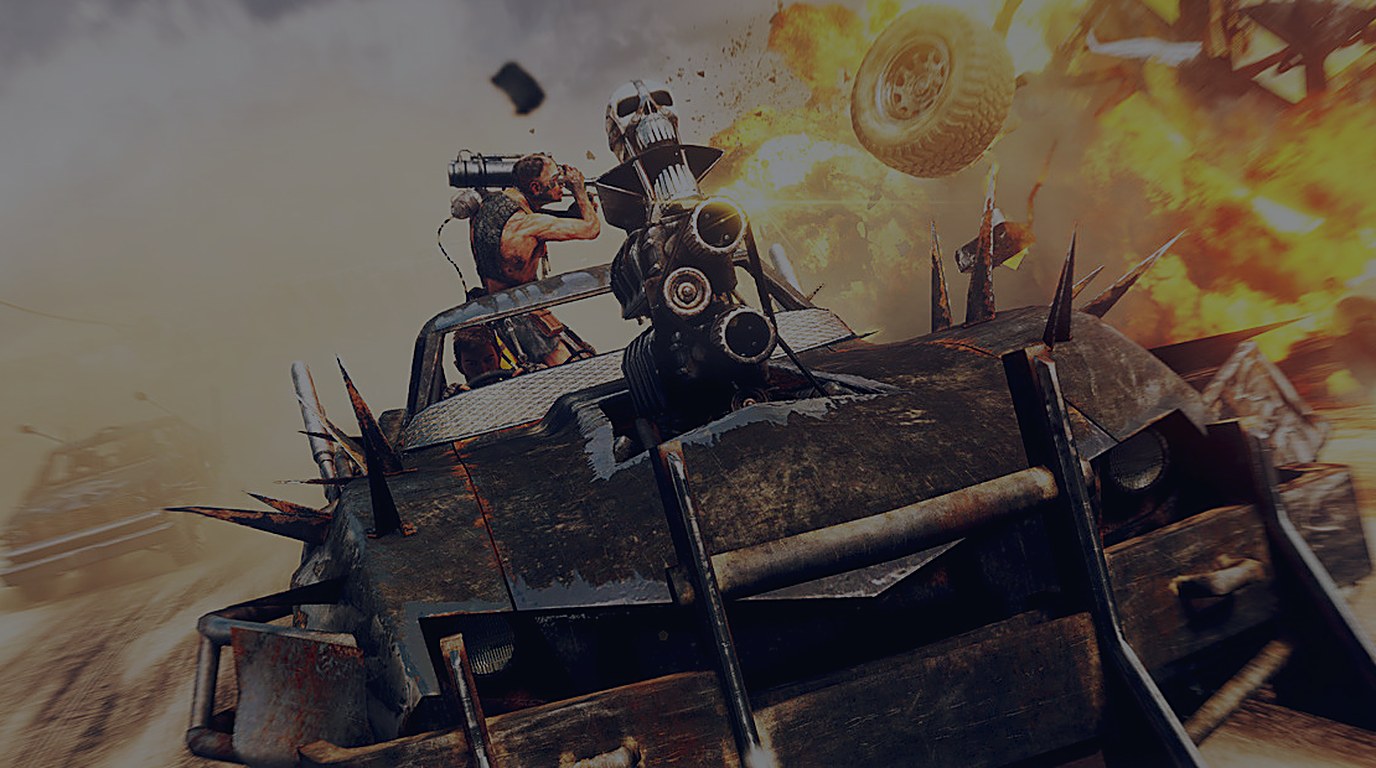
I spent a weekend behind the wheel of the Magnum Opus, and here’s the thing: Mad Max was never built for VR. Avalanche never shipped a headset mode, nobody has done a full conversion, and the engine under the hood — Avalanche’s own Apex tech, not Unreal — means the UEVR crowd can’t touch it either. What you’ve got is one option: a VorpX profile someone built by bending a Unity engine profile until Mad Max fit inside it. Against the odds, it works well enough to be worth a look.
What this actually is
The way in is VorpX, the injection driver that takes a flat game and bolts on stereoscopic 3D plus head tracking. This isn’t a port. There are no motion controls, no hand presence, no VR UI — you’re looking at Mad Max through a 3D window that follows your head. The profile lives in VorpX’s cloud, not on the official supported-games list, which tells you how sanctioned this is: a community hack that happens to hold up. What it delivers is G3D, real geometric depth rather than the Z3D fake-out, and that distinction is everything.
The Steam build carries Denuvo, and VorpX injects straight through it without complaint — I ran the whole thing on the store version. Getting it looking right takes real effort, though: you load the cloud profile, kill shadows in the settings file, and nudge the FOV in VorpX’s capture mode before the image settles. Advanced setup, no question. Performance sits at moderate demand — the 2015 engine is light on its own, but drawing the world twice for stereo at headset framerates wants a mid-range PC, and I kept supersampling modest to hold 90.
Behind the wheel is where it works
Mad Max is a third-person game, and roughly 60 percent of your time is spent driving — which is its salvation in VR. The stereoscopic 3D earns its keep the moment you’re moving. Punch the V key and the camera drops into the driver’s seat: gauge cluster, roll cage, Chumbucket muttering in the back, and a desert highway with actual distance in front of you. That’s the moment the whole thing clicks. Ramming a raider’s buggy and watching it spin off into the dust in proper 3D is the best the game has to offer, and it’s genuinely good. The harpoon pulls — wiring an enemy vehicle to an anchor and watching it get dragged — land with real weight when you can see the cable stretch across the 3D space.
The wasteland itself is the real star. Avalanche built a vast, sun-bleached open world, and stereoscopic 3D turns those long sightlines into something you can lean into. Canyons, scattered wrecks, heat haze on the horizon — the scale flat Mad Max always promised but flattened onto a monitor finally has depth. For a game this committed to “cars are survival,” the head-tracked cockpit makes the world feel inhabited in a way the flat version never did for me.
Where the window fogs up
On foot is where the illusion thins. Mad Max defaults to an over-the-shoulder camera, so you’re floating behind Max rather than being him. Head tracking lets you lean and look, but you’re still watching an avatar do the fighting. The free-flow melee reads fine in 3D, but without any body presence it stays a spectator sport.
The catches are real. The HUD only renders in one eye — minimap, waypoints, health, all pinned to your left eye while the right gets nothing. You stop noticing after an hour, but it’s there, and it’s the kind of thing that reminds you this is a hack, not a port.
The bigger problem is light. In the first couple hours, which take place in dark caves and underlit interiors, the stereo image tears itself apart wherever a light source hits — the depth just collapses in patches of your vision. Disabling shadows in the settings file helps, but those opening stretches are a worse experience than the flat game until you’re out in daylight. Even then, dynamic lights can still punch holes in the 3D. One note on comfort: the third-person camera whips around during fights, and the opening cave stretch is where the stereo image fights itself hardest, so if camera rotation makes you queasy, start with the driving — the high-speed stretches are calmer on the stomach than the brawls.
And the ceiling is what it is: no motion controls, no VR UI, third-person by default. This is a window into Mad Max, not Mad Max rebuilt for VR. You can’t reach for the shotgun. You can’t physically work the harpoon. You’re a passenger with a good view.
Worth the headset?
Here’s my take. If you already own VorpX and you’ve got a soft spot for the wasteland, this profile is an easy yes — the driving alone justifies an afternoon. If you don’t own VorpX, Mad Max is not the game to buy the tool for; there are stronger injection-driver experiences to justify that cost, and the third-person framing keeps you a step removed from the action. It’s a good way to revisit a decent game in 3D, not a reason to put the headset on by itself. For the die-hards, though, the Magnum Opus has never looked this good.