
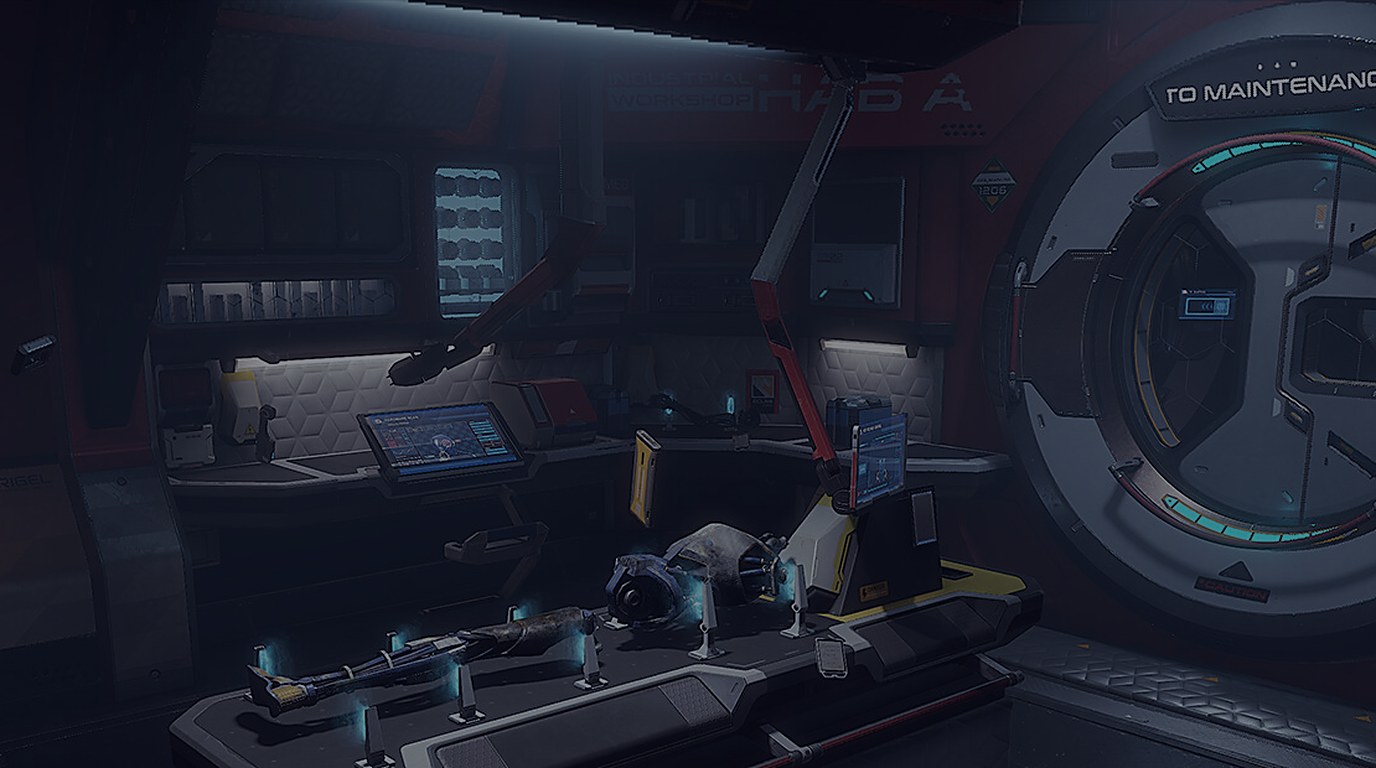
I grabbed the rail outside the airlock, tucked my knees, and pushed. No button, no stick — just my hand on the steel and my shoulders driving me off into the dark. For a second I was weightless in a way flat games have never once tricked me into feeling, drifting toward a station that had been dead for a century, and the only thing keeping me from sailing past it was my own grip on the next handhold. That’s Lone Echo II in a single motion: the best movement system VR has ever shipped, and a sequel that knows exactly what it has.
This is a VR-native title — there is no flat version, no port, no “VR mode” toggle. Ready At Dawn built it for the headset from the ground up, and it launched as a Meta/Oculus Rift platform exclusive. If you’re on the Oculus or Meta PC VR ecosystem, you buy it from that store and play; the official path is about as low-friction as VR gets. The catch, and it’s the one that earns the asterisk, is that there’s no Steam release and no native Quest standalone build. Non-Oculus headsets can try the community Revive compatibility layer, but at launch that path is unreliable — crashes on Valve Index, grey screens on WMR — so if you’re not in the Meta PC VR orbit, getting in is a gamble. That’s an access note, not a knock on what’s in the headset.
What’s in the headset is the reason this genre exists. Lone Echo II picks up the Jack-and-Olivia story — you’re an AI bonded to a human partner, exploring a decaying deep-space installation — and it spends its budget on exactly the things flat games can’t: presence, proximity, and the physical grammar of zero gravity. You don’t walk. You reach, you pull, you launch, you catch. Every surface is a handhold, every push is a decision about momentum, and after an hour your brain stops thinking about controls and starts thinking about trajectories. The original Lone Echo taught a generation of VR players this dance; the sequel refines it, widens it, and trusts you to move like you mean it.
The world rewards the movement. The station is built to be traversed in zero-g — long corridors you boost down, maintenance shafts you climb hand-over-hand, debris fields you thread by nudging off panels. Combat and puzzle work hang off the same system: you brace with one hand to fire with the other, you wrestle a panel open while drifting, you anchor yourself before a repair so the kickback doesn’t send you spinning. The physicality is the game. Your body is doing something real the whole time, and the motion controller grip sells every interaction — there’s no “pick up” prompt, there’s just your hand on the object.
The story is the other half, and it’s better than it had to be. The voice work, the quiet beats between Jack and Olivia, the slow dread of what happened on the station — this is narrative VR that respects your time and your intelligence. It won the D.I.C.E. Immersive Reality Game of the Year and the technical achievement award, and that’s not lobby politics; the rendering, the sound design that places a creak behind your left shoulder, the way the lighting goes cold when the power dies — it’s a showcase. If you want to show someone what high-fidelity VR looked like at the end of the Rift era, this is the demo.
Caveats, kept honest. The zero-g free-float can disorient motion-sensitive players until you acclimate, but the grab-and-push grounding keeps it manageable rather than nauseating. It’s a Heavy Demand title — pushing serious fidelity for its time, so you want a capable PC and a GTX 1080-class card or better to hold the frame. And it’s a Meta store exclusive, which means the easiest way in is a Rift, Rift S, or a Quest headset running through Link; everyone else is fighting Revive. None of that changes what the game is once you’re inside it.
Where it lands is not a hard call. Lone Echo II is the Rift’s swan song and one of the medium’s high-water marks — exceptional world, exceptional VR, body-doing-something-real from the first push-off to the last. If you have the Meta PC VR setup, it’s an unqualified yes and a reason the headset earned its shelf space. If you don’t, it’s the strongest argument I can give you for finding a way in.