
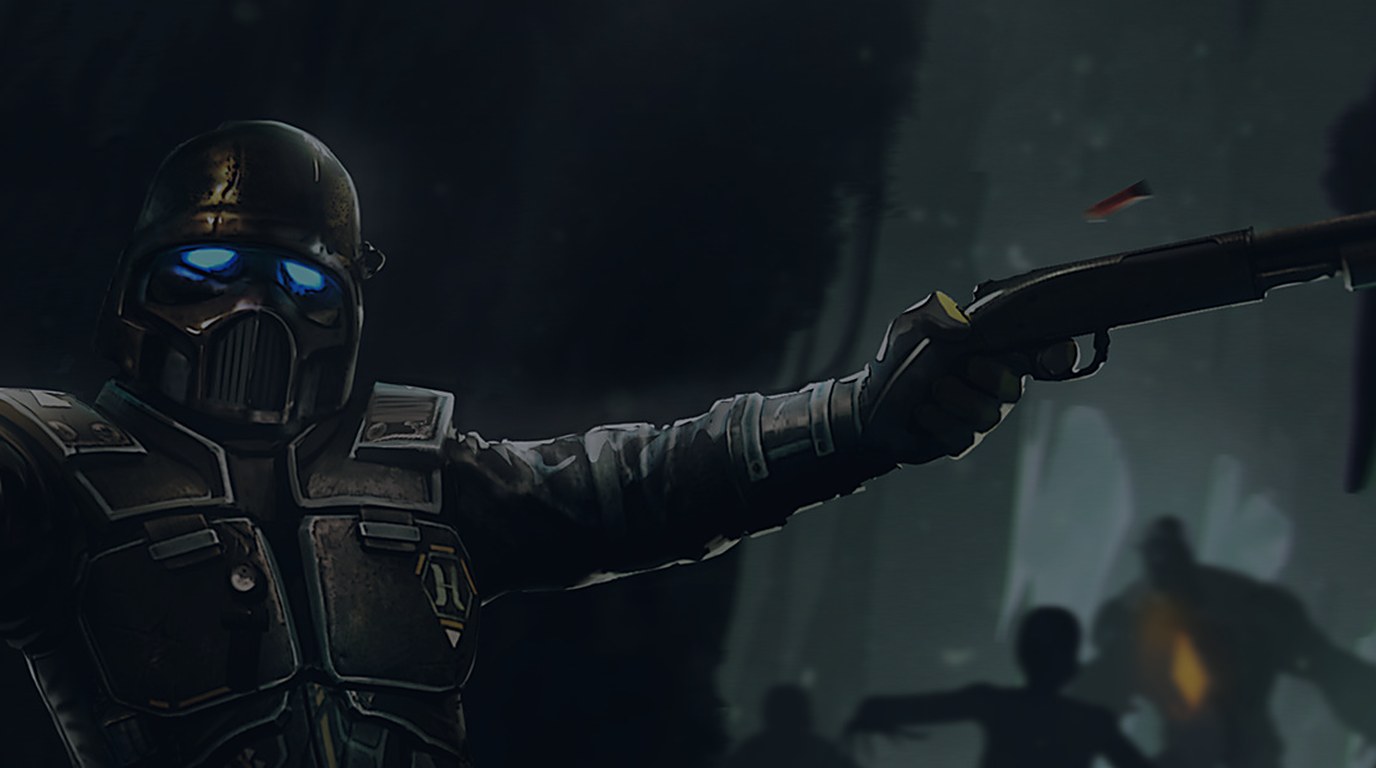
I pulled the pin on a grenade with my left hand, leveled a shotgun across my body with my right, and blew a gaping hole in a zed’s chest before the pin hit the floor. That’s the pitch for Killing Floor: Incursion in one stupid, satisfying motion. This is a VR shooter that wants your hands busy and your brain happy.
Incursion is Tripwire Interactive’s built-for-VR spinoff of the Killing Floor franchise — and there is no flat-screen version hiding behind it. This isn’t Killing Floor 2 with a VR toggle bolted on. It’s a separate game, its own storyline, its own Unreal Engine 4 build, and it will not talk to Killing Floor 2. If you owned KF2 expecting cross-play or a free VR mode, you own the wrong thing. Incursion is VR or nothing.
That separation is a strength. Because it was designed headset-first, the interactions don’t feel grafted on after the fact. You don’t press a button to reload — you reach back, grab a fresh magazine off your rig, and slap it home. You don’t tap a key to prime a grenade — you hook a finger through the pin and yank. That physicality is the whole reason the game exists, and it’s the part that actually lands when the horde shows up.
Getting in is about as heavy as buying a game gets. No mods, no loaders, no controller bindings to wrestle. You buy it on the Oculus Store or Steam — it carries the VR Only tag — install it, and you’re standing in a creepy farmhouse with zeds coming through the door. On PSVR it’s the same story through the PlayStation Store. The setup burden here is zero; this is the easy end of the VR spectrum, and it should be the template every native title shoots for.
The guns are the headline, and they earn it. Incursion hands you pistols, shotguns, axes, knives, grenades, and a spread of melee tools, and every one of them wants to be held. Two-handed aiming — one hand on the grip, the other steadying the barrel or working the pump — turns a shotgun from a stat line into a thing you’re shouldering. I spent a frantic minute with a zed clawing my shoulder, fumbling a knife out of my hip holster with my off-hand because both my guns were empty, and that scramble felt more like survival than any scripted set piece I’ve played this year. The weapon-on-back holstering means you’re constantly reaching, grabbing, swapping — your loadout is your body, not a menu.
Movement is teleport-based, which is the era-standard comfort call for a 2017 headset title, and on Rift, Vive wands, and PS Move controllers the tracking keeps up with the chaos. I never felt the tracking drop during a reload or a blind grenade toss behind my head. A VR shooter that loses your hand mid-mag is a broken VR shooter, and Incursion isn’t that.
Where it opens up is co-op. The campaign runs solo or with one other player, and the two-human version is where the game stops feeling like a competent tech demo and starts feeling like a night out. One of you pulls aggro with the shotgun while the other sets up a grenade line; you cover doorways you’d never survive alone; you argue about who forgot to grab the axe. The AI zeds — the series’ mutated, screaming horde — pressure you in ways that are far more fun to solve with a friend shouting in your ear. If you have one person to drag into this, the experience roughly doubles. If you’re strictly solo, you’re still fine, but you’re getting the lesser version of the same game.
The campaign ends too soon
The story campaign runs short — you’ll burn through it in an afternoon, somewhere in the four-to-six-hour range depending on how often you die and how much you poke at the environment. The settings are great while they last: the farmhouse opening, a stretch through the Paris catacombs, a few other genuinely atmospheric beats. Tripwire built real dread into the spaces. But the moment the credits roll, the thing you actually came for — the tactile, co-op, horde-shooting core — has only one place left to live: Holdout.
Holdout is the endless/horde mode, and it’s solid. Wave after wave, barricades, escalating pressure, the same great gunplay. It’s the reason to keep the game installed after the campaign ends. But a horde mode is a horde mode. It’s the same loop wearing different wave counts. There’s no deep meta, no progression ladder that pulls you back week after week. You’ll come back when a friend is over. You won’t open it on a random Tuesday the way you open a live-service game. That’s the gap between a good VR shooter and a great one.
What the reception actually tells us
I’m not going to pretend the review math decides anything here. But the coverage is worth noting because it lines up with the experience instead of fighting it. UploadVR walked away giving it an 8/10 and described a combat sequence that nearly made them change their underwear. VRFocus called the single-player campaign a glorious action romp at 4.5 out of 5. IGN, in its review, spent real words on the tactile pleasures of the thing — pulling a grenade pin with one hand and lobbing it with the other, the physical dimension of the world. The broader critic aggregate sits a little lower and a little more split, which tracks: the short length and the teleport-only movement read as dated to some, and that’s a fair criticism.
None of that changes the core fact. This is a game built to put guns in your hands, and it does that better than most of its cohort. The split in reception is the split between people who came for the feel and people who came for the campaign. I came for the feel, and I got it.
Should you put the headset on
If you want a polished, deep, endlessly replayable VR shooter with a hundred hours of systems, this isn’t that game, and I’m not going to tell you it is. If you want the specific pleasure of physically handling a shotgun while a friend screams about the door behind you, Incursion delivers that in a way flat Killing Floor never could and most VR shooters still don’t. Grab it when you and one other person have a free evening and a taste for zeds — that’s the version of this game that earns the install. Solo, it’s a tight, well-made shooter that you’ll finish before you’re ready to stop. Either way, the gunplay is the reason it exists, and the gunplay is the reason to play it.