
Journey of the Gods in VR: The Zelda-like That Actually Ships Working
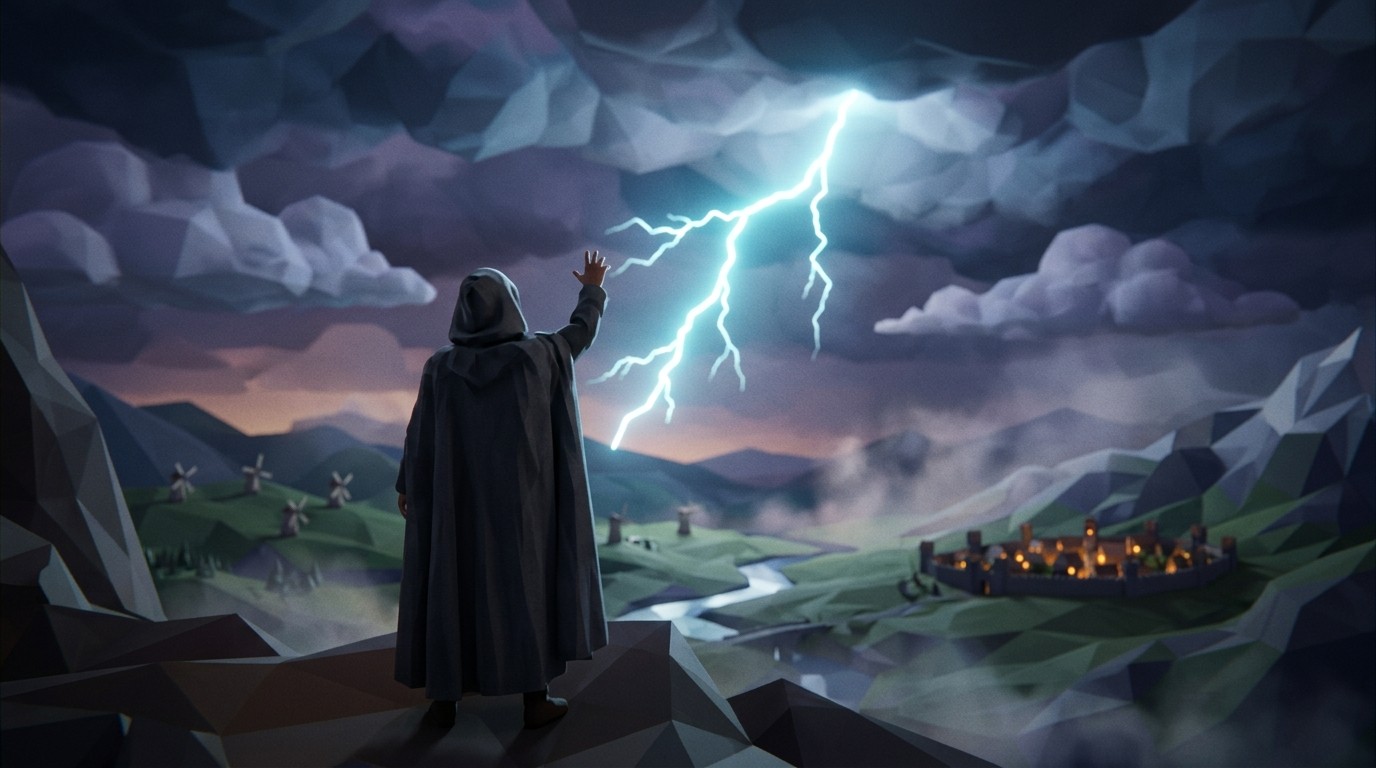
Here’s the thing about Journey of the Gods: there is no BepInEx. There is no VorpX profile to hunt down, no UEVR GitHub thread to refresh, no Discord channel begging for a motion-control update. You buy it from the Oculus store, you put the headset on, and you are inside a colorful first-person action-adventure where you block projectiles with a shield, shoot a crossbow, and call down lightning like you’re actually offended by the weather. In a landscape where most interesting VR coverage starts with “first, install these seven things,” that simplicity is almost suspicious.
Developed by Turtle Rock Studios and published by Oculus Studios, Journey of the Gods is a native VR title built for Quest from the ground up. The Rift version arrived a few weeks later with full cross-buy, so if you own it on Quest you already own the PC VR build. That matters because this is not a game you mod into VR; it is a game that only exists in VR. For people tired of tinkering, that alone puts it on the short list.
What This Actually Is
The elevator pitch is “Zelda: The Wind Waker in a headset,” and that’s not far off. You wander a low-poly fantasy world, solve light environmental puzzles, swing a sword, and accumulate god powers that turn sections of the map into diorama-sized playsets. Need a tree moved? Raise it. Need an enemy group erased? Hold out your hand and drop lightning on it. The game even gives you a top-down “God Mode” view where you interact with the world like a kid hovering over a toy set, then drops you back into first-person to finish the job with steel and bolts.
The loop is genuinely satisfying: explore a level, find hidden upgrades, bring them back to a hub village, and cash them in for a wider shield, a faster crossbow, or a pet bird that ferries items to you at the start of each stage. There is always some new toy arriving just as the old one starts to feel routine. That sense of constant improvement is the game’s strongest trick, and it keeps a fairly simple campaign from feeling like a slog.
How It Plays
Combat splits between melee sword-and-shield and a manually reloaded crossbow. The crossbow is the better half of the equation: you fire your shots, physically pull the string back, and fire again. Special ammo types — fire, homing, piercing — add variety, even if you can’t choose when to use them. The sword, on the other hand, uses that old VR sin of “wiggle physics,” where rapidly shaking the blade counts as damage more reliably than a committed swing. It works, but it never feels good. More than once I found myself flailing at air while enemies politely waited for me to finish my interpretive dance.
Comfort is where the game earns its keep. Locomotion is smooth, but the pacing is gentle enough — and the sit/stand/room-scale options flexible enough — that this is an easy recommend for newer VR owners. On-rails flight and sailing sequences break up the walking without dumping free-camera nausea on you. The “God Mode” overhead view is the only real perspective shift, and it’s brief and player-triggered. I never felt like the game was trying to make me sick; it felt like Turtle Rock understood that a Quest launch title needed to be accessible.
Performance is not a concern. The low-poly art style was clearly chosen to run cleanly on a Snapdragon 835, and it does. On Quest it’s efficient; on Rift PC VR it looks sharper but still sits in the budget-to-mid-range hardware band. This is not the game you buy to stress-test your GPU.
The Catch
For everything the game gets right, there are clear caveats. The visuals are functional but dated even at launch — low-poly works for readability in VR, but the pop-in and slow fade-in of grass, trees, and bushes is hard to ignore. A tree growing into existence ten feet in front of you is charming the first time and distracting the tenth. The story is paper-thin even for an action-RPG: you are the chosen one, evil is coming, gain powers, save everyone. Characters communicate mostly through mime and grunt, which is actually a decent VR UI choice but doesn’t give you much reason to care about them.
The biggest knock is length. A single completion runs somewhere around five hours. For $29.99, that stings. The combat depth doesn’t support much replay either — the difficulty modes exist, but the sword physics and simple enemy behavior don’t invite endless runs. NookGaming’s verdict was “Wait for Sale,” and that still feels right.
The Bottom Line
Journey of the Gods is a comfortable, polished native VR adventure that does exactly what it says on the box. The god-powers hook is real, the progression is paced well, and the lack of setup friction makes it one of the easiest “real” VR RPGs to recommend to a newcomer. But the wiggle-physics melee, visible pop-in, thin narrative, and short runtime keep it from being essential. Grab it on sale, or grab it now if you already bought the Quest version and want the sharper Rift build sitting in your library for free.