
There’s no GTA 2 in VR
I went looking for a way to get Grand Theft Auto 2 into a headset, because the rest of the franchise has quietly built a real VR footprint — GTA III through source ports, Vice City and San Andreas through mods and the Unreal-based Definitive Edition, GTA IV and GTA V through full VR mods. GTA 2, the 1999 top-down entry, is the orphan.
Rockstar never shipped a VR mode for it. Nobody has built a VR mod for it. VorpX doesn’t support it. The emulators that run its console ports have no VR build with a documented GTA 2 path. When I say there’s no VR for GTA 2, I mean there is no VR for GTA 2 — not “it’s janky,” not “wait for a patch,” just nothing.
The only thing that puts GTA 2 in front of your eyes through a headset is a flat screen floating in a virtual room. That’s it.
What the “VR option” actually is
The closest you get is launching the freeware PC build (v9.6) and opening it through Virtual Desktop, SteamVR’s desktop view, or Bigscreen. You get a large 2D panel in a virtual space. No stereo depth, no head-tracked camera, no motion controls. It is exactly the game you’d play on a monitor, with a bigger apparent screen and a quieter room.
Comfort is a non-issue here: the camera never moves in virtual space, so there’s no locomotion sickness vector to speak of. You aim with a gamepad or keyboard and mouse, and setup is as simple as it gets — open the game, put the headset on. If “flat screen in a headset” counts as a way to play in VR, this is the most beginner-friendly one imaginable.
What it feels like to play
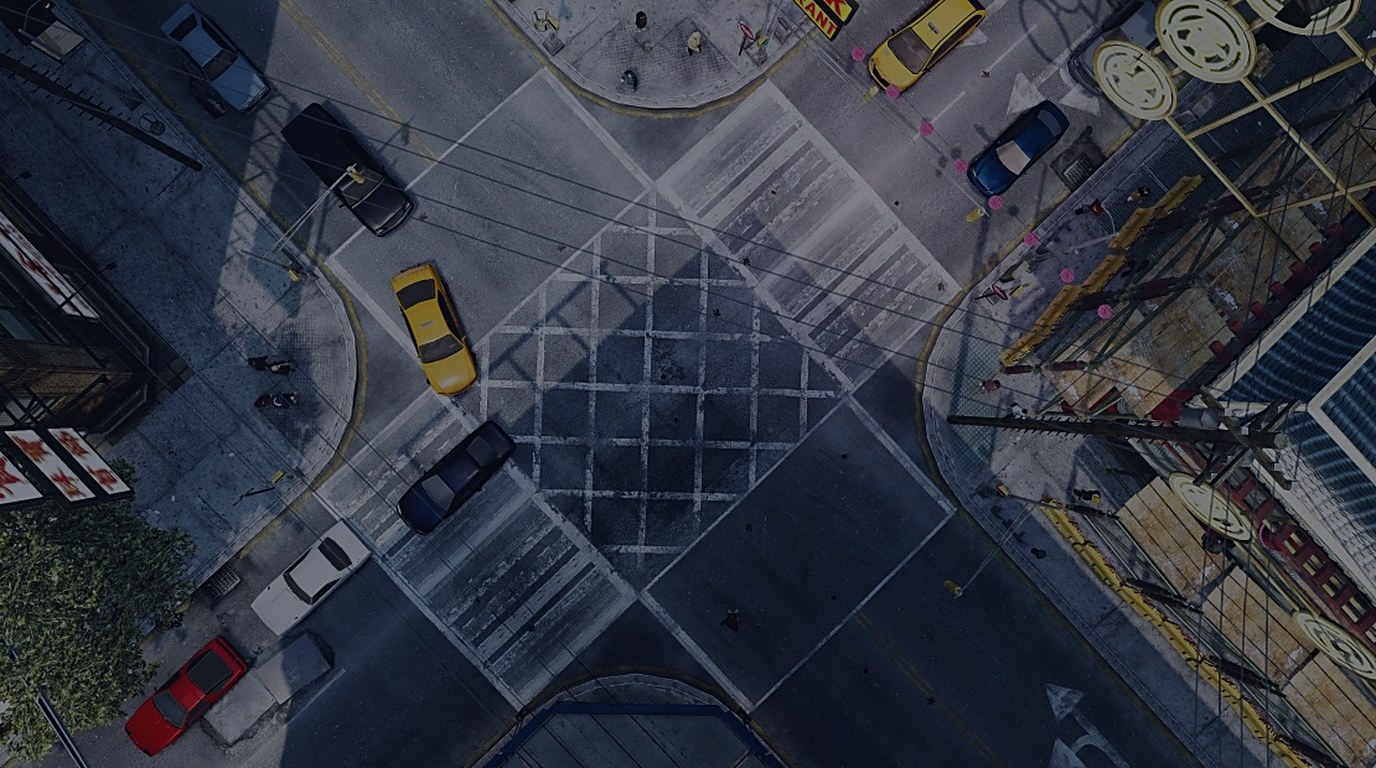
The first thing you notice is that GTA 2’s fixed top-down camera is the whole problem. The game looks down on a near-future retro city where three gangs — Zaibatsu, the Loonies, and the Yakuza — fight over turf across Downtown, Residential, and Industrial districts. The buildings are vertically extruded blocks with a little parallax as the camera tracks you. It’s a great little game, and on a big virtual screen it looks fine.
But the camera is bolted to the sky. There’s no first-person view to drop a head into, no eye-height vantage to place you on the street, no aiming vector that isn’t tied to which way your little character is facing. Every VR route that could have changed that — UEVR, REFramework, a community 6DOF mod — is structurally impossible here. The engine is DMA Design’s in-house fixed-function 2.5D renderer, not Unreal, not RE Engine, not Unity. There’s no object model to hook, no camera component to convert to head tracking, no motion-controller layer to map onto. The game’s own LAN multiplayer deathmatch, which is genuinely fun on the Downtown map, is filmable in a headset only in the sense that anything on a monitor is.
The flat-in-headset experience does work, and it’s trivially easy. If you already love GTA 2 and want to play it on a giant private screen from your bed, that’s a real, if modest, use of a headset. The performance demand is essentially zero — this is a 1999 game running through a wrapper, and it’ll sit at frame rate on anything that can open a browser.
Why the franchise gap exists
This isn’t an oversight someone forgot to fix. It’s structural, and it explains why every other GTA has a VR story and GTA 2 doesn’t. GTA III, Vice City, and San Andreas got VR routes because reverse-engineered source ports (re3, reVC) and the Unreal-based Definitive Editions gave modders a camera layer to rebuild on. GTA 2 has neither. Nobody has decompiled it into something with a camera system, and the engine predates every framework a VR mod would need. The recent attention on GTA 2 — a community path-tracing project that lifts the old renderer onto a modern D3D9 pipeline for real-time lighting — is gorgeous and real, but it’s a graphics mod. Nobody has taken that bridge into a headset, and the engine would still need a camera rebuilt from scratch to get there.
The strengths, such as they are
GTA 2 itself is a sharp, weird, memorable game. The gang-respect loop, the near-future tone, the soundtrack, the sheer nastiness of the missions — it holds up as a cult classic and it’s freeware now, so there’s no barrier to just playing it flat. Running it on a virtual screen is reliable, comfortable, and undemanding. There is nothing to break.
If you’re the kind of person who likes a massive screen and a quiet room for retro games, this delivers that with zero friction. That’s the entire case for it in a headset.
What’s missing, and why it matters
The weaknesses here aren’t jank or bugs — they’re absence. There is no VR transformation of any kind. Stereo depth is absent. Head-tracked camera is absent. Hand presence and motion controls are absent. You cannot lean in to read a sign, peek around a corner, or feel the weight of a stolen car because the headset isn’t doing anything the monitor wasn’t.
That puts this at the bottom of what a headset is for. A great game on a virtual flat screen is still a TV strapped to your face. The experience doesn’t change because the display moved three centimeters from your eyes to your optic lenses. The game’s legacy doesn’t transfer into presence it was never built to have.
Two low-view YouTube uploads label GTA 2 “VR” or “mixed reality,” and one 3D-conversion video has hundreds of thousands of views. Nothing in any of those titles, or in the mod indexes, suggests a real 6DOF or motion-control path. The most likely explanation is exactly what this article describes: a flat game shown inside a headset, or a depth-3D presentation with no head tracking. None of it changes the verdict.
The bottom line
GTA 2 is worth playing. GTA 2 in VR is not a thing that exists. If you want to spend a Saturday with the last top-down GTA, grab the freeware build and play it on a monitor — or, if you must, on a comfortable virtual screen with a gamepad. But don’t put the headset on expecting to be in the city, because nobody has built a way to get you there, and the engine fights anyone who tries. For VR enthusiasts chasing the rest of the franchise’s headset conversions, this is the one that got left behind — and it’s worth knowing that before you go looking.