
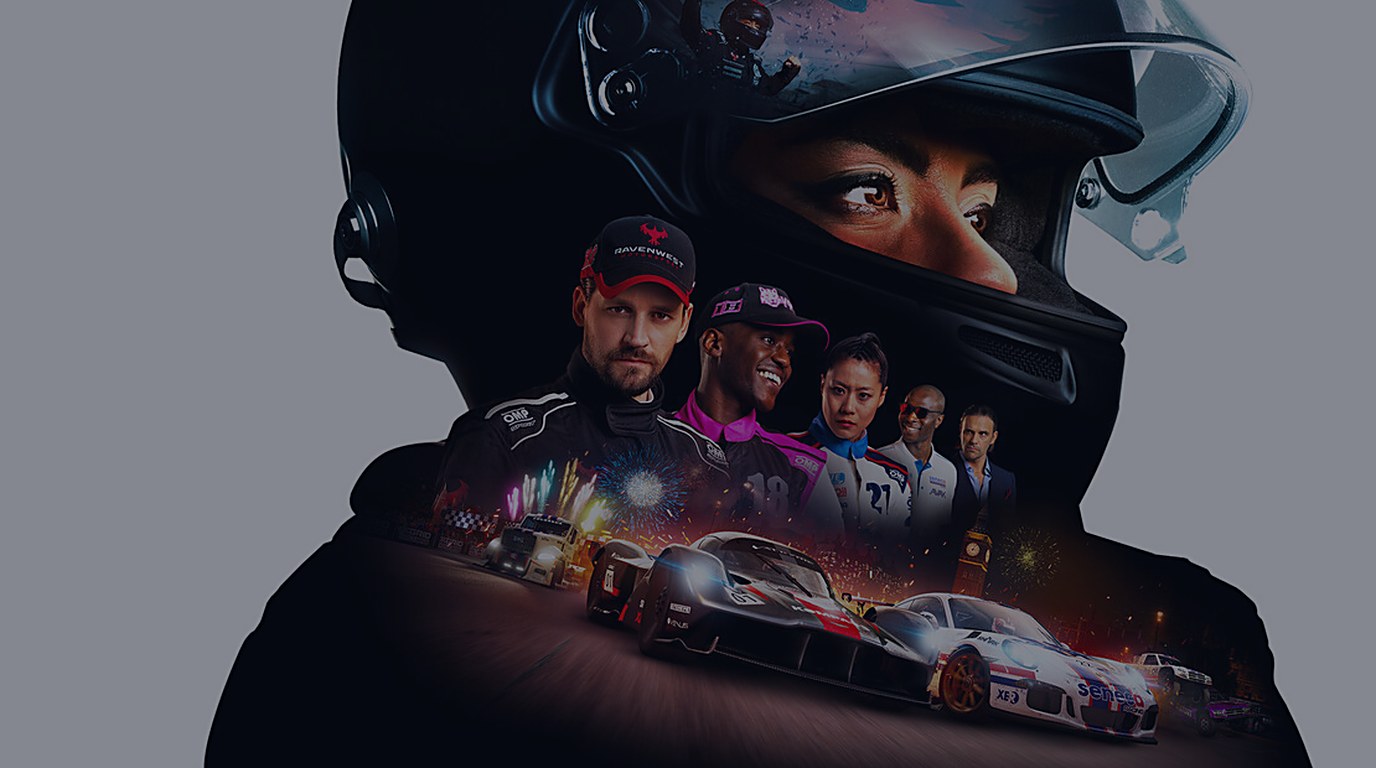
GRID Legends, running on a standalone headset. The whole game — career, story mode, 100-plus cars, 130-plus tracks — boots on a Quest 2 like a native app, because it is one. Codemasters dropped a surprise Quest port in January 2023, and the achievement is that it’s the complete game wearing a VR headset, not a slice of it.
But “the complete game” and “good VR” are two different bars, and GRID Legends clears the first and stumbles on the second. There are two ways into this cockpit: that native Quest port, and a brand-new PC mod that just made head-tracked VR possible on Steam. I’ve spent time in both. Here’s what actually happens when you put the headset on.
The Quest port is the full game, visually halved
When GRID Legends hit the Quest Store it brought everything: the “Driven to Glory” live-action story mode, time trial, elimination events, the full garage. Online multiplayer is capped at 16 players instead of 22 on flat, and there’s no DLC and no crossplay — but the backbone is all there. You’re not buying a trimmed-down racer.
What you are buying is a heavy visual compromise. UploadVR measured the render resolution at 1,080 by 1,188 per eye — roughly half of the Quest 2’s native panel — and it shows. Textures are soft, edges crawl with jaggies, and the sense of speed that flat GRID sells through crisp detail gets muffled. It’s a ~31GB install on the headset, substantial for standalone, and you feel that budget pressure in every blurry billboard.
The racing underneath is the GRID I know: forgiving arcade handling, aggressive AI that actually fights for the line, events that escalate from “learn the track” to “survive the pack.” That part survives the port intact. The catch is that you’re watching a good racing game through a slightly dirty windscreen.
Controls and the cockpit
This is cockpit-only driving. There’s no third-person chase cam like the flat version, no look-around freedom beyond the seat you’re bolted into, and the menus are flat 2D screens you point at, not something built for standing in. Steering is the Touch controller’s analog stick — Codemasters skipped motion controls entirely, so you’re not gripping a virtual wheel, you’re tilting a stick. For an arcade racer that’s what most of us want from VR racing anyway: hands relaxed, eyes up, wheel feedback coming from the game’s audio and the seat, not your palms.
There are no functional mirrors, so overtakes from behind mean physically cranking your head around — the cockpit sells the immersion and quietly pads the difficulty. There are no comfort settings either: no vignette, no snap options. That’s a non-issue here, because seated cockpit play acts as its own natural frame and the fixed forward view keeps the stomach settled. Comfort isn’t the catch on Quest; the visuals are.