
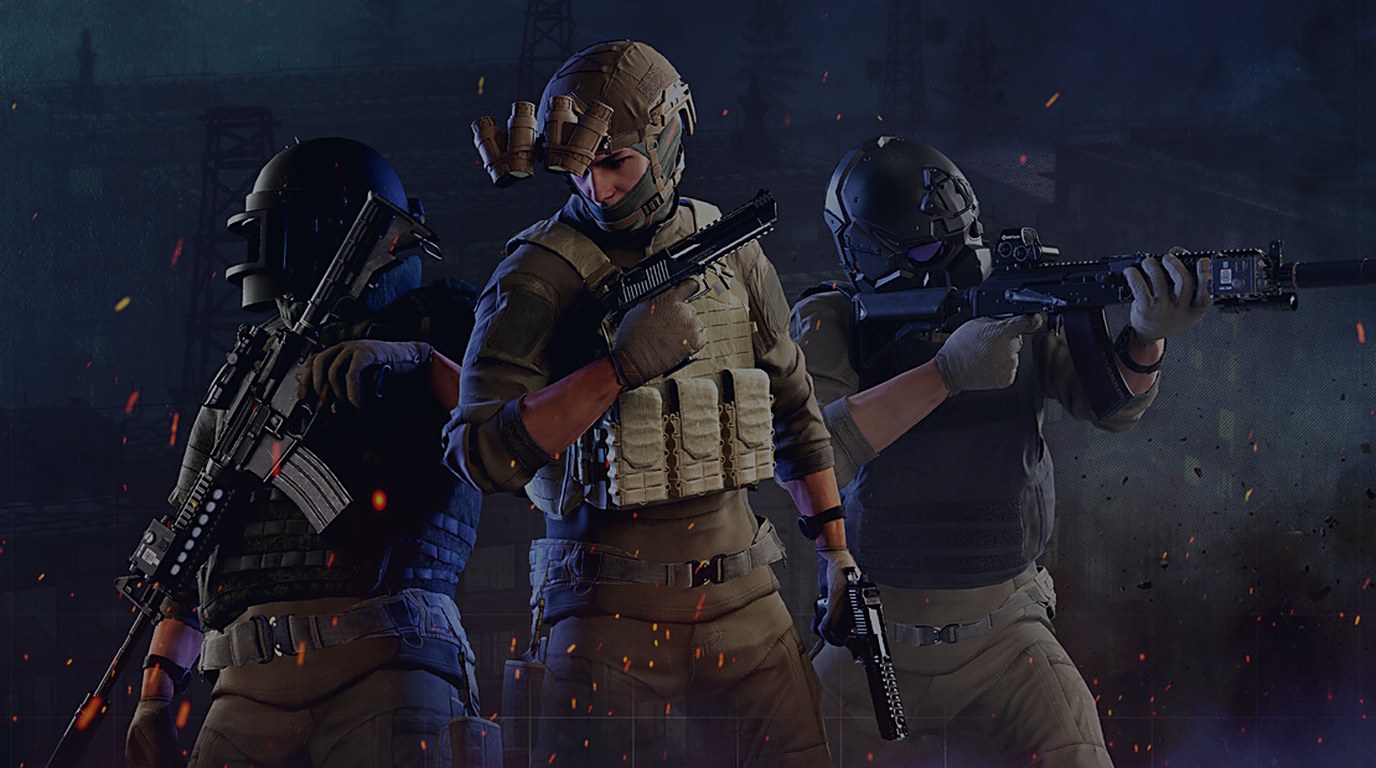
The first time I died in Ghosts of Tabor, I wasn’t dropped by a sniper or ganked by a coordinated squad. I panicked, fumbled a magazine swap with both hands while crouched behind a rusted container, and a scav put two rounds through the gap before I’d seated the mag. I lost everything I’d carried in — and I immediately queued another raid. That’s the whole game in one stupid, glorious, infuriating moment.
Your gear is real the moment you pick it up
Ghosts of Tabor is VR-native, full stop. There’s no flat version hiding underneath, no community mod, no injection layer — Combat Waffle built it for the headset from the first line of code, and you feel that in your hands before you feel it anywhere else. Every weapon is two-handed and physical. You pull a mag from your chest rig, slap it home, rack the bolt, and shoulder in, all with motion controllers and whatever roomscale space you’ve got. Looting a corpse means bending down, prying open the vest, and pulling the items off the body. None of the loop is abstracted into a menu click.
That physicality is the entire reason this works. This is “Escape from Tarkov in VR” the way Beat Saber is “a rhythm game in VR” — the genre gets rebuilt around your body, not reskinned with a headset bolted on. When a firefight breaks out you’re not watching a crosshair track a target. You’re shoving the barrel around a corner, leaning to peek, and swearing when your support hand slides off the foregrip.
A raid is 20 minutes of silence and two seconds of terror
A raid drops you onto one of three maps — the Island of Tabor, the Missile Silo, or Matka Miest — with a kit you bought, bartered, or scrounged. The contract is simple and merciless: find loot, extract alive, keep what you pulled. Die, and the gear stays on the map. VR makes that stakes ladder hit different than a monitor ever could, because the body keeping score is yours.
Most of a raid is quiet. You move room to room, checking corners, listening for the audio cue that separates a bored AI scav from a player who’s already drawn a bead. Then it isn’t quiet. A single bad angle turns twenty minutes of careful looting into a two-second scramble where your hands forget every reload you’ve practiced. Win that scramble and you walk out rich. Lose it and you’ve funded someone else’s kit. The loop is pure adrenaline wrapped around pure dread, and it is exactly as addictive as it sounds.
Comfort-wise it’s intense but fair — smooth locomotion only, no teleport, and the firefights spike your heart rate without wrecking your stomach. If you can handle a fast VR shooter, you can handle this one.
The wipes will break your heart
Ghosts of Tabor runs on wipe cycles. Periodically the economy resets, and a chunk of your accumulated progress goes poof. For a hardcore extraction crowd that’s part of the bargain — it keeps the loot meaningful. For anyone who treats progress like a savings account, it’s a gut punch with no warning. I’ve watched players quit for months over a wipe that erased a stash they’d spent real hours building. You have to want this specific flavor of cruelty, or the resets will sour the whole thing.
Cheaters and rough edges
This spent a year in early access before its full Quest store relaunch, and it still wears that history. Bugs surface — geometry you clip through, items that refuse to register, the occasional desync that gets you killed behind cover. More corrosive is the cheating problem that haunts any PvP extraction game: every so often you run into someone who is simply not playing the same match you are. Combat Waffle has been responsive on their Discord and pushes frequent fixes, but the live-service reality is that the floor under your feet shifts. You’re buying into a game that is being built in public, not a finished product.
The maps punch above their size
Three maps doesn’t sound like much, and the maps themselves aren’t sprawling. What saves them is density and tension. The Island of Tabor turns a handful of buildings and a shoreline into a dozen ambush angles. The Missile Silo is a vertical chokepoint where sound carries and everyone hears your footsteps. Matka Miest layers tight interiors against open ground that punishes anyone who thinks they’re safe at range. None of them are big, but all of them are mean, and the extraction points force you back through the places you just cleared. That loop — clear it, then run the gauntlet home — is what keeps the small maps from feeling small.
This is a squad game wearing a solo costume
Ghosts of Tabor is playable solo, and I’ve had solo raids that rank among the most tense VR moments I’ve had in the headset. But the game is built for a squad. Coordinating a push over voice, watching a teammate’s six while you loot, calling out contacts you can’t see — that’s where it clicks from good to I-canceled-my-evening. Solo is a hard mode that the wipes and the cheaters punish hardest. Grab two friends, or accept that you’re choosing the punishing path on purpose.
The bottom line is the tension, and the tension is the point. Ghosts of Tabor is the most committed VR extraction shooter on the platform — physically demanding, occasionally unfair, and built in a way that respects your body and your time only when you respect its rules back. If the genre is in your blood, there is no better way to lose an evening and a loadout. If it isn’t, the wipes will tell you fast.