
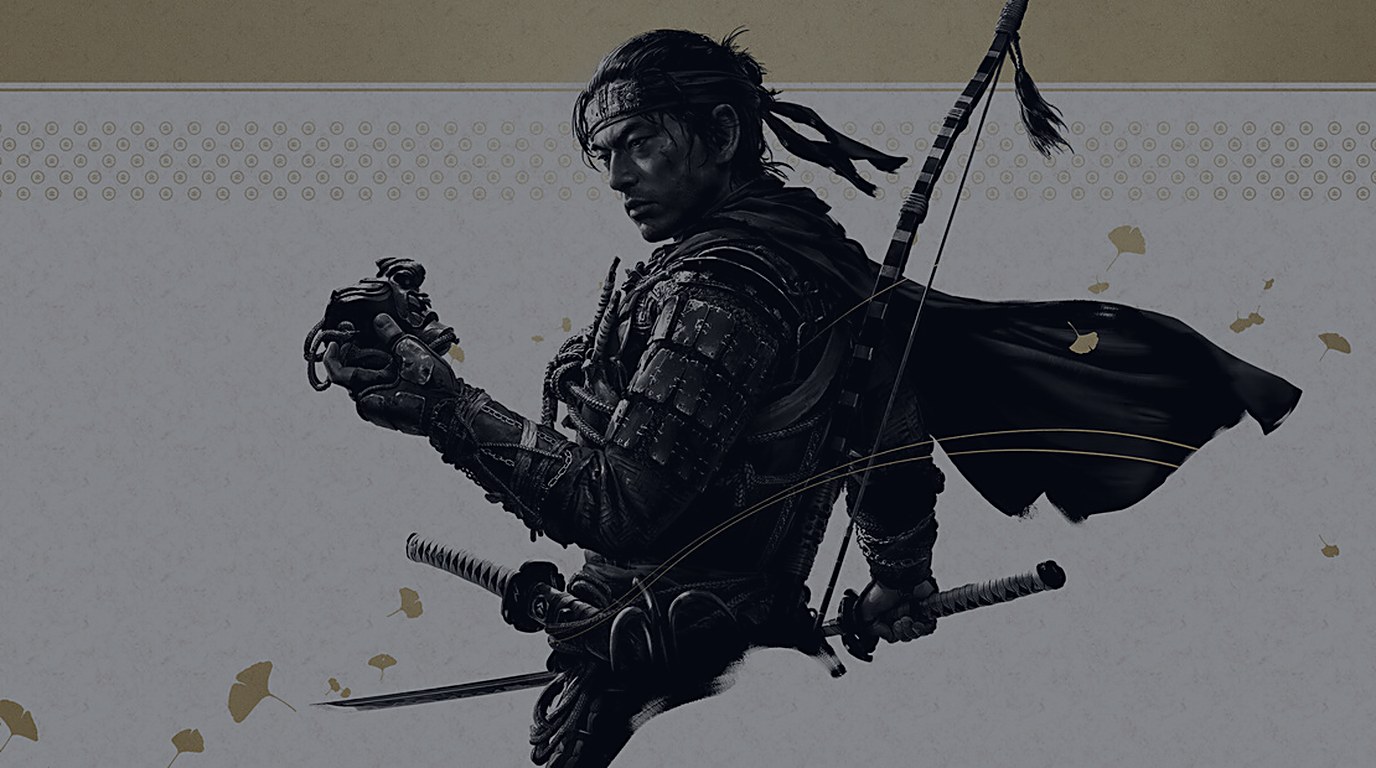
The first time I stood behind Jin Sakai on a windswept cliff and watched the grass bend in stereoscopic 3D, I got it. This is what Luke Ross’s R.E.A.L. VR conversion of Ghost of Tsushima is for — not to reinvent the samurai power fantasy, but to put you inside the frame of one of the most photogenic open worlds ever shipped and let you look around it with your own head.
Ghost of Tsushima barely needs introduction as a flat game. Sucker Punch’s samurai epic, expanded into the Director’s Cut and finally ported to PC by Nixxes in May 2024, is a deliberate action-adventure about a warrior holding Tsushima island against a Mongol invasion. What it has never had is an official VR mode. Sony and Sucker Punch haven’t announced one, and the proprietary engine under the hood rules out the usual engine frameworks — there is no UEVR or REFramework path here. The only way this game reaches a headset is Luke Ross’s third-person injection conversion, and that’s the experience on the table.
What you’re actually getting
R.E.A.L. VR is an injection-driver conversion, not a port and not a full VR mod. It takes the running PC game and renders it as stereoscopic 3D with head tracking, then parks a third-person camera behind and above Jin that you nudge with the look axis. You keep the game’s original controls — gamepad or mouse and keyboard — exactly as they were on a monitor. There are no tracked hands, no motion-controlled sword swings, no VR UI. When Jin draws his katana and cuts down a Mongol, that’s Sucker Punch’s animation playing out in front of you; you’re the director holding the camera, not the swordsman.
Ghost of Tsushima is, at its heart, a melee combat game about the feel of a blade. The flat game sells that through animation, framing, and the resolve system. In the headset, all of that spectacle is still present — you just don’t get to provide the swing yourself. If your mental image of samurai VR is standing in a dojo with a controller in each hand, this isn’t that, and you should know it before you spend a session wiring it up.
Luke Ross distributes the framework through his Patreon. When the conversion first appeared in 2024 it was a paid release; it has since been opened up free for everyone, with donations encouraged. The install is moderate, not beginner-friendly: you need to own the PC Director’s Cut, run it once flat, strip out competing injectors and overlays like ReShade, drop the framework files in, and tune the third-person camera distance to taste. ## How it actually plays
Performance is the first wall. Tsushima is a 2024 open-world game running at stereo resolution with extra rendering overhead, so it demands a strong GPU — think high-end or better on the PCVR demand scale. The conversion guide is honest about this: drop the output resolution, pull back shadows, volumetrics, and reflections before you assume the framework is the problem. Dense grass fields, which the game leans on for its signature wind ripple, are the specific thing that hammers wireless streaming encoders, so a wired connection or a tame bitrate is your friend for long riding sessions. It’s a seated gamepad experience; horseback sprints and the fast camera swings in standoff prompts are the known discomfort triggers, so steady sessions are your friend.
Where it lands is the duels. Tsushima’s one-on-one sword fights are already shot like a samurai film, and in 3D they gain a physical sense of scale that flat play never quite gives you — your opponent’s blade is a real length away, the standoff staredown has weight, and the kill-cam cuts feel staged in the room with you. The game’s wind-navigation exploration suits the headset too: you can crane around and actually read the island’s geography as a place rather than a map. Push the camera in close and the presence kicks up, though you risk your viewpoint clipping into Jin’s body during the busier two-handed swings, so most players settle a step back.
What’s genuinely good
The presentation is the whole argument. This is one of the best-looking games of its generation rendered in stereoscopic depth, and the third-person camera does it more justice than a first-person injection usually manages, because the game was built to be watched over a character’s shoulder. Grass, fog, and the famous golden fields all hold up under the headset, and the duels genuinely feel staged rather than rendered. For a game that is, above all, about looking cool while being honorable, VR is a better viewer than a flat screen.
It’s also complete. Everything in the Director’s Cut is here — the main island, Iki Island, the Legends content if you want it. Nothing is stripped for the conversion. You’re getting the full game, just with your head inside it instead of in front of it.
What doesn’t work
The katana problem is the ceiling, and I won’t soft-pedal it. Combat in this game is the loop, and the loop is unchanged from flat — you press buttons and watch Jin move. That’s fine for a relaxed playthrough and actively undercuts the moments the game wants you to feel. A standoff is choreographed tension; in VR you’re a spectator to it, not a participant. If you were hoping VR would finally let you be the Ghost, it doesn’t, and no camera distance fixes that.
Beyond the input, the conversion carries the usual injection-driver tax: flat menus float at you in 2D, there’s no in-world HUD comfort, and you’ll be reaching for a keyboard or propping a gamepad somewhere sensible because there’s no hand presence. The setup is fiddly and version-locked, so a game patch can break your afternoon until the framework catches up. None of that is unusual for this class of tool, but it’s real friction you pay before the first cliff vista.
Worth the headset time
I’d hand this to exactly one kind of player: someone who already loves Ghost of Tsushima and owns a PCVR rig with the GPU to push it. For that person, the 3D tour of Tsushima is a genuine treat, and revisiting the duels in depth is worth a weekend. Everyone else — players curious about the game, or VR enthusiasts hunting for a samurai power fantasy they can swing through — should play the flat version, which is the same game minus the setup tax and the spectator distance. A gorgeous world you can only watch, not wield, is a specific kind of VR: beautiful, complete, and fundamentally a step back from the sword.