
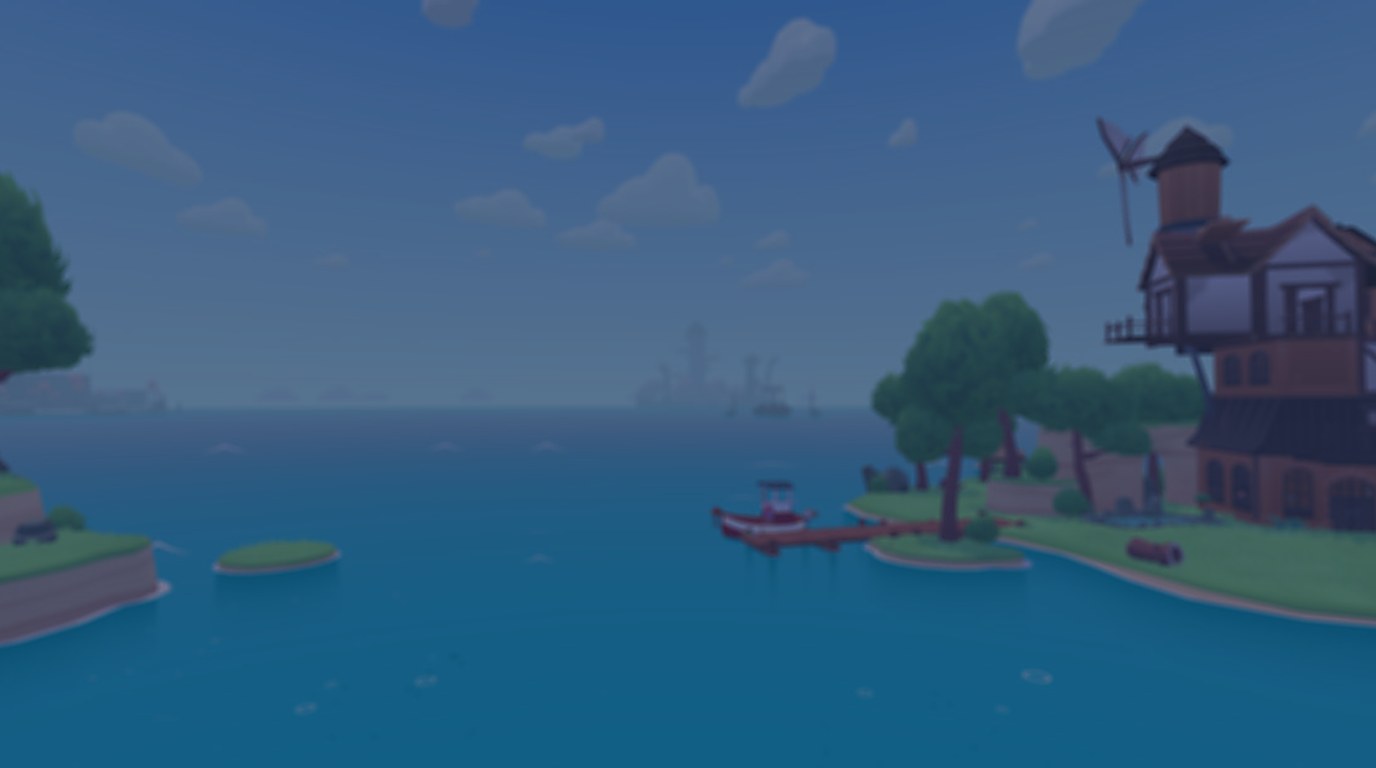
There’s a particular kind of VR calm that only shows up when nothing is trying to kill you. I spent a lazy afternoon on a small island, crouched in the dirt, pressing seeds into soil with my own hands, and realized I hadn’t thought about a single loading screen, cooldown, or health bar in over an hour. Garden of the Sea, from the studio behind Budget Cuts, is a cozy farming and creature-care sim built from the ground up for the headset — and that “from the ground up” part matters more than you’d think.
Planting, fishing, and feeding things by hand
This is the Animal Crossing of VR, or the Stardew Valley of VR — and both comparisons land because the loop is that familiar. You grow crops, you fish, you befriend the weird little creatures that wander onto your island, you cook what you grow, you build and decorate a house, and you sail a small boat between islands to chase quests. None of it is deep. All of it is soothing.
What makes it work in VR specifically is that the chores have weight and presence. Reaching down to pat a bulbous creature on the head, then watching it waddle after you, is a small joy that a flat screen flattens into a menu click. The garden isn’t a UI panel — it’s a patch of earth in front of you that you bend over, tend, and watch fill in. The chores become something you do with your body instead of something you manage.
The motion controls are the whole point
Neat Corporation built the tools for VR first, and it shows. Every interaction is hands-on — you dig, you plant, you reel in a fish with a real tug-of-war against the line, you place furniture by grabbing and setting it down. There’s no abstraction layer between you and the task. On Quest 2 and SteamVR the controllers map cleanly to what your hands are actually doing, and the game never asks you to memorize a complicated binding scheme.
Comfort is handled the way it should be in a game this gentle: you can play seated or standing, adjust your height, and pick between teleport, smooth locomotion, snap turning, or smooth turning at whatever speed feels right. This is a comfort-first experience by design.
What genuinely works
The creature design deserves the first mention. The animals you befriend aren’t pets in the Tamagotchi sense — they’re odd, charming, and they react to you. Feeding one, watching it lumber over, and earning its company is the kind of low-stakes reward loop that VR does better than any other format. The island-hopping structure gives the loop variety: one island is for farming, another nudges you toward building, and the sailing in between is a quiet breath of fresh air rather than a fast-travel cut.
Performance is a non-issue. This is a lightweight Unity build that runs cleanly on a mid-range PC and stands comfortably on Quest 2 as a standalone title. I never once thought about frame rate — the tech got out of the way. There’s even bHaptics vest and glove support if you want haptics while you garden, though that’s a bonus, not something you’ll miss.
Where it runs out of road
Here’s the honest catch, and it’s the one every reviewer circled: Garden of the Sea is modest. The quest lines are gentle nudges, the crafting is shallow, and the world, for all its charm, is a handful of compact islands rather than a place that keeps unfolding. If you come in expecting the systemic depth of a real Stardew Valley, you’ll feel the ceiling fast. The optimization-and-expansion rabbit hole that makes a farming sim linger for dozens of hours just isn’t here.
That modesty is a two-sided coin. For the player who wants to decompress for forty minutes after work, the lack of pressure is the feature. For the player who measures a game by how much there is to master, the game will feel like it ends while you’re still settling in. I lean toward generosity here — a game that knows exactly what it is and delivers that cleanly is worth more than an ambitious one that trips over its own scope — but you should walk in knowing the size of the thing.
The platform picture
Garden of the Sea launched on Quest 2 and PC VR, and later made the jump to PSVR2, where the higher fidelity and headset comfort make the already-peaceful experience even easier to sink into. It also landed on PICO headsets. Across every version this is the same native VR game — no port compromises, no stripped-down standalone build pretending to be the full thing. You’re getting the real article wherever you play it. A separate flat-screen edition for Switch and Steam Deck exists as its own product, but that’s a different animal and not the VR route.
The bottom line for a quiet evening
Garden of the Sea is a game you inhabit for an hour, put down feeling lighter, and maybe come back to tomorrow. The VR implementation is the reason it works — the hands-on planting, feeding, and sailing are exactly the kind of gentle physical presence that needs a headset, and it does all of that with zero setup friction and a comfort profile that welcomes newcomers.
The limitation is real and worth naming: this is a small world with a shallow loop, and players hunting for systemic depth will hit the wall quickly. But for the VR owner who wants a calm, beautifully tactile place to spend a wind-down session, it earns its keep. Recommended — with the caveat that you should buy it for the peace, not for the content volume. If your library is missing a cozy VR title, this is one of the cleanest entries you can grab.