
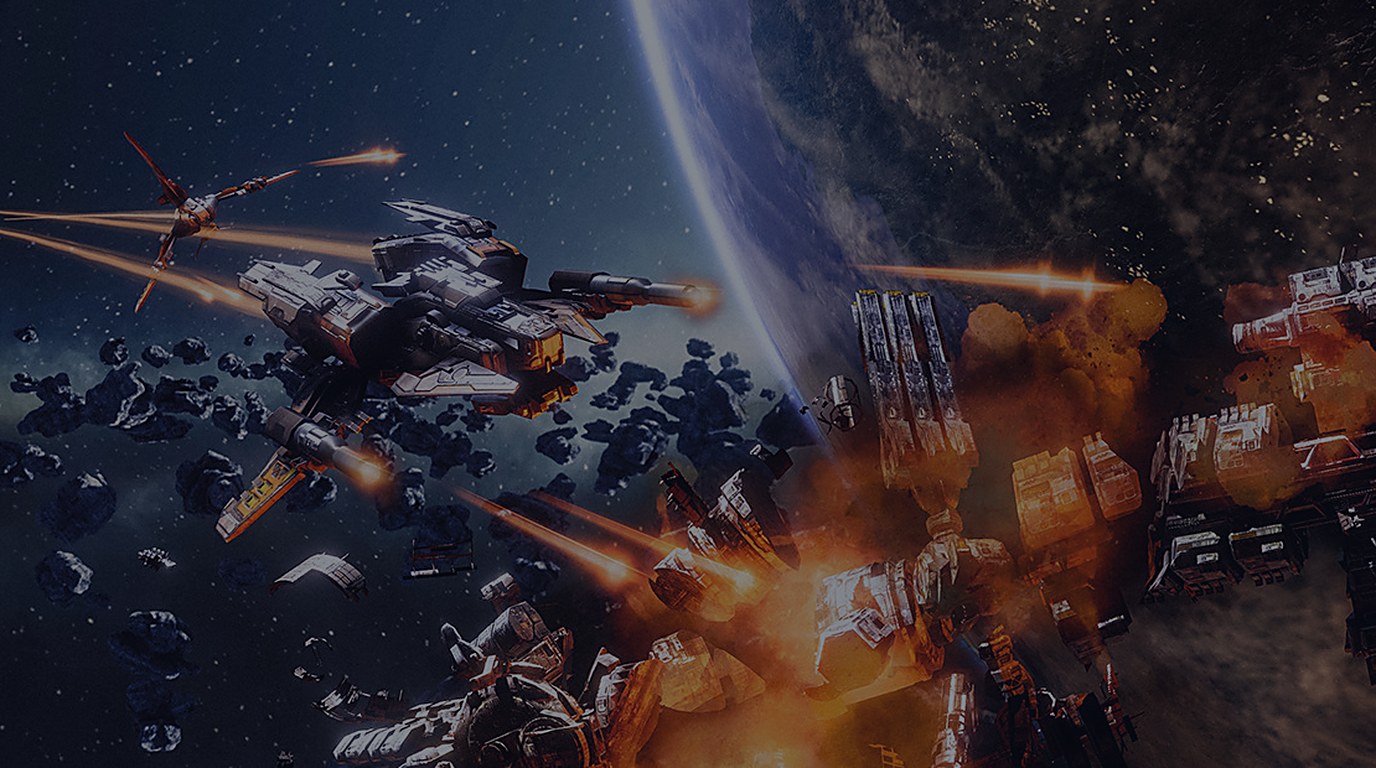
I’ve lost count of how many times I’ve climbed into End Space’s cockpit, fired up the engines, and chased a Tartarus Liberation Front fighter through a debris field. Head tracking lets you glance at your wingmeters while a thumbstick or motion controller swings your guns onto a target. The combat stays arcade — light on depth, heavy on moment-to-moment thrills — and that’s the point. Being in the starfighter is the draw, not the simulation underneath it.
End Space is a VR-native game. A two-person studio, Orange Bridge Studios, built it for headsets first. It runs on Quest, PSVR, PC VR, and Pico. They later added a flatscreen mode for monitor play, but the headset is the whole reason this game exists. You buy it, you put the headset on, and you’re flying. No mods, no injection drivers, no setup gymnastics.
What you’re actually flying
You’re a pilot in the United Trade Consortium, taking contracts in the Tartarus Sector. The structure is a hub-and-mission loop: pick a job, fly it, earn credits, upgrade your ship, replay old missions for a better score. The upgrades give the loop a reason to keep spinning — better lasers, missile loadouts, hull tweaks that change how a mission feels on a second run.
Most weapons draw from a shared energy reserve, so holding down fire drains you and you sit there recharging while enemies ping your shields. That sounds annoying in writing and feels tense in the cockpit. You learn to burst-fire, to chase, to mix approaches instead of holding the trigger like a hallway shooter. The pacing rewards patience without ever feeling slow.
The mission design is competent, not inspired. You’ll escort convoys, clear sectors, take out flagships. None of it reinvents the genre, but each contract has a shape, and the sector’s asteroid fields and stations give you places to use. When a mission opens up and three TLF fighters break from a freighter at once, the cockpit comes alive in a way flat space games rarely manage.
The headset advantage
This is where End Space earns its keep. You’re seated in a cockpit with a real sense of being inside the ship. Your head aims the primary guns on most setups, so scanning for targets means actually looking around the canopy — not flicking a mouse. On 6DOF headsets you can grab the controls with motion controllers and aim a turret with your off-hand while your main hand flies. On Quest there’s a virtual-joystick mode that splits flight and aiming across two hands. Every platform supports gamepad and HOTAS too, which is the right call for a space game.
Comfort is a non-issue. You’re bolted into a seat the entire time, and all movement is ship-based flight — there’s no artificial walking to trip your stomach. Gaze-aim on 3DOF headsets (Gear VR, Go) means you can play the whole game by looking, which is exactly how a seated space shooter should handle limited tracking. I never felt a twinge after long sessions, and the cockpit frame of reference does most of the work.
Performance is light. This is a Unity title with modest demands — it runs clean on standalone Quest and asks little of a mid-range PC. That efficiency is part of why it landed on so many headsets. The Quest 2 build pushes 90Hz with Phase Sync and real-time cockpit shadows, which is a genuine step up from the original Quest version without needing new hardware tricks.
Where it thins out
The mobile-VR roots show. Some textures are flat and a few environments feel sparse compared to a PC-only production. Orange Bridge is two people, and you can see the budget in the corners. It’s not ugly — the cockpit reads well and space looks right through the canopy — but don’t expect the density of a bigger-budget dogfighter.
Content depth is the real caveat. The mission list is solid for a weekend but the campaign doesn’t sprawl, and there’s no multiplayer. If you want competitive dogfights against other pilots, this isn’t your game — it’s strictly single-player. The replay hook is score-chasing and ship-building, which holds if you enjoy optimization, but runs dry once you’ve maxed the loadout.
That’s the honest trade: End Space is a great few evenings and a reliable pickup-for-a-mission-when-you-have-twenty-minutes game, not a live-service you’ll still be flying in a year.
Who should climb in
If you want a VR starfighter that respects your time and your wallet, End Space delivers clean combat with real cockpit presence across whatever headset you own. It won’t replace the genre’s heavyweights, but it’s the most complete seat-in-a-ship experience from a two-person team you’re likely to fly — and at its price, the value is hard to argue with.