
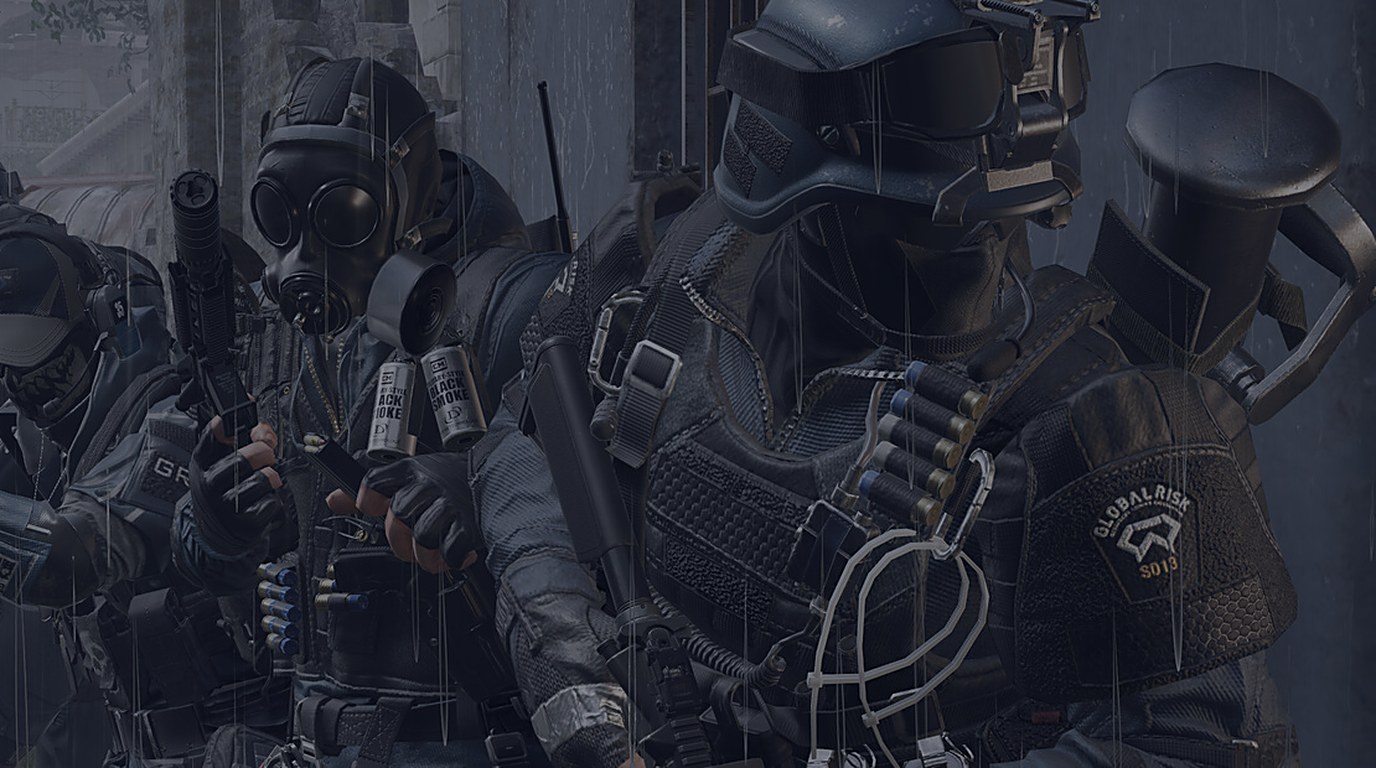
Crossfire: Sierra Squad shows up loud and doesn’t apologize
I put the headset on expecting another flat-to-VR afterthought. What I got instead was Smilegate walking into VR like it owned the place — a military arcade shooter built from the ground up for the headset, not a port with a VR toggle bolted on. The first thing that hits you is how much noise there is. Muzzle flashes fill your peripheral vision, enemies call out from off-screen, and your forearm is a small arsenal of cooldown timers. This is Crossfire’s first VR entry, and it plays like the studio wanted to prove a Korean FPS giant could do room-scale gunplay.
The pitch is simple: you are a squad operator, and the game wants you shooting constantly. It delivers that with a generosity that surprised me.
What you’re actually stepping into
This is a native VR build, not a mod or an injection profile. You buy it on the PlayStation Store for PSVR2 or on Steam for any PCVR headset, install it like any other game, and play. There is no setup, no dependency chain, no config file to edit. For a VR title, that alone removes the usual friction that eats an evening before you fire a single round.
Smilegate shipped it simultaneously on both storefronts, which means the PSVR2 crowd and the PCVR crowd both got it day one. It’s a dual motion-controller game through and through — there is no gamepad path, and there doesn’t need to be. You hold the guns, you reload them, you throw the grenades. The whole thing assumes your hands are the interface.
The guns are the whole point
The arsenal is the draw: thirty-nine weapons, seventeen enemy types, and a reload system that feels physical without demanding real-life dexterity. You hit a button and grab at your hip to cycle a fresh mag — simplified compared to simulation shooters, but it keeps the firefights moving instead of fumbling. Grenades and health packs sit on forearm cooldown timers, so you’re never digging through a menu mid-firefight. Ammo is effectively infinite in arcade mode, which is the right call: the fun is in the shooting, not the inventory management.
On PSVR2 the headset rumbles when you take damage or something blows up nearby, which sells the chaos better than I expected. The adaptive triggers, though, are a missed opportunity — resistance didn’t meaningfully change between weapons, so a pistol and a rifle feel identical under your finger. for a studio with this much hardware to play with, leaving the triggers mostly static feels like leaving horsepower in the garage.
Movement is full smooth locomotion with no teleport or comfort toggles, which is exactly what you want from an arcade shooter and exactly what this audience expects.
Sixty-three missions and a co-op habit
The single-player campaign runs thirteen stages, most of them ten to twelve minutes, so you get bite-sized bursts that still add up to a full game. On top of that there are squad co-op missions — fifty of them — that remix the campaign spaces with a coin economy for guns, upgrades, and attachments. And there’s a horde mode that supports four players.
The unlockable realism mode is the surprise I didn’t know I wanted: no enemy health bars, no ammo counter, and reduced damage tolerance, so every careless peek costs you. It turns the arcade romp into something closer to a tense run where one mistake ends the squad. For a game this loud, that restraint is a genuinely sharp turn.
Co-op is the real reason to own it
If you play alone, you get a perfectly good arcade shooter. If you play with a friend, it clicks into something better. The two-player squad missions are where the pacing and the chaos feel intentional rather than repetitive, and the four-player horde mode is the kind of loud, stupid fun that makes an evening disappear.
Matchmaking for co-op was hit and miss at launch, with private matches throwing errors. Whether that got fully ironed out, I can’t confirm from where I’m standing, but the core co-op works, and a friend on your list is the safest way to guarantee a session.
Where the arcade stops pretending
Enemies follow predictable lines, stages are linear with hard boundaries that tell you when you’ve wandered out of the play space, and the weapon models occasionally sit at a scale that feels off from your hands. None of this broke the experience for me, but it does mean the game never escapes its arcade roots. This is a light-gun shooter with full locomotion, not a tactical milsim, and it knows it.
The other soft spot is lasting depth. The missions are numerous, but the loop doesn’t deepen much past the first few hours — you’ve seen most of what the enemy and the level design can throw at you by the midpoint. That’s the trade for the volume: lots to do, not a lot that’s new.
Fire away, preferably with a friend
Crossfire: Sierra Squad is the rare VR shooter that shows up with both hands full. The gunplay feels right, the content is genuinely generous, and the co-op is the kind of loud fun that justifies the headset on a Friday night. It won’t fool anyone into thinking it’s a deep tactical game, and the AI won’t sneak up on a seasoned player, but those aren’t the promises it made. If you want a military arcade shooter with real motion-controlled guns and a pile of missions to burn through with a buddy, this is an easy one to load up. Skip it if you’re hunting for tactical depth or smart enemies — there are better headset time investments for that crowd.