
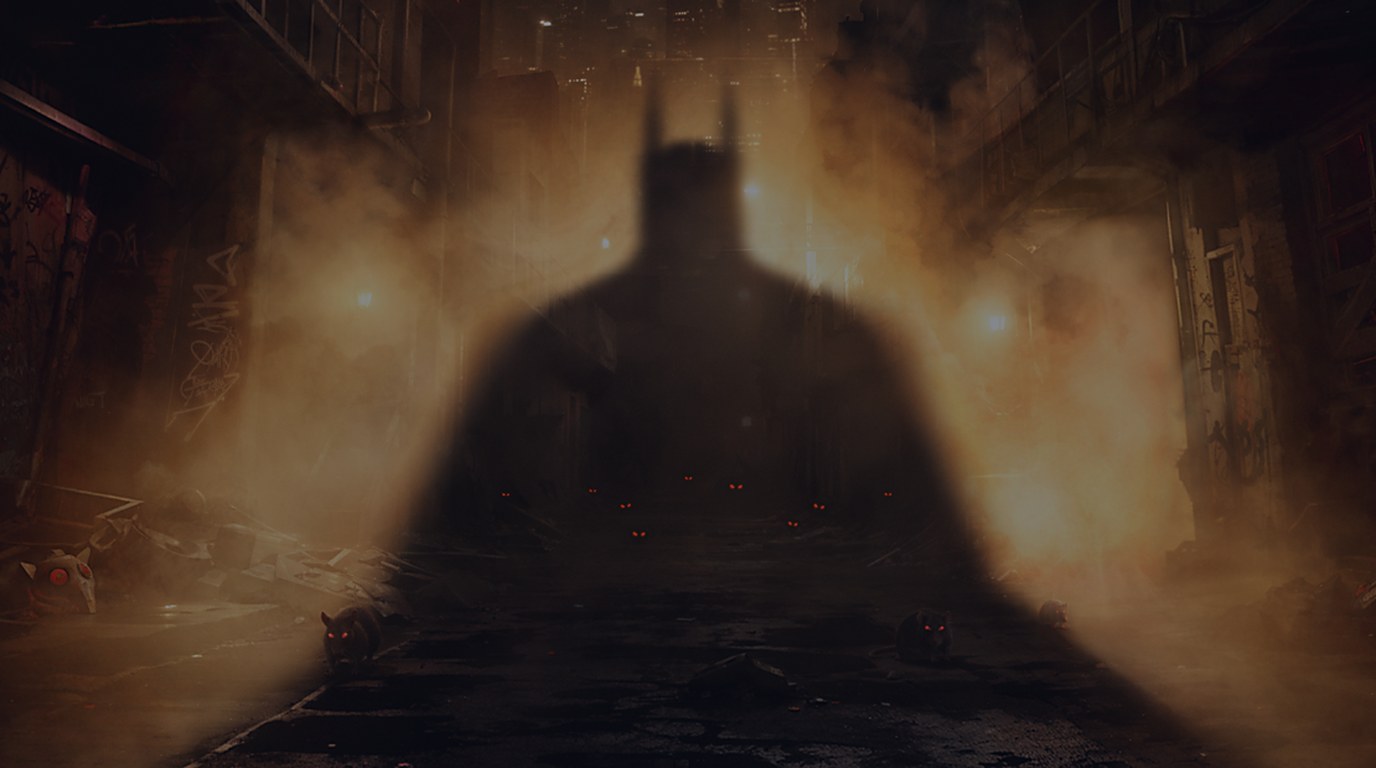
I spent a weekend as Batman on my couch, and not the “sit in a chair and watch a cutscene” Batman. I threw a real punch with my right hand, cocked my left to counter a thug’s bat, and watched him go down because I read the tell — in VR, with my own eyes, inside the cowl. That’s the pitch for Batman: Arkham Shadow, and for once the pitch holds up.
This is the full Arkham treatment rebuilt for a headset, not a tech demo with a Batman skin slapped on. Camouflaj — the studio behind Iron Man VR — built it with Oculus Studios as a first-party Quest title, and it shows in the right ways. You get a complete, single-player Arkham campaign: free-flow combat, predator stealth, gadgets, a hub you unlock over time, and a story that actually earns the Batman name instead of coasting on it.
What you’re actually buying
It’s a native Quest 3 and Quest 3S game. No PC, no sideloading, no mod stack to wrangle — buy it on the Meta Quest Store, install it on a Quest 3 or 3S, and play. That’s the entire setup. If you already own one of those two headsets, you’re minutes from Gotham. If you don’t, this is the hardware gate you need to clear first: it won’t run on a Quest 2, a Rift, a PSVR2, or any PCVR headset. That’s not a mark against the game — it’s the platform boundary — but it’s the first fact you need before you get your hopes up.
The story drops you about six months after Arkham Origins. You’re a younger Bruce, still drawing the line between vigilante and symbol, while the Rat King cult has turned Gotham into a July 4th hostage scenario they’re calling the Day of Wrath. Harvey Dent’s arc runs straight through it, which means you’re watching the Two-Face origin get staged in front of you. Roger Craig Smith is back as Batman, Troy Baker as Dent, Mark Rolston as Gordon — the voice cast carries the weight you’d expect from the series, and the writing respects the mythology instead of rebooting it for the headset.
How it plays in the headset
The combat is the free-flow rhythm the series is known for, translated to first-person motion controls. You strike with one hand, stun with the other, and the counter window opens as a read on the enemy in front of you — the same “watch for the tell” loop that made Arkham combat sing, now driven by your own arms. It took me a few minutes to stop swinging like I was playing Beat Saber and start reading the room, but once the timing clicked, throwing a flurry and snapping a counter felt like I was actually in the fight rather than puppeteering it.
Comfort options follow Quest standards — snap and smooth turning plus vignette — so you can tune the locomotion to your gut.
Predator stealth is where the VR perspective pays off hardest. Crouched in a vent, peeking through Detective Vision, picking which unsuspecting thug to drop first — that’s the Arkham fantasy, and first-person makes the stalking physical in a way the third-person games never could. Silent takedowns, inverted drops from grates, repositioning while nobody’s looking: the headset turns a menu of options into a space you’re actually moving through. The gadgets join in naturally — batarangs you aim and throw by hand, smoke bombs that break a fight wide open, the grapple gun that pulls you up to a ledge you couldn’t reach on foot.
And then there’s the cape. Gliding off a ledge and feathering the descent with your own movement is the kind of dumb, pure power-fantasy moment that justifies the headset on its own. It’s not a long sequence, but it lands every time.
Where the standalone ceiling shows
This is a Quest standalone game, and that hardware is doing a lot of heavy lifting to look like an Arkham title. The world is convincingly Gotham — confined, atmospheric, lived-in — but it’s built from smaller spaces than the console Arkham games, and the visual density reflects the silicon it’s running on. That’s not a flaw so much as a trade: you get a complete Batman campaign you can play wirelessly from your couch, and the cost is that it doesn’t have the sprawling set pieces of Arkham Knight. The hub is metroidvania-gated by gadgets you earn, which keeps the loop moving, but if you came in expecting an open Gotham to fly around, recalibrate — this is a tightly wound, room-and-corridor Batman, not a city sandbox.
The combat, for all that it gets right, is also a touch more forgiving and a touch less deep than the tightest console entries. The motion-control reads are generous early, and the enemy variety doesn’t reach the peak of the series. That’s the caveat I keep landing on: it’s a great Arkham game in VR, not the greatest Arkham game. The VR transformation is the headline, and the standalone compression is the fine print.
None of that stopped it from being the title that, at launch, made the case that standalone VR could carry a full-length, AAA-caliber action game. It won Best VR/AR Game at The Game Awards 2024, and the launch coverage across both VR and mainstream channels treated it as the bar the platform had been missing. I’m not leaning on that as my verdict — my job is the in-headset experience — but when a VR-exclusive pulls half a million “before you buy” views on a flat-gaming channel, something real is happening.
Who should put the cowl on
If you own a Quest 3 or 3S and you’ve ever wanted the Arkham fantasy without the asterisk of a tech demo, this is the one. It’s the rare VR game that respects your time with a real story and a real campaign rather than an hour-long proof of concept. If you’re on any other headset, the gate is the hardware — and that’s the only real barrier standing between you and a genuinely complete Batman in VR.