
I strapped into Pandora expecting a tech demo with leaves. What I got instead was the closest thing I’ve felt to standing inside a nature documentary that hates me a little.
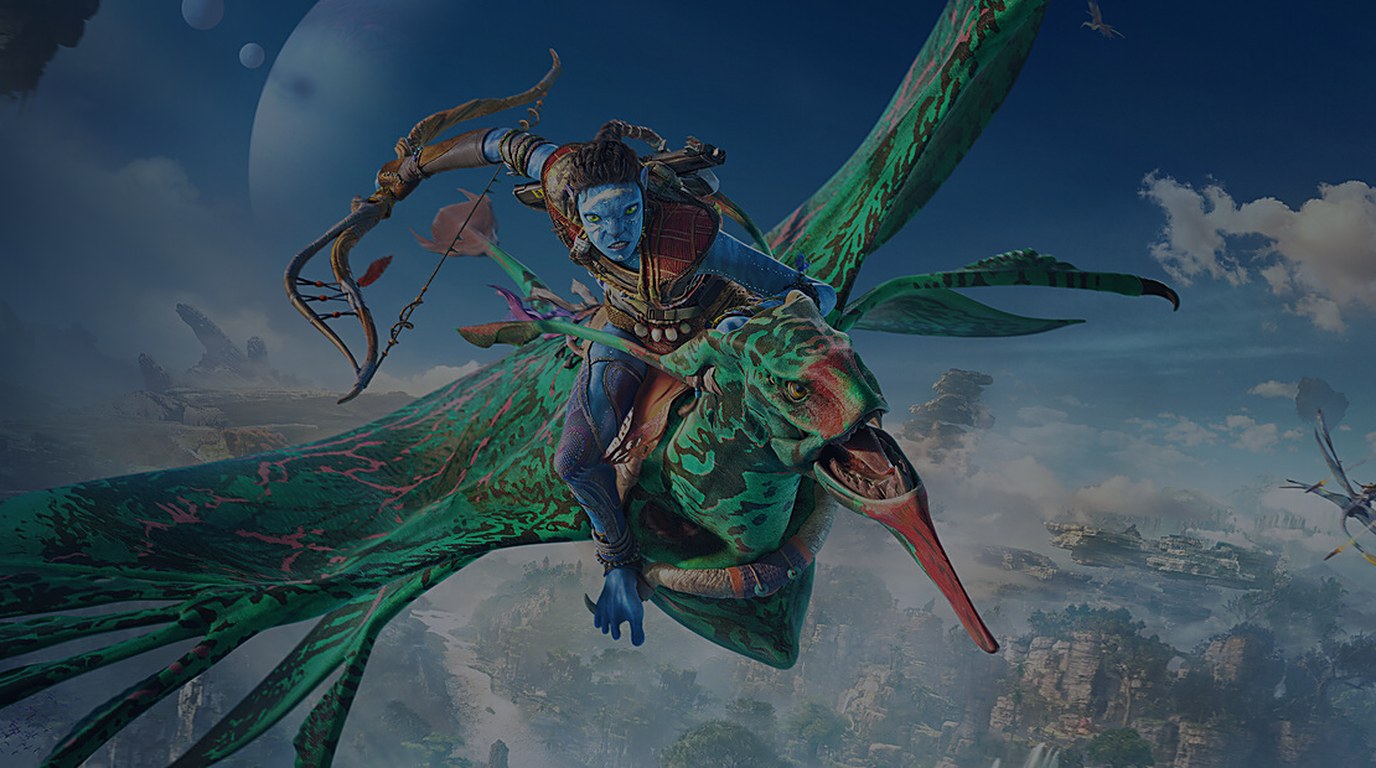
The opening stretch drops you into the Kinglor forest, and the first thing that lands isn’t the graphics, it’s the scale. Trees you have to crane your neck to take in. A world that reads as tall before it reads as pretty. Then you unlock the ikran, and the flight is the moment the whole thing clicks: you’re not watching a cutscene of a pterodactyl, you’re riding one, and the ground falling away beneath you is the kind of “oh, okay” beat that justifies the headset on its own.
That’s the pitch. Now the catch, because there’s always a catch with these conversions.
What you’re actually putting on
Avatar: Frontiers of Pandora never shipped an official VR mode. What you’re running is Luke Ross’s R.E.A.L. VR conversion, a hand-built stereoscopic injection for Snowdrop, the engine Ubisoft built this game on. It’s the same family of work as his Far Cry and Cyberpunk-style conversions: take a first-person game that was practically begging for a headset, add real head-tracked 3D, and leave the original controls alone.
So this is an injection conversion, not a native VR rebuild. It gives you the two things injection does well, stereoscopic depth and natural head tracking, and none of the things it can’t: tracked hands, motion controls, or a VR-native interface. You look around Pandora with your own head. You do not reach out and touch it.
The good news is the base game is already first-person, so the camera maps cleanly. There’s no third-person-to-VR awkwardness to suffer through. The forest feels like a place you’re standing in, not a screen you’re leaning toward.
Getting it running
Moderate effort, and the order matters. Launch the flat game once so Ubisoft’s services and your save settle. Grab the current authorized R.E.A.L. VR framework from Luke Ross’s Patreon/setup page and drop it beside the main executable. Run RealConfig.bat. Boot the game normally and tune from there. Two things bite people: version-matching the framework to your game patch, and stripping out competing injectors, ReShade, or overlay tools before you start. Do that and you’re set for every session after.
How it actually plays
You hold a controller the entire time. Movement, aiming, the bow, the climbing — all the original gamepad mapping, preserved exactly. When you draw a Na’vi bow, you’re not drawing a string; you’re holding a button and watching a reticle settle. That’s the ceiling of the interaction, and you feel it most in combat. The minute-to-minute shooting works fine, but it works like a flat game wearing a headset, not like something built for VR.
Comfort is honest, not optional. The game is first-person, so the base camera is friendly, but the ikran flight is a different animal. Flying fast and low over the canopy, banking hard, diving — that’s the best part of the whole experience and the part most likely to send a motion-sensitive player straight to the floor. I started seated, kept my early flights short, and let the vertigo pass before I pushed harder. If you’ve ever bounced off smooth-loco flight in another game, respect this one.
Performance is the real wall, and it’s a high one. Snowdrop throws everything at the screen: dense layered foliage, volumetrics, huge draw distances, and you’re rendering two of every leaf for stereo. Start at a modest headset resolution and climb from there; chase frame stability before crispness. DLSS helps, but aggressive upscaling shimmers in the foliage because there are two of every leaf and the edges fight each other in stereo. I’d rather run a slightly softer image than chase native res and watch the leaves crawl. Wired Link beat wireless for me on the flight scenes — the bandwidth matters when the world is whipping past.
What actually works
The world is the entire point, and it delivers. The Kinglor forest has weight: you read individual plants, water, and distances as physical space because your head is the camera. Creature scale is the other win — a thanator or a stomping central-server mech reads as genuinely large in a way a flat screenshot flattens. And the verticality, climbing a ridge, gliding off it, mounting up and gaining altitude, is the thing injection does better than people expect. You’re visiting, not living there, but the visit looks incredible.
The From the Ashes expansion runs in VR too. Luke Ross updated the conversion for that content, so the added territory and story beat play in the headset without a separate setup. If you already own the DLC, the mod keeps pace.
Where it falls short
The interaction ceiling is real and it’s low. No tracked hands means every menu, crafting screen, and inventory panel is a flat UI floating on a very curvy television. You can’t point at it. You can’t reach. You navigate it with a stick, and after the wonder of the forest wears off, those panels feel like the game reminding you that you’re wearing a converter, not a port. Aiming a bow or a rifle with a right stick in stereoscopic 3D is serviceable but never physical. The gunplay and archery work; they just never become the reason you’d choose VR over the couch.
And it’s thirsty. This is a high-end PC tax. If your rig is mid-range, you will be turning knobs every session to keep it smooth, and the foliage shimmer will nag you the whole time. The spectacle scales with the hardware, and the hardware asks for a lot.
The honest take
I’d put this on for the flight alone, and I’d stay for the forest. Pandora is a spectacular place to stand inside, and injection gives you enough presence to make the standing real — the scale, the height, the size of the things moving around you. That’s a genuine win over watching it on a monitor.
But be clear about what you’re buying. This is a flat game running through a headset, not a world rebuilt for one. You aim with a stick, you read flat menus, and the moment-to-moment play is unchanged from the pad-and-screen version. If you came for the interaction, you’ll be disappointed. If you came to be inside Pandora, the conversion earns its keep — and the setup, once done, is a one-time effort that rewards you every time you take off.