
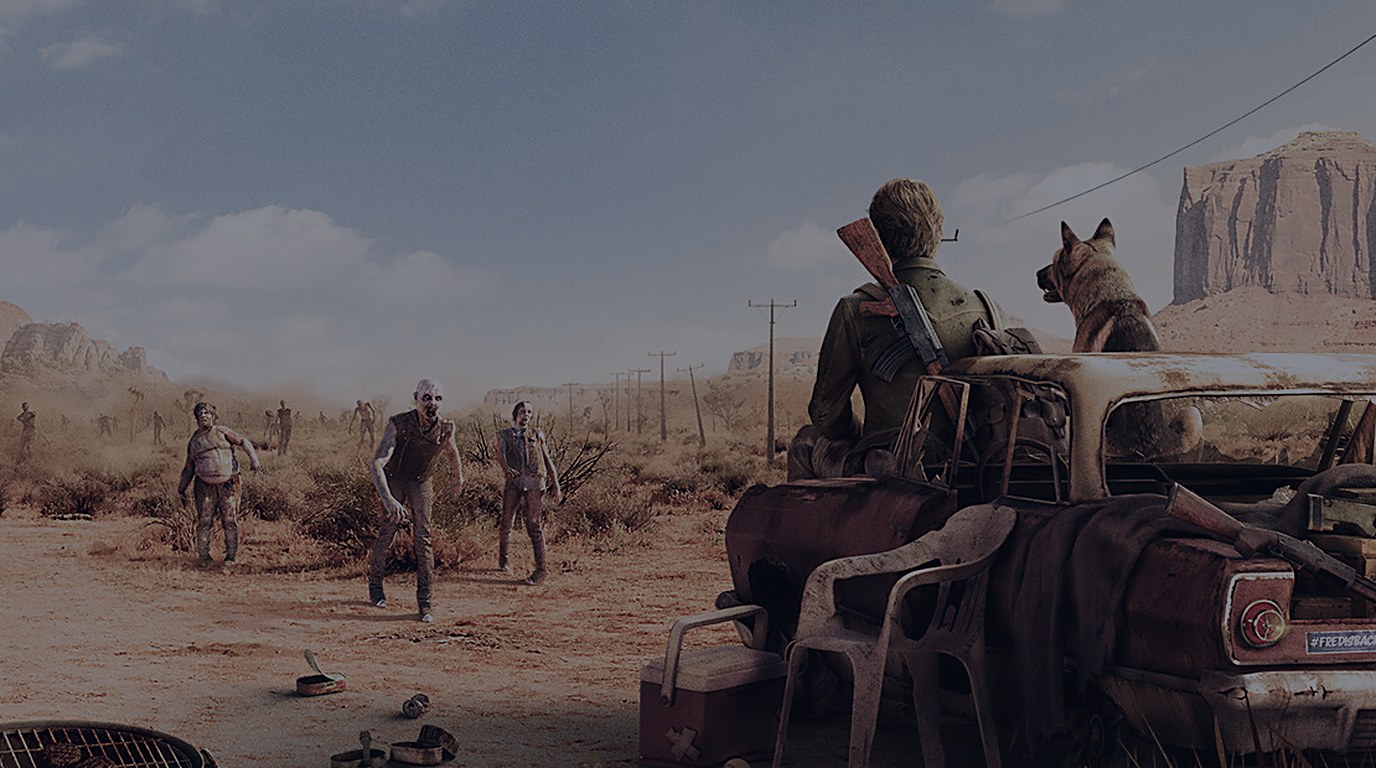
I’ve spent the better part of two weekends inside Arizona Sunshine 2, and the moment that sold me wasn’t a set piece. It was reloading a pump shotgun one-handed while a zombie had hold of my other arm. The stock plants against your shoulder, and the pump action is a motion you do, not a button you press. That’s the whole pitch: this is a zombie game that remembered it was built for VR first, and it shows in every grip and gesture.
The verbs are VR verbs
Arizona Sunshine 2 didn’t port anything, didn’t bolt VR onto a flat game, didn’t ask you to install a single tool. It launched day one on Quest, PSVR2, SteamVR, and Pico 4 as a native VR title — you buy it on your headset’s store and you’re in. On PCVR, the version I spent most of my time with, it runs clean and the headset tracking keeps up with the kind of fast, panicked aiming a horde demands.
That sounds like a checkbox until you remember how many “VR” games are flat games wearing a headset as an afterthought. This one isn’t. The verbs are VR verbs: you point at a dropped pistol across the room and Buddy brings it back, you brace a rifle against a windowsill, you swing a crowbar into a skull with the arc your arm actually makes. The motion controls aren’t a translation layer on top of a flat design — they are the design.
The weapons feel like objects, not menu selections.
The double-barreled shotgun is the best proof. You break it open, drop two shells in, snap it shut, and when you fire both barrels the recoil shoves your hands back in a way that reads as weight, not animation. The crowbar and the rebuilt melee system — a new mutilation and gore pass built for this sequel — let you cave in a skull with a committed overhead swing, and the gore lands as physical feedback rather than a splatter decal. TechRadar said the VR-centric mechanics all work incredibly well, and they’re right that everything works: firearms, melee, environmental grabs, all of it answers your hands.
It’s gross in the fun way. When a headshot pops with the tactile crunch the rebuilt system delivers, you feel like you earned the kill with your swing, not a trigger pull on a menu. That’s the gap between a VR shooter that works and one worth replaying.
Co-op is where it earns the headset
Here’s the real argument for this game: the campaign is built for two. You and a friend drop into the same zombie-soaked Arizona, and the shooting, the looting, the “cover me” moments all happen in the same shared room-space. I ran the campaign co-op with a buddy on a different headset — PSVR2 on his end, PCVR on mine — and the cross-play simply worked. No lobby gymnastics, no “you’re on the wrong version” nonsense.
That cross-play between PSVR2 and Quest is the feature I’d flag to anyone on the fence. If your friend has a Quest and you’re on PlayStation, you can still clear the campaign together, and the PSVR2 build holds up visually right alongside the PCVR version. On top of the two-player story there’s a four-player horde mode with online leaderboards, which is where the game turns into a weekly habit instead of a single weekend.
The dog.
Buddy is the single best idea in the sequel. You’re handed a dog named Buddy, a companion who fetches items you point at from across the map: ammo, weapons, loot you don’t want to break cover to grab. It sounds like a gimmick until you’re pinned behind a truck, you point at a dropped pistol across the room, and Buddy trots over and brings it back while you’re still laying down fire. That’s a real tactical choice — it changes how you position and what risks you take.
The writing leans on Buddy for the emotional beat too. The campaign’s lonely-survivor premise gets its heart from the bond between you and the dog, and it mostly lands. Buddy’s AI is responsive without being magic — he goes where you point, comes back when you call, and stays out of your line of fire. For a VR companion, that restraint is the right call.
What’s actually thin
The cracks are real. Enemy variety is the obvious one: after the first few hours the zombie roster stops surprising you, and the encounters lean on volume over new behavior. IGN flagged the same gap, and they’re right — the shooting stays satisfying, but the things you’re shooting start to blur together.
The script is the other soft spot. GameSpot called the protagonist an unfunny dweeb, and while I wouldn’t go that far, the joke-track humor is juvenile in a way that lands sometimes and misses often. The game commits hard to being the wisecracking zombie romp, but the writing doesn’t always earn the smirk. These are real complaints, not nitpicks, and they’re why this isn’t an automatic essential.
The headset earns its keep
Arizona Sunshine 2 is the rare sequel that does exactly what its predecessor did and simply does it better in VR — bigger set pieces, sharper gunplay, and a co-op loop that’s the reason to own it. If you’ve got a friend on any headset in the supported range, the cross-play campaign is a genuinely great night in. Solo, it’s still a solid, physical zombie shooter with a dog that earns his screen time.
The honest version: play it with someone. The gunplay and Buddy carry the experience; the thin enemy types and the junior-high humor are the price of admission. For a native VR title that asks nothing of you but to put the headset on and start pulling triggers, that’s a trade I’d make every time.
One-line takeaway: the best co-op zombie shooter on VR, as long as you bring a friend and don’t expect literature.