
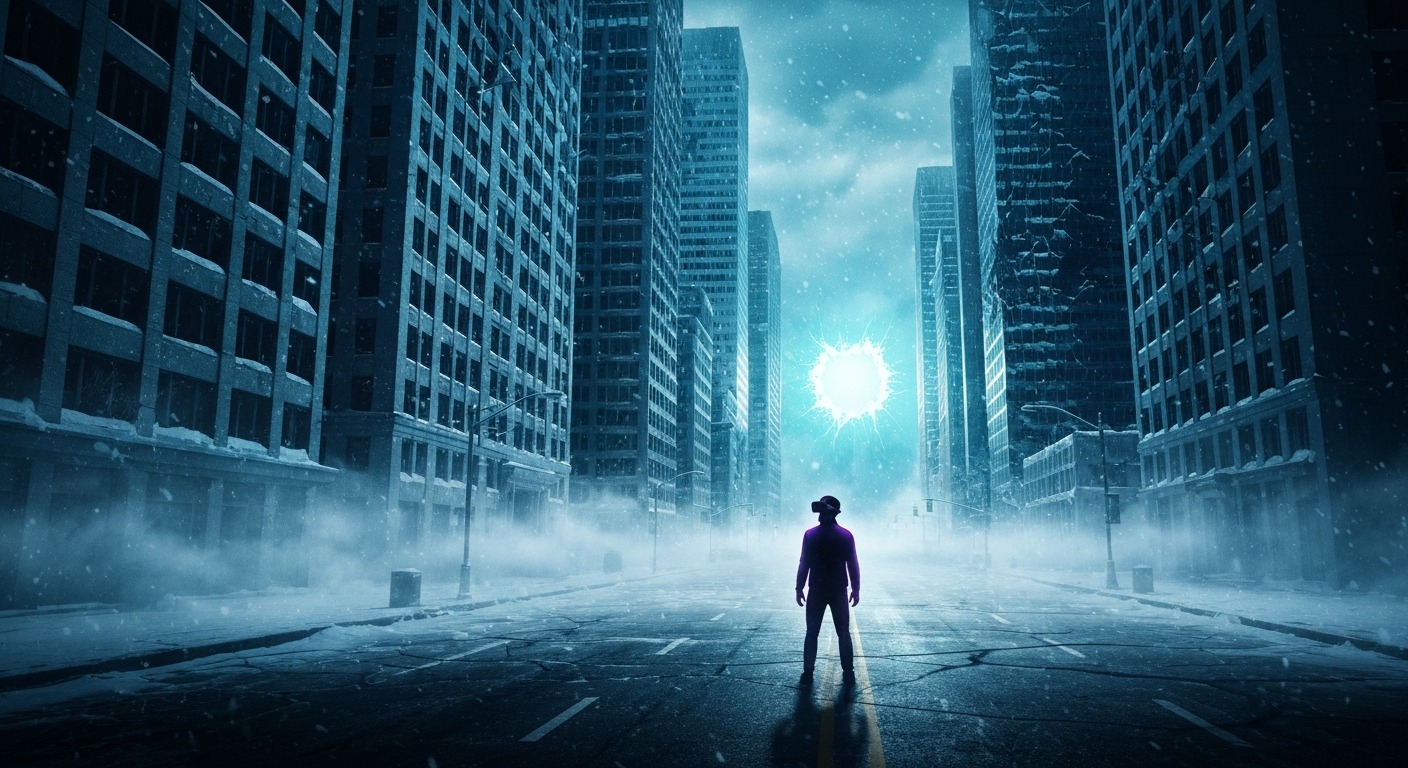
After the Fall in VR: The Closest Thing to Left 4 Dead in a Headset
I went into After the Fall expecting a VR zombie shooter with friends. What I got was a competent, sometimes thrilling co-op horde mode that borrows so heavily from Left 4 Dead it almost feels like a mod of it — except it’s built for VR from the ground up, and that changes more than you’d think.
The first time a Snowbreed horde pours through a crack in a frozen wall while I’m fumbling for a fresh magazine, I understood why this game won PC VR Game of the Year. Vertigo Games knows VR shooting. The guns have weight, the reloads are manual, and the undead are genuinely frangible — heads pop, limbs separate, and the blood spray is generous without being cartoonish. It’s the kind of physical chaos that only works in VR because your body is doing the aiming, not a mouse.
But here’s the thing: After the Fall is also a grindy loot shooter wearing a co-op campaign’s clothes, and that grind starts showing its face about three missions in.
What It Actually Is
After the Fall is a four-player co-op FPS set in an alternate 1980s where an ice age turned most of humanity into mutants called Snowbreed. You and up to three other Runners push through linear levels dotted with safehouses, scavenging harvest currency to craft better weapons and attachments. Cross-play is supported across Quest, PCVR, and PSVR, so you can squad up with friends regardless of headset — a feature that should be standard by now but still feels generous when it works.
The game launched simultaneously on Steam, Oculus/Rift, and PSVR on December 9, 2021. It came to PSVR2 as a launch title on February 22, 2023 as the Complete Edition, bundling all the DLC. It’s also available on Pico 4. There is no flatscreen version of this game, which means there is no UEVR, no VorpX, no “Full VR Mod” to hunt down. The only question is which native platform to buy it on.
The Platform Decision
If you’re trying to decide between versions, the hierarchy is straightforward: PCVR for fidelity, PSVR2 for the best console experience, Quest for convenience.
On PCVR, After the Fall looks and behaves like the proper product Vertigo intended. Ragdoll physics, dense crowds, better textures and lighting — the Snowbreed feel like a genuine flood rather than a scripted trickle. The Rift version cross-buys with Quest, so if you own both headsets you only pay once.
On Quest standalone, the game sacrifices a lot of that visual detail to run wirelessly. Textures simplify, physics get dialed back, and the hordes look chunkier. It’s still one of the better-looking Quest shooters, and the freedom of no cable matters more than I expected during frantic reloads — but you are absolutely playing the downgraded version.
PSVR2 is the obvious console choice. It launched with eye-tracking and Sense haptics, and the Complete Edition meant PS5 players didn’t have to chase DLC piecemeal. I wouldn’t buy a PSVR2 for this game, but if you already own the headset it’s a solid pickup. The original PSVR version, by contrast, had a rough launch — Vertigo publicly advised that it needed a patch to be properly playable, which is not the kind of confidence you want from a day-one purchase.
How It Plays
Movement is smooth locomotion by default, with standard comfort options for snap vs. smooth turning and vignetting. This is not a teleport-and-hide shooter — you’re strafing, backpedaling, and panic-sprinting through tight corridors while Snowbreed lunge from vents and stairwells. Motion sickness is a real risk for sensitive players, especially in the vertical sections where the game likes to drop you down ice shafts or have enemies swarm from multiple levels. I used snap turning for the first hour until my VR legs caught up.
The shooting itself is excellent. Pistols, shotguns, rifles, and launchers all feel distinct, and the manual reloading forces you into the kind of pressured multitasking that flat shooters can’t replicate. The crafting system lets you upgrade weapons over time, but the economy is where the game starts to sag. You earn harvest points by completing missions quickly, accurately, and without dying, then spend them on incremental gun improvements. After a handful of runs the loop becomes transparent: replay the same levels on harder difficulties to afford slightly better versions of the same guns. It gives the game legs, but those legs are repetitive.
Enemy variety is the other weakness. The Snowbreed classes map cleanly onto Left 4 Dead archetypes — you’ve got your basic horde, your tank, your spitter equivalent — and while they serve the combat fine, they stop surprising you after a few hours. The single campaign boss is a cool setpiece the first time and a chore the fifth.
What Works and What Doesn’t
The co-op structure is the best part. After the Fall understands that VR co-op lives or dies on communication and shared panic, and the levels are designed to create those moments. Reviving a teammate while covering a doorway, watching someone fumble a reload as twenty Snowbreed close in, calling out harvest crates across a frozen street — that’s where the game earns its keep.
The long-term retention is shakier. Multiplayer-only-adjacent games like this depend on population, and while cross-play helps, the limited level count and repetitive boss mean you’re mostly grinding for better gear in environments you’ve memorized. There’s no sprawling world to inhabit; you’re running the same gauntlets with bigger numbers. That’s fine for a few dozen hours, but it’s not the kind of game you keep installed for a year.
On the upside, setup is trivial. You buy it, you install it, you put the headset on. No BepInEx, no OpenXR tweaks, no controller binding rabbit holes. For anyone exhausted by the flat-to-VR setup grind, that alone is worth something.
The Verdict
After the Fall is a solid B-tier VR shooter: good gunplay, good co-op, and a forgettable economy stretched over too few enemy types. It doesn’t transform the genre, but it delivers exactly what it promises — four friends shooting ice zombies in VR with cross-play that actually works. If you have a PCVR rig, that’s the version to get. On Quest it’s a capable portable alternative. On PSVR2 it’s a comfortable console purchase. Just don’t come looking for a deep world to get lost in; come looking for a Saturday night horde shooter, and you’ll leave satisfied.