
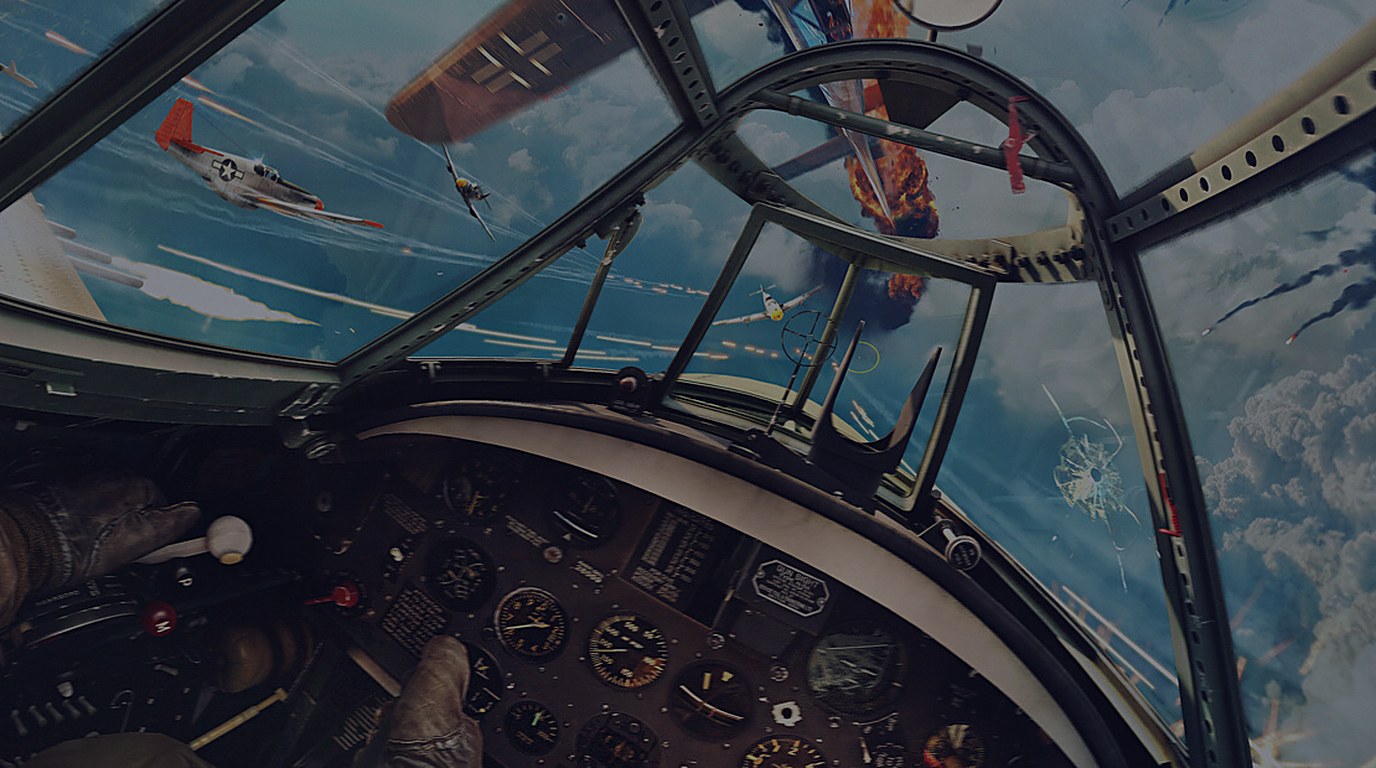
The first thing that hit me in Aces of Thunder wasn’t the speed. It was the canopy frame. I’d strapped into a P-51 Mustang, reached out, and the virtual stick was already in my hand — no menu, no “press A to grab controls,” just my actual hand closing around a throttle that sat exactly where a throttle should sit. Gaijin didn’t staple a headset onto War Thunder. They cut a dogfighter from the cockpit out, and you feel it in the first thirty seconds.
A Native Build, Not a Retrofit
Most flight games in VR are War Thunder or Microsoft Flight Simulator with the headset bolted on — the cockpit is a shell you peek through, the head tracking is an afterthought, and the controls were drawn for a stick and a keyboard, not your hands. Aces of Thunder is the opposite. It’s a native OpenXR build on Gaijin’s own Dagor engine, the same technology that runs War Thunder, but here the cockpit is the entire game. You never leave it. Every mission launches from a seat with instruments where they belong and a view out the canopy that is actually a view, not a render of one.
The flat-screen mode lives in the same build — buy it once, and “VR headset optional” is a real option, not a patch. I’ll come back to who that matters for, because it changes the buying math. But the VR isn’t a toggle dropped on top of a flat game; it’s the shape the game was cut to. It shipped day one on both PSVR2 and PCVR, same date, same price, and there’s no community conversion because the VR was built in, not bolted on.
What It Feels Like in the Cockpit
The cockpit presence is the whole pitch, and it mostly delivers. You’re sitting inside a P-51 or a Fw 190 with the canopy frame in your peripheral vision, the instruments where they should be, and your hands on the stick and throttle. Your own tracked controllers become the virtual HOTAS — the store copy promises you’ll “literally control the aircraft with your own hands,” and it isn’t lying. Reach for the throttle and your hand is on the throttle. Want the gear lever, it’s where a gear lever would be. That’s the gap between a VR-native cockpit and a flat one wearing a headset: your hands know where things are without you reading a diagram.
Between missions you can walk the hangar and get close to your favorite aircraft, which lands bigger than it should — it tells you the developers thought about the headset as a place to be, not just a screen to project through. The flight and damage models are lifted from War Thunder, so the planes handle like the ones War Thunder players already argue about, and the fifteen maps span the Western, Eastern, and Pacific fronts plus WWI frontlines with Fokker Dr.Is and SPADs if biplanes are your itch. Twenty-plus airframes, cockpit-only, every one of them a seat you occupy rather than a model you watch.
A fixed cockpit reference frame makes this one of VR’s calmer seats, but hard aerobatics and spins will still test anyone prone to sickness.
The Input Story Is Messier Than the Pitch
The virtual HOTAS with tracked controllers is the pushed default, and it’s the right one — your hands are the controls, and that’s the VR sell. But Gaijin also advertises full hardware HOTAS and gamepad support, and that’s where the calm gets interrupted. The sim crowd showed up wanting a serious rig experience, and the threads I read suggest the HOTAS binding is rougher than it should be: a 27-comment r/PSVR thread complains a current Thrustmaster HOTAS is “just as bad as” the previous generation, which is the kind of pain point that tells you the hardware path was shipped, not finished. If you’re buying this to plant a real stick and throttle on your desk, go in knowing the virtual hands are the polished route and the metal is the contested one.
None of that touches the controller experience, which is the one most VR pilots will actually use. Gamepad is there as a fallback and works, but the motion-control virtual cockpit is the reason to put the headset on, and it’s the thing that holds up.
Performance and Reach
On PCVR this is moderate demand — the recommended spec lands around an RTX 3070 Ti class card with 16 GB of RAM, and the cockpit is the heaviest thing on screen, not the sky. A mid-range PC pushes it at a stable frame without drama, and the seated, cockpit-fixed view is forgiving on reprojection if your rig dips. I saw footage from a Pimax owner and a standard PSVR2 playthrough and neither showed the kind of stutter that breaks the illusion. On PSVR2 it’s the same content at the same thirty-dollar price, no asterisks. There’s no Quest standalone build and no PSVR1 path, but the game was built for the headsets it shipped on, and it runs clean there — platform reach is a who-can-play note, not a knock on what’s in the headset.
The Reception Split Is Real
Here’s where I stop selling it. The YouTube coverage is a wall of superlatives — “Utterly INCREDIBLE,” “INSANE,” “MORE Incredible Now” — and the r/PSVR community ranked it seventh among 2026 PSVR2 titles. But the Steam user reviews sit at 57% positive across 1,194 buyers, and the recent window is actually worse, 47% of 19 in the last month. The PlayStation Store averages 3.73 out of 5 across 2,333 ratings. Those aren’t troll numbers; they’re the people who paid.
The split tracks an audience fault line. VR-first pilots — the ones who bought a headset to sit in a cockpit — tend to love it, because the presence is exactly what they came for. Sim purists, the people who wanted a DCS-grade flight model with War Thunder’s skin, look at the arcade-derived handling and the contested HOTAS path and bounce. A whole video exists titled “Everyone’s Praising Aces of Thunder. They Left This Out,” and it exists because the praise and the disappointment are both real. A content update roughly 224 days after launch addressed enough that lapsed players posted about returning — it’s not abandoned, and the rough edges are being sanded.
Who Should Strap In
This is a VR pilot’s dogfighter, not a simulator’s. If your measure of a flight game is how faithfully it models torque and trim, the War Thunder-derived handling will read as arcade and you’ll be in the 43% who didn’t leave a positive Steam review. But if you put on a headset to be somewhere, to sit in a P-51 with the canopy around your vision and your own hands on the stick, this does the thing the rest of the genre only gestures at. The virtual HOTAS is the real route; treat the hardware rig as a maybe, not a promise.
The flat-screen mode in the same build is a courtesy, not the draw — and it matters because it means a friend without a headset can still fly with you. That’s the honest shape of it: a native cockpit experience that transformed the genre’s default into something you occupy, held back by a flight model the hardcore won’t accept and a HOTAS path that’s rougher than it should be. For the right pilot, it’s one of the most convincing seats I’ve put a headset on this year. For the wrong one, it’s War Thunder with the landing gear down.