
HTC Vive Review: The Room-Scale Revolution
The HTC Vive shipped on April 5, 2016 — and it was the first headset to deliver the full VR promise: motion controllers, room-scale tracking, and hands that actually appear in the game. We spent launch week inside it. Here's what $799 buys, what it costs, and why it changed everything.
The Oculus Rift shipped in March 2016 and proved consumer VR was real. A month later, the HTC Vive answered a different question: what if VR wasn’t just something you looked at, but somewhere you stood?
On April 5, 2016, the Vive arrived — a $799 headset built by HTC and Valve that did what no consumer headset had done before. It tracked your hands with motion controllers. It tracked your body across an entire room. It put you inside the game, not just in front of it. After a week living with it, the verdict is clear: the Vive is the first headset that delivers the full VR promise, and it’s the reason the Rift suddenly looked incomplete.
The Hardware
The specs are familiar on paper. Two AMOLED panels running 2160×1200 (1080×1200 per eye) at 90Hz. A 110-degree field of view. Adjustable lens spacing. A headset that weighs about 555 grams. But the specs that matter aren’t on the display — they’re in the tracking.
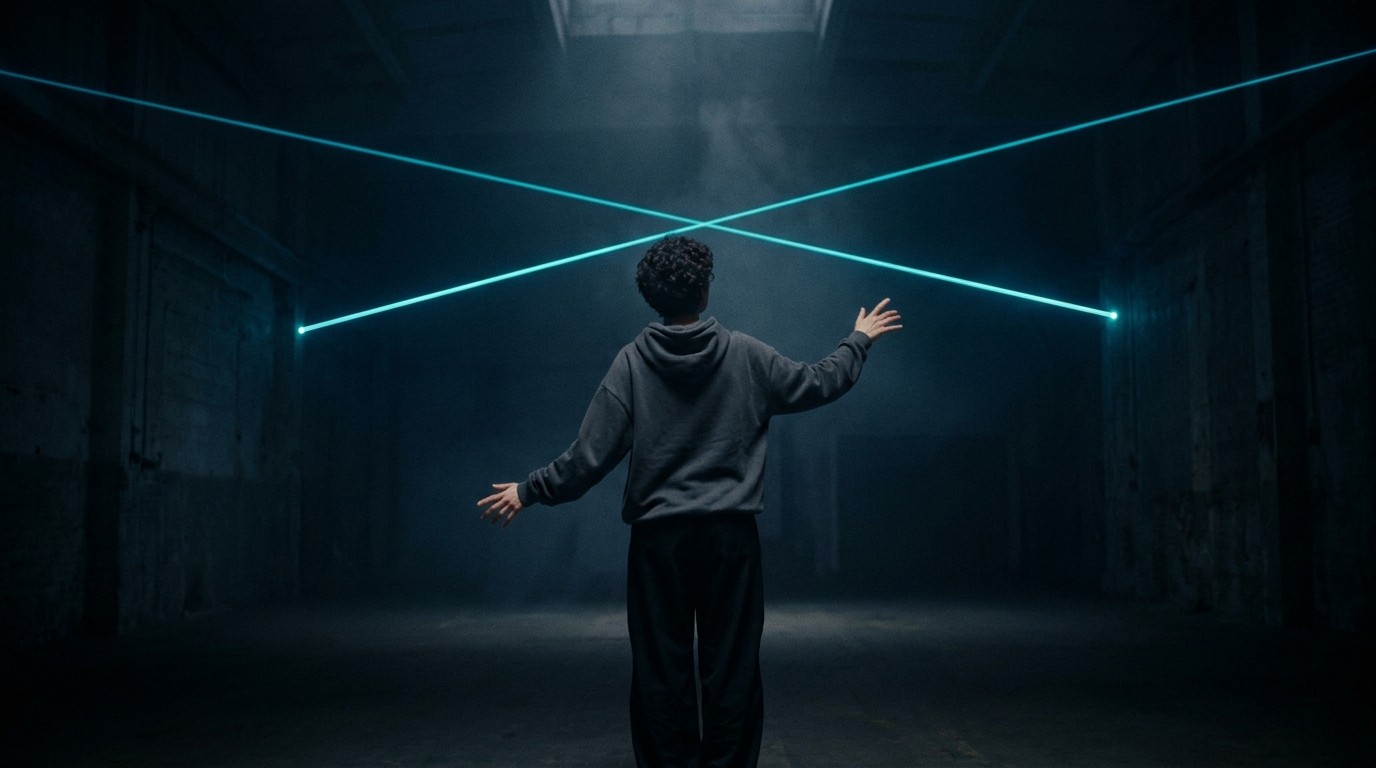
The Vive uses Valve’s Lighthouse system: two small boxes you mount in opposite corners of your room that sweep infrared lasers across the space. The headset and controllers triangulate their position from those lasers, reporting their location and angle precisely and quickly across a play area up to 15 feet diagonally. This is the breakthrough. It’s what makes room-scale VR possible, and it’s what the Rift — with its single forward-facing camera sensor — couldn’t match at launch.
The controllers are the other half of the story. Two wireless, motion-tracked wands with a clickable thumbpad, an analog trigger, and grip buttons. They’re not much to look at, but they’re the most accurate and usable motion controllers released to date. When you look down in VR, you see them sitting exactly where your hands are. That changes everything.
The Room-Scale Experience
The first time you stand in a Vive game, you understand what the hype was about. You’re not watching a world on a screen — you’re in a volume of space you can walk through, lean into, and reach out and touch.
The effect is genuinely disorienting in the best way. You flinch when an object comes close to your face. You feel real vertigo looking down from a simulated mountain peak. You whirl around to face an encroaching zombie and feel a real spike of terror. Your brain stops treating it as a screen and starts treating it as a place.
The controllers unlock a new language of interaction. You don’t follow a prompt to pull a lever — you just reach out and pull it. You pick up a virtual object by grabbing it. You aim a gun with a twist of your wrist. The controller in your hand becomes a bow, a sword, a flashlight, a tennis racket, a paintbrush that suspends color in mid-air. It’s intuitive in a way no button-based control scheme has ever been, because you’ve been training your whole life to use your hands.
The room-scale space itself matters more than you’d expect. In Space Pirate Trainer, you sidestep and duck out of the way of incoming bullets like an action-movie star. In Vanishing Realms, you jump backward to avoid a swinging sword. In Job Simulator, your room becomes a full-sized office you can wander around. The space isn’t a gimmick — it’s the point.
The Setup Problem
Here’s the cost of all that magic: the Vive is high maintenance.
The Lighthouse boxes need to be mounted in opposite corners of your room, ideally above your head and angled down, with access to a wall outlet. You’ll likely be drilling and screwing swivel mounts into your walls or ceiling. You need to clear your play space of coffee tables, chairs, and pets. And you need at least 1.5m × 2m of open floor — which, for many people, means rearranging a room or accepting a smaller-than-ideal space.
The initial setup is a real process, and it’s a one-time hassle that makes a small space feel even smaller. The tracking boxes can also be finicky — I had moments where a box turned off for no apparent reason, or a controller briefly floated away, or the headset lost tracking and clouded my vision in gray for a few seconds. It’s rare, but it’s there.
The headset itself is also the least comfortable of the launch headsets. It’s clamped to your face like ski goggles, with a thick vinyl headband and a heavy ring of pressure around your eyes and nasal passages. It traps heat and leads to sweat and facial redness during active play. The four cables that tether you to your PC are a constant presence, and you’ll occasionally get a foot tangled in them during high-intensity moments. None of it is a dealbreaker, but you’ll take breaks to let your face breathe.
The Launch Lineup
The Vive launched into a library of over 100 games listed as “VR supported” on Steam — a huge advantage over the Rift’s thin Oculus Store. The quality varies wildly, but the highlights are real.
Job Simulator is the perfect introduction. A comedic simulation where you perform absurd office tasks — making coffee, filing documents, microwaving hot dogs — with your actual hands. It’s the game you show people who’ve never tried VR, because it’s immediately understandable and endlessly charming.
Space Pirate Trainer is the arcade showpiece. You stand in a room and shoot down waves of drones with a gun in each hand, ducking and dodging behind cover. It’s simple, it’s frantic, and it’s the clearest demonstration of why motion controllers matter.
Vanishing Realms is the adventure. A first-person dungeon crawler where you swing a sword, block with a shield, and explore a fantasy world at room scale. It’s rough around the edges, but it’s the closest thing the launch had to a full game, and it proves the model works.
The rest of the catalog is a mix of tech demos, experiments, and awkwardly adapted flat games. TheBlu puts you in an underwater scene that’s more experience than game. Fantastic Contraption turns your room into a garage for building absurd machines. Hover Junkers is a multiplayer shooter built around the room-scale concept. The library is deep but uneven — the signal is clear, even if the polish isn’t.
The PC Problem
The Vive needs a serious PC. Valve recommends a GTX 970 or AMD R9 290 equivalent or better, an i5-4590 or FX 8350, and 4GB of RAM. A VR-ready PC will set you back $800 to $1,500 on top of the $799 headset. The total cost of entry is $1,600 to $2,300, minimum.
The 90Hz refresh rate is non-negotiable for comfort, and the Vive holds it — but only if your GPU can push the frames. The room-scale tracking also demands more of your system than the Rift’s seated model, because you’re rendering a full 3D volume you can walk through, not just a view you look at. If you already own a VR-ready PC, the Vive is a $799 upgrade. If you don’t, it’s a serious investment.
The Verdict (And It’s Complicated)
The HTC Vive is the best VR headset you can buy in April 2016 — and it’s the one that defines what VR is supposed to be.
The Rift shipped a month earlier with a gamepad and a forward-facing camera. It was a beautiful headset, but it was a seated, gamepad-driven experience — the flat-screen era with a screen strapped to your face. The Vive is the opposite. It gives you your hands. It gives you a room. It gives you the full promise of VR: not watching a world, but standing in one.
The cost is real. It’s $799, it needs a serious PC, it demands you mount hardware in your room and clear your floor space, and the headset is uncomfortable over long sessions. The setup is a hassle, and the tracking isn’t flawless. But the experience — the first time you reach out and grab something in a virtual world, the first time you duck behind cover in a room that isn’t there — is something no other headset could deliver in 2016.
The Vive is the holodeck simulator v1.0. It’s rough, it’s demanding, and it’s the most important VR hardware of the year. If you want the full VR promise — hands in the game, walking around a room — this is the headset. The Rift is the starting line. The Vive is the revolution.
Score: A- — The first headset to deliver the full VR promise: motion controllers, room-scale tracking, and hands that actually appear in the game. Held back by its price, its setup burden, and an uncomfortable design. But it’s the one that defined what VR is supposed to be.