
The 10 Best PSVR Launch Games: Sony's $399 Bet on Console VR
The PlayStation VR launched on October 13, 2016 with over 30 titles — the deepest VR launch library to date. Here are the 10 that proved console VR wasn't a compromise.
The Rift launched with Lucky’s Tale and a prayer. The Vive launched with space-scale demos and a $1,500 PC requirement. The PSVR launched on October 13, 2016 with over 30 titles — and for the first time, the launch library was deep enough to matter.
Sony’s bet was different from Oculus and HTC’s. Instead of chasing the highest specs, they built the most accessible headset — $399, plugs into the PlayStation 4 you already own, sets up in fifteen minutes. The tracking was worse. The resolution was lower. The Move controllers were repurposed from 2010. But the price was right, the install base was massive, and the launch library covered enough ground that everyone found something to play.
Here are the 10 games that proved console VR wasn’t a compromise — and the 5 that came close.
#1: Until Dawn: Rush of Blood
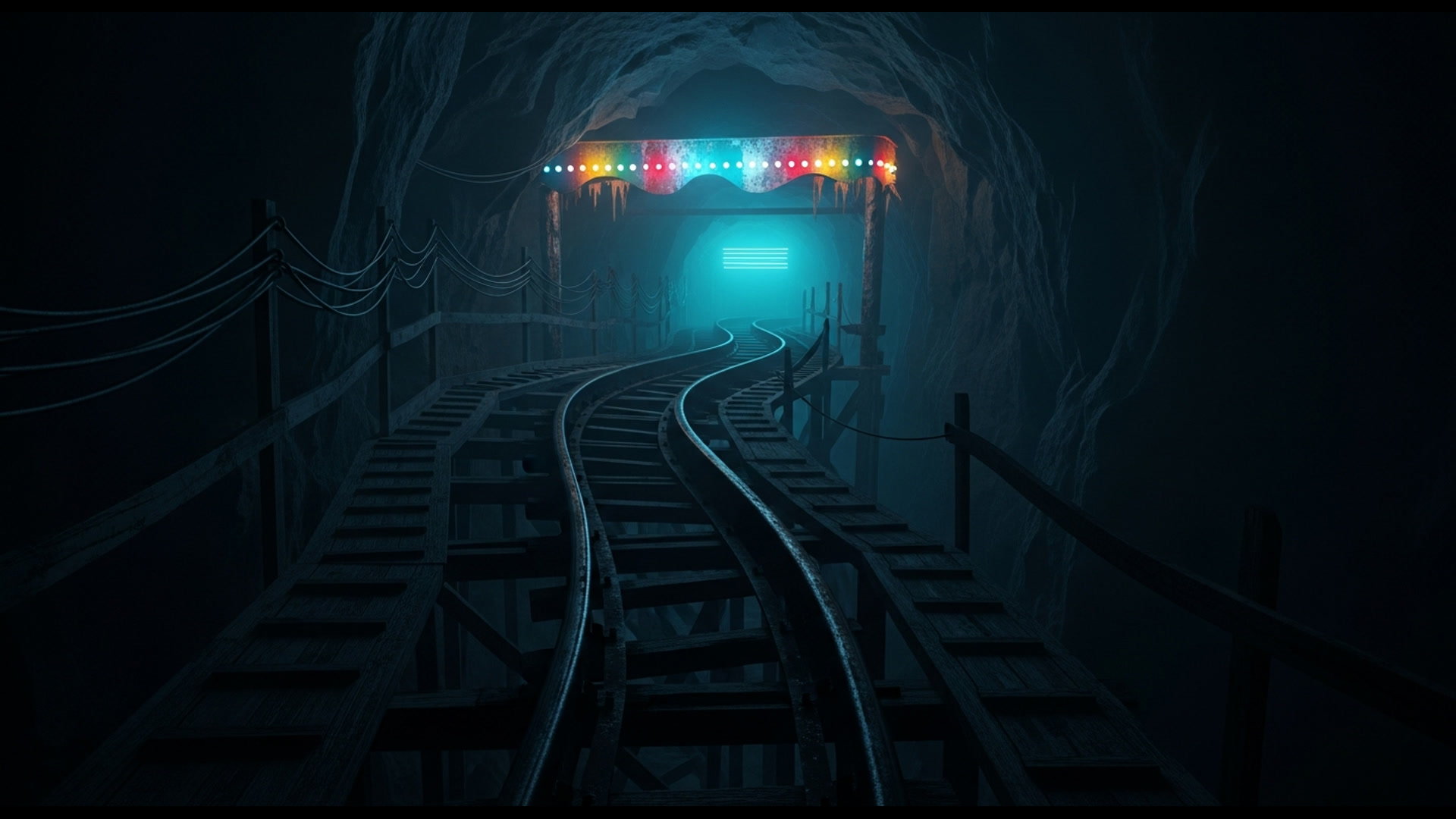
Until Dawn: Rush of Blood is the best PSVR launch game and it is not close. A rail shooter prequel to Until Dawn where you ride a rollercoaster through a haunted house with a gun in each hand. The Move controllers are the guns. The horror is effective. The set pieces are genuinely thrilling. The immersion is total.
The game understands what VR does best: make you feel physically present in a dangerous place. The rollercoaster tracks pull you through dark tunnels, around blind corners, and past jump scares that land harder because you can’t look away — you’re strapped to the ride. The shooting is simple but satisfying: pop targets, reload by flicking your wrists, and shoot the things that are trying to kill you between set pieces. The Move controllers, dated as they are, work perfectly as guns. You aim by pointing. You reload by flicking. It’s intuitive in a way that most VR shooters aren’t.
If you buy one PSVR game at launch, buy this. Rush of Blood is the game you show people to explain why VR matters. It’s scary, it’s fun, and it’s the most complete experience in the launch library.
Read the full Until Dawn: Rush of Blood review
#2: Thumper
Thumper describes itself as “rhythm violence” and earns the label. You are a beetle hurtling through a psychedelic void, hitting timing prompts at 120fps. The speed, the sound design, the visual intensity — this is the first VR game that made my palms sweat.
The game is brutally simple: one button, one stick, a track that demands perfection. You hit notes on beat, charge through gates, and dodge obstacles at speeds that feel suicidal. The sense of speed in VR is overwhelming — the void rushes past you, the bass shakes your skull, and the visual intensity ramps from hypnotic to assault as the levels progress. It works on a flat screen. It is transcendent in VR.
Thumper is also one of the few launch games that runs at native 120fps, and the smoothness is immediately apparent. Every other game that relies on Sony’s 60fps-to-120fps reprojection feels slightly off by comparison. Thumper feels like silk. It is the technical showcase for what the PSVR’s display can do when a game is built around it.
#3: Rez Infinite
Rez Infinite is Tetsuya Mizuguchi’s remake of the cult classic rail shooter, and it is the game that most justifies the PSVR’s existence as a creative platform. It is a sensory experience that only works in VR — the music, the visuals, the synesthetic flow of shooting through a digital landscape.
The original Rez was already a masterpiece of synesthetic game design — a game where shooting, music, and visuals merged into a single flowing experience. In VR, the merger becomes total. You are inside the music. The visuals wrap around you. The haptic feedback pulses with the bass. You don’t play Rez Infinite — you inhabit it.
Area X, the new VR-exclusive level, is the reason to buy the headset. It’s a ten-minute experience that rebuilds Rez’s formula from scratch — organic visuals, a sweeping soundtrack, a sense of flying through a living painting. It’s the most beautiful thing on the PSVR at launch, and it’s the game that makes the case for VR as an art medium, not just a gaming platform.
Read the full Rez Infinite review
#4: Batman: Arkham VR
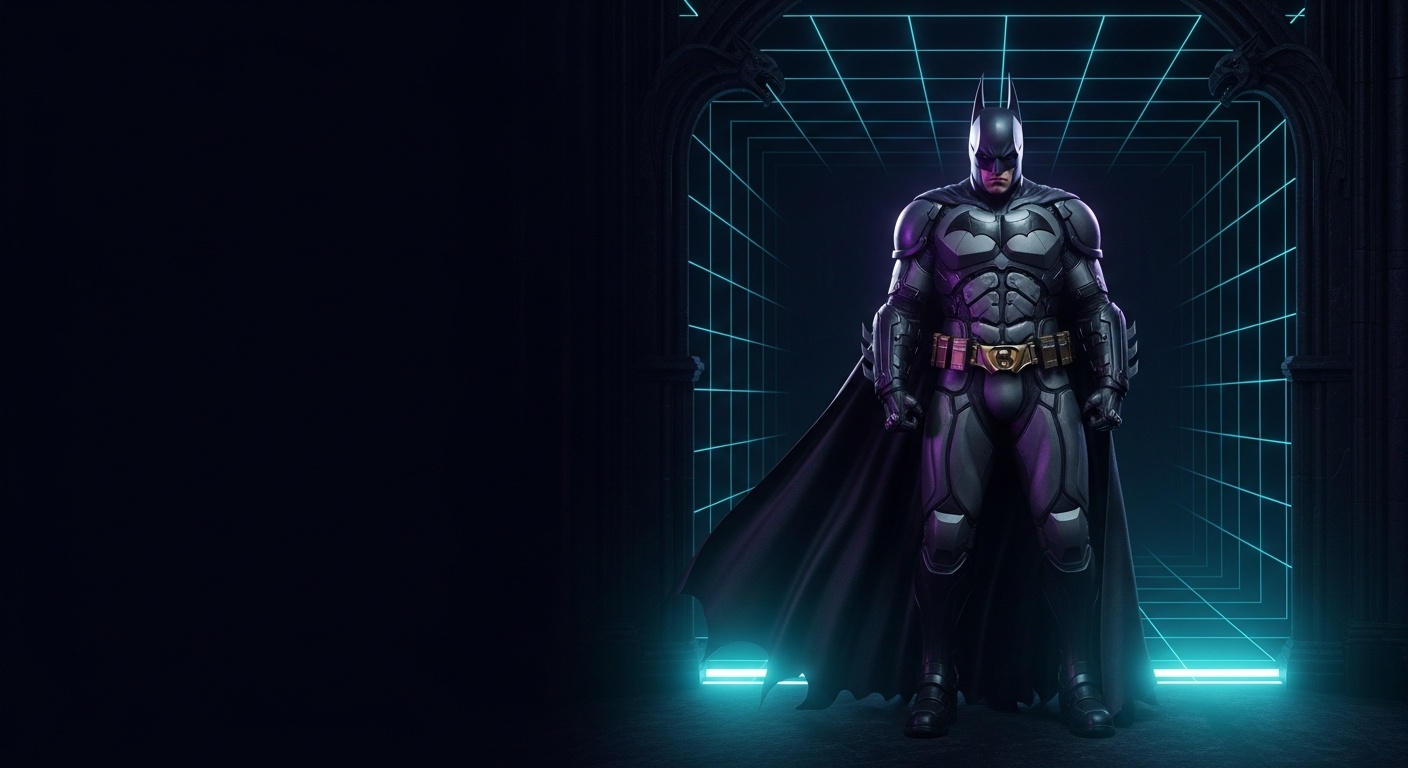
Batman: Arkham VR is Rocksteady’s VR detective experience. You are Bruce Wayne. You put on the suit. You investigate crime scenes. It is an hour and a half long. It is a tech demo with a Batman skin. It is also the most “I am actually here” experience on the PSVR.
The mirror moment — looking in a mirror and seeing Batman stare back at you — is the kind of moment that sells VR to non-believers. You turn your head, and Batman turns his. You reach for your cowl, and Batman’s hand moves. It’s a trick of perspective and tracking, but it’s a trick that works. The crime scene investigation sections let you examine evidence, use Batman’s gadgets, and piece together a mystery in a way that feels physical and immediate.
The length is indefensible. Ninety minutes is not a game — it’s a tech demo. But the production value is undeniable, and the experience is so uniquely “Batman” that it justifies its existence as a proof of concept. This is what VR can do for beloved franchises: put you inside them.
Read the full Batman: Arkham VR review
#5: Driveclub VR

Driveclub VR is the technical showcase. Racing in VR at 120fps with a full cockpit view is the single most convincing VR experience on the PSVR at launch. You sit in the driver’s seat, look left and right to check traffic, feel the speed of the track in your gut.
The graphics are downgraded from the base Driveclub — lower texture resolution, reduced draw distance, simpler lighting. The downgrade is visible. The VR immersion compensates. When you’re leaning into a turn and your brain believes you’re actually moving at 120mph through a mountain pass, the lower texture resolution stops mattering. The sense of speed and presence is something no flat racing game can match.
Driveclub VR is the game that makes the case for VR racing. Not as a simulation — it’s more arcade than sim — but as a visceral experience. You’re not looking at a screen. You’re inside the car. And when you cross the finish line in first place, the victory feels earned in a way that a flat screen can’t deliver.
Read the full Driveclub VR review
#6: Battlezone
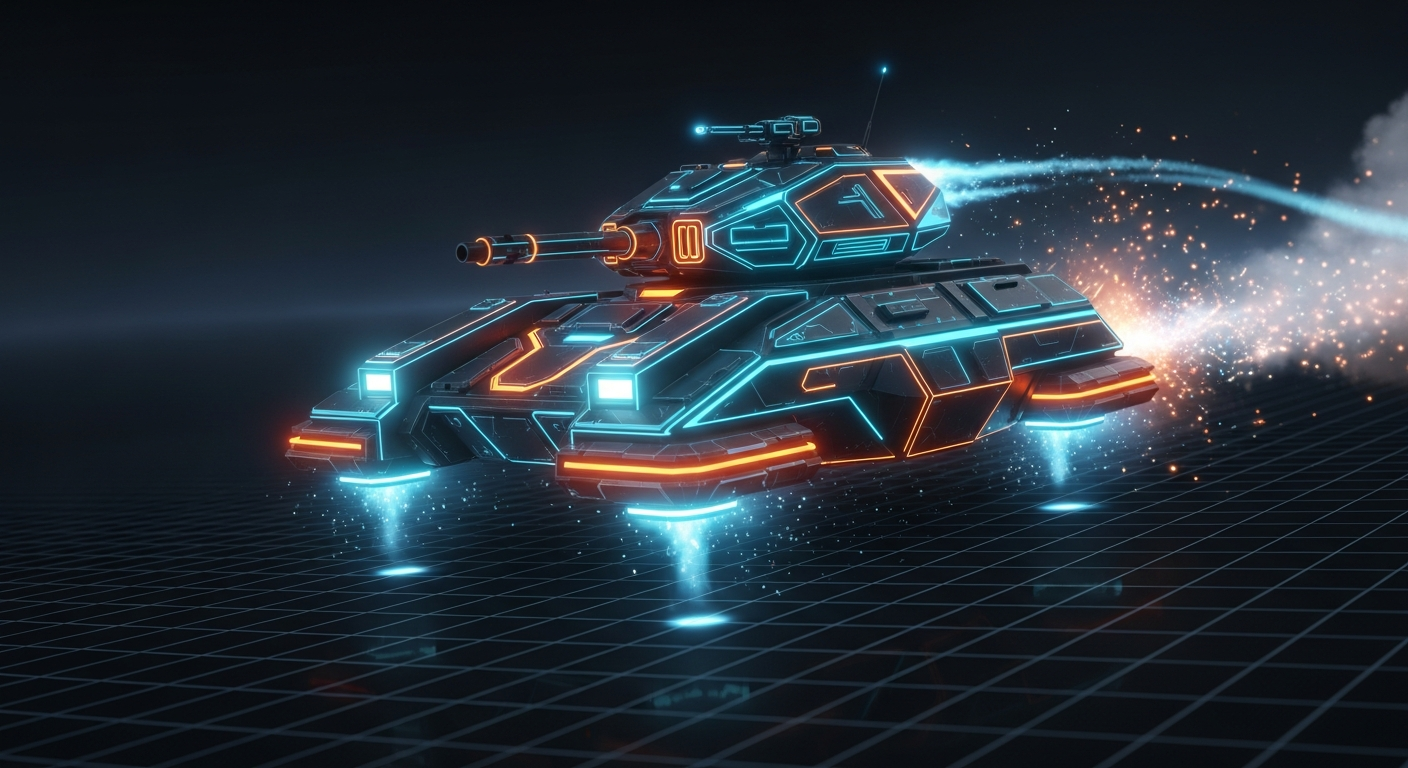
Battlezone is a remake of the Atari tank game, reimagined as a neon tank shooter with a roguelike campaign structure. It is fun, it is replayable, and it uses the VR cockpit perspective effectively.
You sit inside a tank cockpit, surrounded by neon wireframe environments, fighting waves of enemies in a campaign that randomly generates its level structure. Each run is different. The roguelike structure means death sends you back to the start, but the upgrades and unlocks persist across runs. The neon art style looks sharp on the PSVR’s OLED display, and the cockpit perspective — looking around the interior of your tank while enemies swarm outside — is a perfect fit for VR.
Battlezone is not a system seller. It is a solid B-tier game that benefits from VR’s sense of presence. The tank combat is satisfying, the roguelike structure adds replay value, and the visual style is distinctive. It’s the game you play between the blockbusters — the one that fills the gaps in your library and keeps you coming back.
Read the full Battlezone review
#7: EVE: Valkyrie
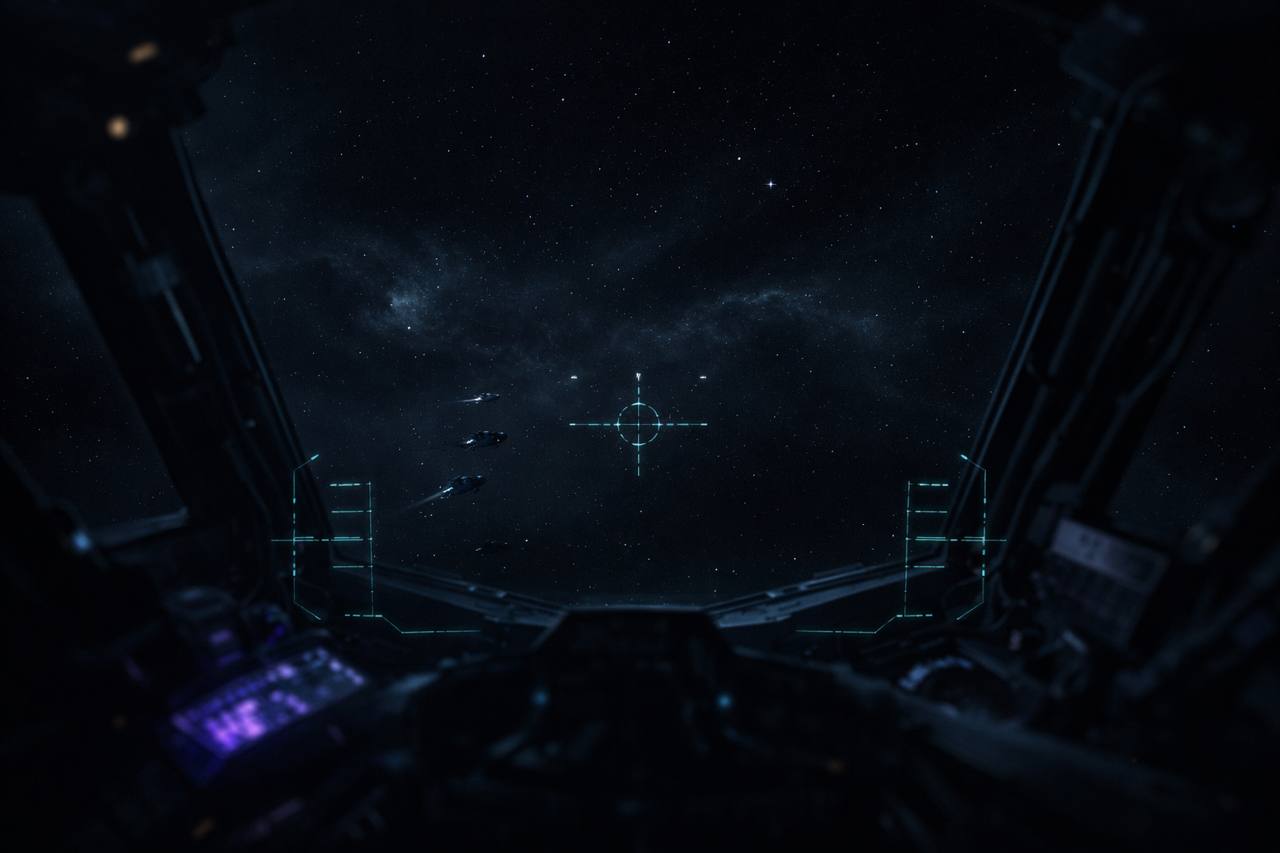
EVE: Valkyrie is the space combat game that makes you feel like an X-Wing pilot — a dogfighting experience built from the ground up for VR and designed to exploit the headset’s strengths.
You sit in a spaceship cockpit, surrounded by stars and enemy fighters, and you fly by looking where you want to go. The controls are intuitive: look to aim, pull the trigger to fire, boost to close distance. The sense of scale is overwhelming — capital ships loom overhead, missiles streak past your canopy, and the void of space stretches infinitely in every direction. VR makes space combat feel real in a way that flat screens can’t.
The multiplayer focus means the game lives or dies by its community, and at launch, the community is thriving. The ship variety, the upgrade paths, and the competitive modes give EVE: Valkyrie the legs to sustain long-term play. It’s the PSVR’s best multiplayer experience at launch — fast, competitive, and visually stunning.
Read the full EVE: Valkyrie review
#8: Job Simulator

Job Simulator is the game you show to your parents. A tongue-in-cheek simulation of “jobs” — cook, office worker, store clerk, mechanic — as remembered by robots in a future where humans don’t work anymore. It’s simple, funny, and perfectly designed for VR newcomers.
The game’s genius is its physicality. You grab objects, throw them, stack them, and interact with the world using your hands. The Move controllers track your movements precisely enough that the interactions feel natural — pick up a coffee mug, drink from it, throw it at a customer. The humor is light and accessible, the tutorials are clear, and the difficulty is nonexistent. It’s a playground, not a challenge.
Job Simulator matters because it’s the Wii Sports of PSVR — the game that demonstrates the technology to people who’ve never tried it. Every VR headset needs a game that non-gamers can pick up and understand in thirty seconds. Job Simulator is that game. It’s not deep. It’s not long. It’s essential.
Read the full Job Simulator review
#9: Here They Lie
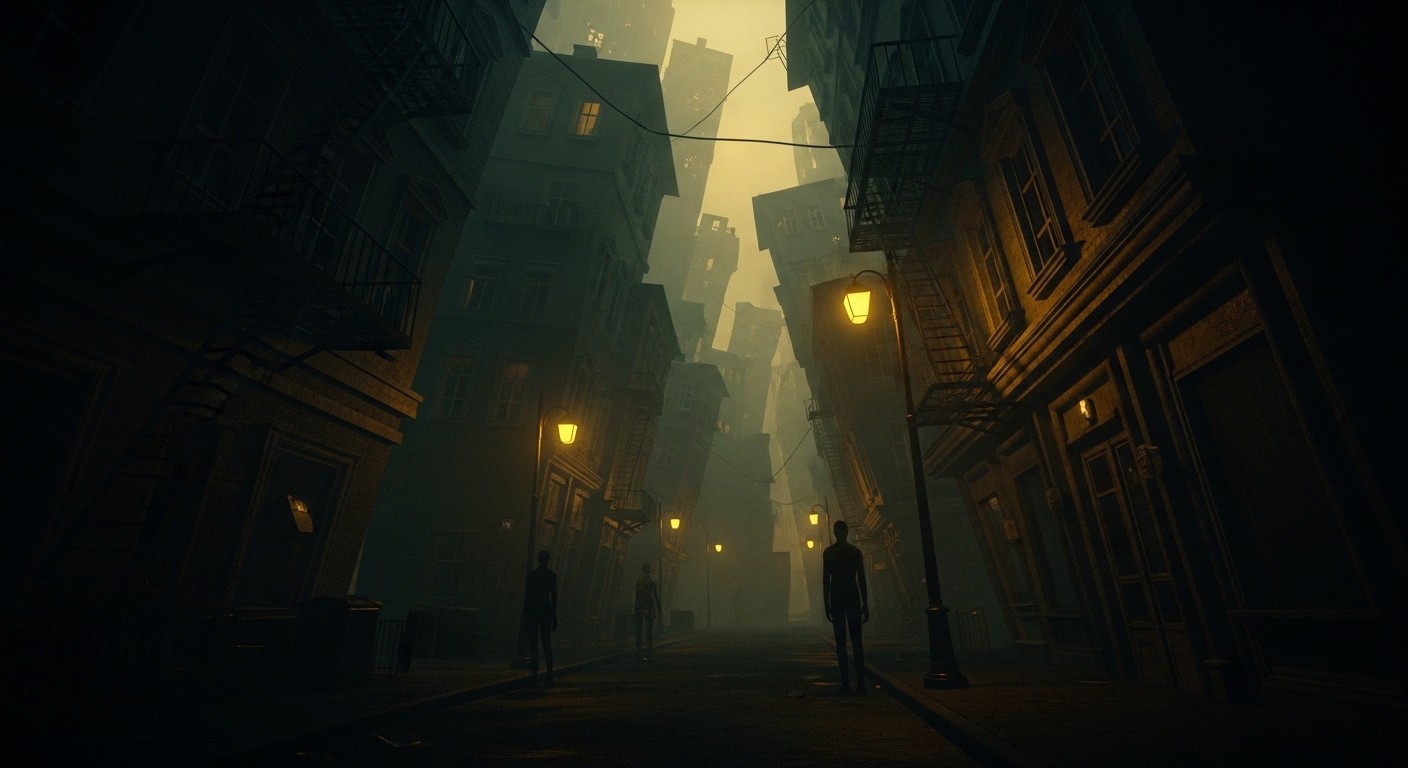
Here They Lie is a first-person horror walking sim through a surreal city that works better as an atmosphere piece than a game. It is atmospheric and unsettling, and it uses VR to create a sense of place that few launch titles match.
You walk through a decaying city, following a woman in a yellow dress through environments that shift between realistic and nightmarish. The art direction is striking — empty streets, flickering lights, impossible architecture — and the sound design creates a constant low-level dread that builds without ever resolving. The narrative is deliberately oblique, more about mood than plot.
Here They Lie suffers from the PSVR’s tracking limitations. Locomotion is head-directed walking, and the reprojection makes the world swim slightly as you move. Motion sickness is a real risk. But for players who can handle the movement, the atmosphere is worth the discomfort. It’s the PSVR’s best horror experience at launch — not because it’s scary, but because it’s deeply, persistently wrong.
Read the full Here They Lie review
#10: Eagle Flight

Eagle Flight is the PSVR’s flight game — a first-person experience where you soar through the skies as an eagle, navigating through forests, cities, and canyons at speed.
The game uses head-tracking for steering — look where you want to go, and the eagle follows. The sense of flight is convincing: you bank through turns, dive through narrow gaps, and soar above landscapes that feel genuinely expansive. The PSVR’s tracking handles the head-based locomotion well enough that the flight feels natural, if simple.
Eagle Flight is the launch’s most relaxing game. No enemies to fight, no timers to beat — just you, the sky, and the thrill of flight. It’s the game you play when you want to unwind, the one that reminds you VR can be peaceful as well as intense. It won’t change anyone’s life, but it will make them smile.
Read the full Eagle Flight review
Honorable Mentions
Five more PSVR launch-window titles worth knowing about — games that didn’t make the top 10 but earned their place in the library.
PlayStation VR Worlds — Sony’s compilation disc, a mix of five experiences including The London Heist (a gangster shooter that shows off the Move controllers) and Ocean Descent (a shark cage dive that shows off the headset’s immersion). The Wii Sports of PSVR. Not as good as Wii Sports. The London Heist is the standout.
Super Stardust Ultra VR — The twin-stick asteroid shooter reimagined for VR. The cockpit perspective works, the explosions are satisfying, and the 120fps performance is smooth. A solid arcade experience that benefits from VR’s sense of presence.
Headmaster — A soccer heading trainer that sounds absurd and plays brilliantly. You head balls at targets, dodge obstacles, and progress through increasingly chaotic challenges. The Move controllers make the heading motion feel physical, and the humor keeps the tone light. The best pure-motion game in the launch library.
Hyper Void — A space shooter that uses the cockpit perspective effectively. The neon art style looks sharp on the OLED display, and the shooting is satisfying. Not a standout, but a solid addition to the library.
Tumble VR — A block-stacking puzzle game that works perfectly in VR. You pick up blocks, rotate them, and place them on a tower. The physics are satisfying, the challenges are creative, and the Move controllers make the manipulation feel natural. The PSVR’s best puzzle game at launch.
The Lineup That Changed the Argument
The PSVR’s launch library wasn’t just deep — it was diverse. Horror, rhythm, racing, flying, shooting, puzzling, social, creative. Sony didn’t just port Rift games and call it a day. They funded exclusives that demonstrated the headset’s strengths, curated a lineup that covered enough genres to give every type of player a reason to buy, and launched with a library that felt like a real platform, not a proof of concept.
The secret was curation. Oculus launched with a handful of polished titles. HTC launched with tech demos. Sony launched with thirty-plus games that covered the spectrum from “you must play this” to “this is fun enough.” The range was the point. You didn’t buy a PSVR for one game — you bought it for the library. And at launch, the library was strong enough to justify the purchase.
The PSVR launched on October 13, 2016. By November, the argument was over. Console VR wasn’t a compromise. It was the future — and it was already in your living room.