
Best Pavlov Mods: Maps, Weapons, and the DIY Workshop Culture
Pavlov's real game is its Workshop. Beyond the Counter-Strike ports and Trouble in Terrorist Town sit a whole DIY culture of absurd maps — Left 4 Dead, Call of Duty Zombies, WW1 trenches, a Best Buy, a McDonalds, Mario Kart — plus custom weapons like nerf guns and lightsabers. Here's the essential Pavlov modding guide.
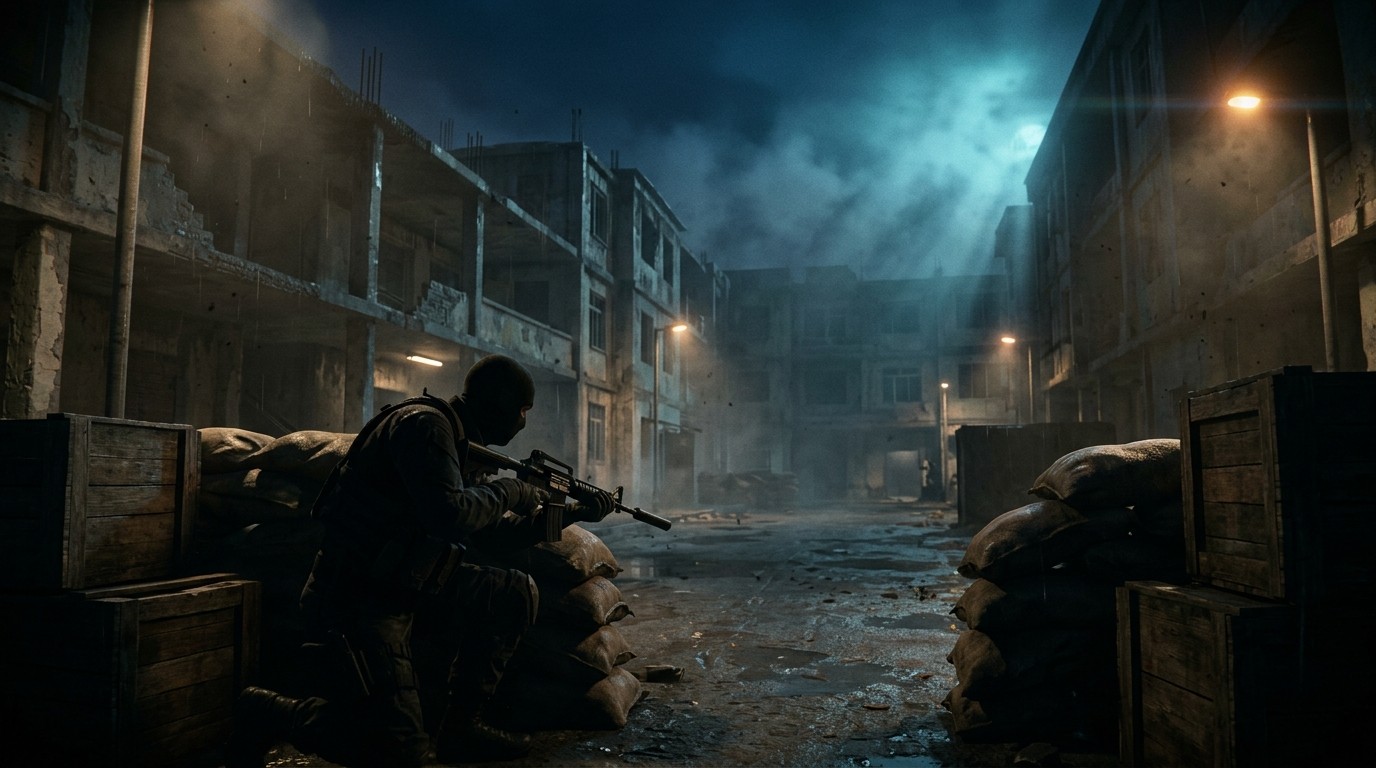
Pavlov has been called “Counter-Strike in VR” since its 2017 Early Access launch, but that nickname only describes the surface. The real Pavlov — the one the modding and DIY VR enthusiast community actually plays — is a Workshop-driven sandbox where the community decided the game’s whole personality.
The Steam Workshop turned Pavlov into a bottomless multiplayer machine. Custom maps, remade Counter-Strike classics, Left 4 Dead survival, Call of Duty Zombies ports, WW1 trenches, an actual Best Buy, a McDonalds, Mario Kart, SpongeBob, The Office — plus custom weapons from nerf guns to lightsabers. It’s the VR shooter where you never know what map you’re about to be dropped into, and that chaos is the point.
Here’s the essential Pavlov modding guide, from the maps that define it to the weapons that break it.
The Foundation: Steam Workshop and Mod.io
Before any of this works, know where the content lives. Pavlov’s full catalog is on PCVR via the Steam Workshop — that’s where the deep library is. The Quest port (Pavlov Shack) uses a separate, smaller Mod.io pipeline, and you don’t get the same breadth. If the mods and custom maps matter to you — and after this article, they will — PCVR is the only place that makes sense.
The Workshop has thousands of maps and a constant churn of new ones. The scene is so active that the “best of” list is a moving target; the entries below are the durable pillars, and everything else is a browse-by-popularity situation. Collections are your friend — community-curated packs bundle the essential maps and modes into a single subscribe.
The Counter-Strike Ports: Where It Started
The heart of Pavlov’s map scene, and its oldest tradition, is the Counter-Strike map port. Dust II, Dust, de_basalt, the classics — rebuilt room-for-room in Pavlov’s engine so you can finally walk the middle of Dust with a real weapon in your hands, physically crouch behind the crates, and peek the angle with your actual head. These aren’t pastiche; they’re faithful remakes tuned for VR movement.
For anyone who grew up on CS, walking through a remade de_dust2 in a headset is the single most powerful Pavlov moment there is. And it established the template for everything else: if the community loved a flat-screen map, someone would rebuild it in VR.
Left 4 Dead Maps: Zombie Survival, Rebuilt
The Left 4 Dead influence on Pavlov is enormous. When Left 4 Dead’s cooperative zombie-survival formula meets Pavlov’s manual-reload shooting and physical movement, you get some of the best co-op VR in the genre — and the Workshop is full of L4D map ports rebuilt for Pavlov’s zombie mode.
These aren’t just reskins. A Left 4 Dead map in Pavlov means you and a team, real hands on real weapons, clearing through familiar safe rooms and hordes — the spatial terror of zombies rounding a corner you can’t see, combined with the pressure of keeping your magazine full under fire. It’s the rare case where a flat-screen classic actually gets better in VR, and it’s a cornerstone of the modding scene.
Call of Duty Zombies: The Full Recreation
The other major survival pillar is Call of Duty Zombies. The community built a dedicated COD Zombies mod — creator xCeezyx’s project recreating the classic game mode for Pavlov — and on top of it, a whole collection of faithful remakes of the iconic maps.
Der Riese, Nuketown Zombies, Call of the Dead — the pack-and-punch, the mystery boxes, the round-based escalation, all rebuilt so you can physically run the classic zombie arenas in a headset. For Call of Duty fans, this is the definitive way to experience the mode that defined co-op survival, and it’s some of the most polished custom content Pavlov has.
The Historical War Maps: WW1, the Civil War, Vietnam
Where the DIY scene really shows off is its historical war maps — the ones that turn Pavlov into a completely different game.
World War One is the most celebrated. The Workshop’s WW1 maps drop you into trench warfare with working artillery, buildable fortifications, and foggy smoke-filled battlefield pushes. The WW1 Push mode divides players into attackers and defenders fighting over objective stations — a full Battlefield-style RUSH experience in VR, complete with a crashed zeppelin looming over no-man’s-land. The BritishColonist weapons pack and Great Wars packs outfit it with era-accurate bolt-actions and bayonets.
Civil War and Napoleonic maps take the historical obsession further, with rank-and-file line combat and smoothbore-era weapons that make every reload a deliberate ritual. Vietnam maps pivot the other way — jungle warfare, helicopters in the skybox, and the distinct weaponry of the era. If you’ve ever wanted to fight a historical battle in VR with a community that built the entire battlefield by hand, this is the corner of the Workshop for you.
The Absurd Pop-Culture Maps: Where It Gets Weird
This is the heart of Pavlov’s DIY personality. The community doesn’t just rebuild shooters — it rebuilds everything, and drops you into it with a gun. The Workshop is packed with real-world and pop-culture locations, and lobbies fill up for them all the time.
There’s a Best Buy (a port of the Garry’s Mod classic gm_bestbuy, with breakable windows and interactable doors — shopping-trip gunfights across the electronics aisles). There’s a McDonalds (order at the counter, then survive the drive-thru ambush). There’s The Office — the show’s Dunder Mifflin set recreated so you can have a shootout around Dwight’s desk. There’s SpongeBob’s Bikini Bottom. There’s a paintball arena that swaps lethality for the splat-and-redeem chaos of a paintball match. And there’s Mario Kart — kart tracks and Rainbow Road-style arenas rebuilt as combat maps, where you’re not racing so much as shooting your way around the course.
These maps are what make Pavlov’s community special. It’s not a serious tactical shooter all the time — it’s a game where you and a dozen strangers can be having a firefight inside a Best Buy one round and on a WW1 battlefield the next. The absurdity is the culture.
Custom Weapons: Nerf Guns, Lightsabers, and Everything Else
The weapons are as much a part of the scene as the maps. Beyond the base game’s 65+ real-world guns, the Workshop is full of custom weapon mods that change the feel of combat entirely.
The lightsaber packs are the marquee custom weapon. A lightsaber in Pavlov isn’t just a reskin — it’s a physics-driven melee weapon that feels right in the hand, hums, and turns the shooter into something closer to a blade duel. Combined with a Star Wars map or arena, it’s a completely different game.
The nerf gun mods are the community’s other favorite. Actual foam-dart blasters, with real dart physics, turning Pavlov into the backyard-war gunfights of your childhood — pure, harmless, absurd fun. Between nerf guns, lightsabers, and the full catalog of community-built weapon packs, there’s a weapon for every mood. The custom weapons collection is worth browsing just to see how far the community pushed it.
The Game Modes: TTT, Zombies, Infection, Parkour, Push
Finally, the modes that turn all those maps into different games.
Trouble in Terrorist Town (TTT) is Pavlov’s signature mode — the social-deduction shooter from Garry’s Mod where some players are traitors, some are innocent, and nobody knows who’s who. In VR, with real hands and real voice proximity, the physical tells and real conversations make it a completely different beast, and the custom TTT maps (from small arenas to elaborate set pieces) are its centerpiece.
Beyond TTT there’s Zombies (the co-op survival that pairs with all those L4D and COD maps), Infection (one player starts infected, tags others, last human alive wins), Parkour (movement-focused maps that test you in a shooter with no native wall-running), and Push (the Battlefield-style objective mode that anchors the WW1 maps). Underneath it all sits Pavlov PMF, the modding framework that gives creators a real pipeline for building these custom modes — it’s the reason the scene can do more than port maps.
Is It Worth It?
If you’re playing Pavlov for the base Search & Destroy loop, you’re missing the game’s actual soul. The Workshop turns Pavlov into a bottomless, personality-driven multiplayer sandbox — remade classics, L4D and COD Zombies survival, historical war maps, and an unhinged pop-culture catalog that drops you into Best Buys and Bikini Bottoms with a weapon in hand.
The mods are why Pavlov is still filling lobbies years after Early Access. It’s the VR shooter where the community decided what the game was — and the community decided it was a whole library of games, from serious historical warfare to nerf-gun chaos. Install the Workshop, find a full lobby, and you’ll understand why the modding and DIY VR crowd treats Pavlov as the most essential VR shooter on PC.