
Best Blade & Sorcery Mods: The Total Conversions and DIY Scene
Blade & Sorcery's physics engine is the best melee VR has, and its mod scene turned a small sandbox into a bottomless one — Star Wars total conversions, a 400-weapon Medieval MegaPack, new spell systems, maps, and behavior overhauls. Here's the essential Blade & Sorcery mod guide.
Blade & Sorcery ships with one of the most physically satisfying melee systems in VR — weapons that have real weight, edges that cut where edges should cut, and combat that behaves like objects colliding rather than wands with hitboxes. But the base game is a small box. There’s no campaign, no skill tree, no progression to chase. You fight waves in a handful of arenas until you die, then do it again.
That’s exactly what the mod scene fixed. The community took WarpFrog’s physics engine and turned it into one of the deepest modding ecosystems in VR — thousands of custom weapons, total conversions that make it a completely different game, new spell systems, maps, and behavior overhauls. On Nexus Mods alone, Blade & Sorcery has over eight thousand mods. This is not a scene that tweaks a weapon or two; it’s a scene that rebuilt the game around its best system.
Here’s the essential Blade & Sorcery mod guide, from the total conversions that define it to the quality-of-life fixes you can’t live without.
The Foundation: Nexus Mods and the Mod Pipeline
Blade & Sorcery’s modding scene lives on Nexus Mods (and mod.io, which the game’s in-game mod manager integrates with). It’s a PCVR ecosystem, and it’s tightly coupled to the game’s update cycle — WarpFrog ships regular updates (U8, U9, U10, U11, U12…), and mods are built for specific versions. A mod written for U9 won’t work on U12 until its author updates it, which means the “current best mods” list shifts with every game update.
That update churn is the one real friction point of the scene. The good news is that the game’s built-in mod manager handles install and update for you. The bad news is that when a new game version drops, your installed mods can break until the community catches up. The durable pillars — the total conversions and content packs below — are consistently updated and stay at the top of the lists, so they’re the safest place to start.
The Outer Rim: The Star Wars Total Conversion
The most influential mod in Blade & Sorcery’s history is The Outer Rim, created by KingWoof. It’s a total conversion that transforms the medieval fantasy sandbox into a Star Wars simulation — and it’s the reason a huge slice of the community bought the game in the first place.
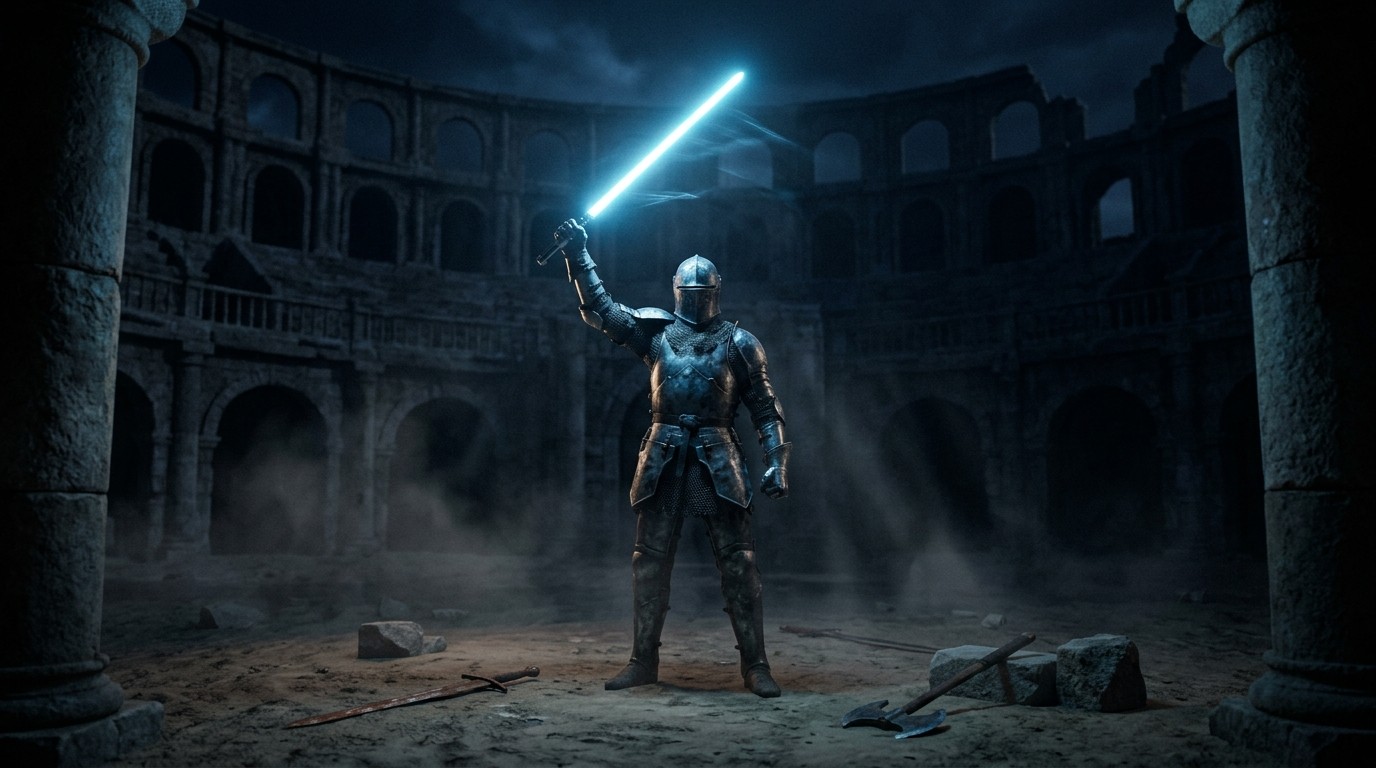
The centerpiece is the lightsabers. These aren’t cosmetic glowsticks; they have genuine plasma-cutting physics. A lightsaber in Blade & Sorcery dismembers on contact, slices through limbs and bodies with the same weight-and-collision logic as the base game’s swords — but scaled to a weapon that cuts through almost anything. The result is the closest thing VR has to a real lightsaber duel: blades lock, deflect blaster bolts, and dismember enemies with a swing that feels as physical as it is cinematic.
Around the sabers, The Outer Rim builds a full Star Wars package. Blasters (blaster pistols, rifles, the Z-6 rotary cannon) fire with recoil you feel through the physics. Custom maps include Mos Eisley, Naboo, and other familiar locations. NPC loadouts, endless waves, friendly allies you can spawn via a comlink, and expansion packs — Clone Reinforcements, the Galaxy’s Most Wanted waves — flesh out a whole Star Wars army to fight and command. It’s the gold standard of Blade & Sorcery modding, and it’s been expanded by a web of supporting mods.
The Outer Rim Expansions
The total conversion spawned its own ecosystem. More Star Wars layers on armor, spells, and additional blasters using The Outer Rim as a base. Outcome Expansion - Lightsabers adds over fifty unique sabers plus custom ones, giving the already-deep saber roster even more variety. Jedi Knight addons and the lightsaber tweak mods let you dial in cutting power — the community even debated turning it down, because the default saber dismembers a little too easily for some players’ taste. For Star Wars fans, the Outer Rim ecosystem is the single best reason to own Blade & Sorcery.
The Medieval MegaPack: 400 Weapons and Then Some
Where The Outer Rim is a Star Wars fantasy, Medieval MegaPack (MMP) by Sushin is a historical armory. It’s a content pack of over 400 historically themed weapons and objects from cultures around the world — and it’s the most-easy-recommendation mod in the scene, the one everyone tells you to install first.
MMP isn’t just swords and axes. It includes gadgets, tools, crossbows, throwing weapons, magic weapons, firearms, explosives, foods, and more — all with the physics-based weight the base game’s weapons have. You can arm yourself (and your NPC enemies, who spawn with MMP gear) with weapons from a dozen historical periods and regions. For a game whose whole pitch is physics-driven melee, MMP is the definitive weapon collection, and it’s compatible with both the PCVR game and the Quest port (Blade & Sorcery: Nomad).
The Spell and Magic Overhauls
Blade & Sorcery’s base magic — fire, lightning, telekinesis, gravity — is fun but thin. The mod scene turned it into a full spell-casting sandbox.
The most popular spell mods add new schools and mechanics on top of the base system. NPC Spawner spells let you summon enemies with a gesture instead of fighting through menus — a huge quality-of-life win for sandbox players. Other spell mods add new elements, more powerful variants of the base spells, and entirely new magical abilities that obey the same physics logic as everything else. If you want to feel like a sorcerer rather than a fighter with a couple of tricks, the spell mods are where the magic system finally stretches its legs.
The Maps and Arenas
The base game ships with a handful of arena maps. The mod scene added dozens, ranging from atmospheric set pieces to practical training grounds.
The best map mods are more than new floors — they change how combat plays. A map with verticality gives you something to climb and fall from. A map built around tight corridors forces close-quarters fighting. Popular map mods like Lakeside Cabin and the community-built arenas give the sandbox fresh spaces to fight in, and the Outer Rim’s Star Wars maps (Naboo, Mos Eisley) turn those into fully themed battlefields. For a game that lives on player-generated scenarios, the map mods are the stage on which everything else happens.
The Behavior and Combat Overhauls
The mods that make the combat itself feel different are the ones that change how NPCs fight and how damage works.
Internals is a standout — it adds bleeding damage over time, survivable dismemberment, and vital points in the heart and lungs. It makes combat more methodical and more brutal, rewarding precise strikes over flailing. Threat changes NPC behavior so they hold off attacking when you’ve got a blade to a hostage’s throat — a small change that enables a whole new style of play. Sheath Framework adds real sheath physics, so drawn weapons physically sheath and un-sheath instead of clipping away like arrows. Combined, these overhauls make the physics combat feel deeper and more reactive than the base game ever did.
What to Know Before You Dive In
Three honest notes. First, Blade & Sorcery modding is PCVR-first — the full scene (The Outer Rim, MMP, the spell and behavior overhauls) is on Nexus and mod.io for the PC version. The Quest port (Nomad) has a smaller, separate mod catalog that lags behind, so if mods matter to you, PCVR is the place to be.
Second, watch the update version. Every WarpFrog update breaks mods until authors catch up. Always check a mod’s stated version compatibility against your game version before installing, and expect to re-verify your loadout after major updates.
Third, the scene is huge and moving. Eight thousand mods means the “best of” list is a snapshot, not a destination. The pillars here — The Outer Rim ecosystem, Medieval MegaPack, the spell and behavior overhauls — are the durable anchors. Everything else is worth browsing by popularity.
Is It Worth It?
If you own Blade & Sorcery and have only played the base arenas, the mods are the point you’ve been missing. The scene turns a small, physics-driven sandbox into a bottomless one: Star Wars total conversions with genuine lightsaber physics, a 400-weapon historical armory, new spell systems, fresh maps, and combat overhauls that make the fighting deeper.
Blade & Sorcery’s physics engine was already the best melee in VR. The mod scene is why it’s also one of the most replayable. The Outer Rim alone justifies the install for any Star Wars fan, and Medieval MegaPack is the easy first download for everyone else. Install the pillars, browse by popularity, and you’ll understand why Blade & Sorcery’s modding community is one of the most active and passionate in VR.