
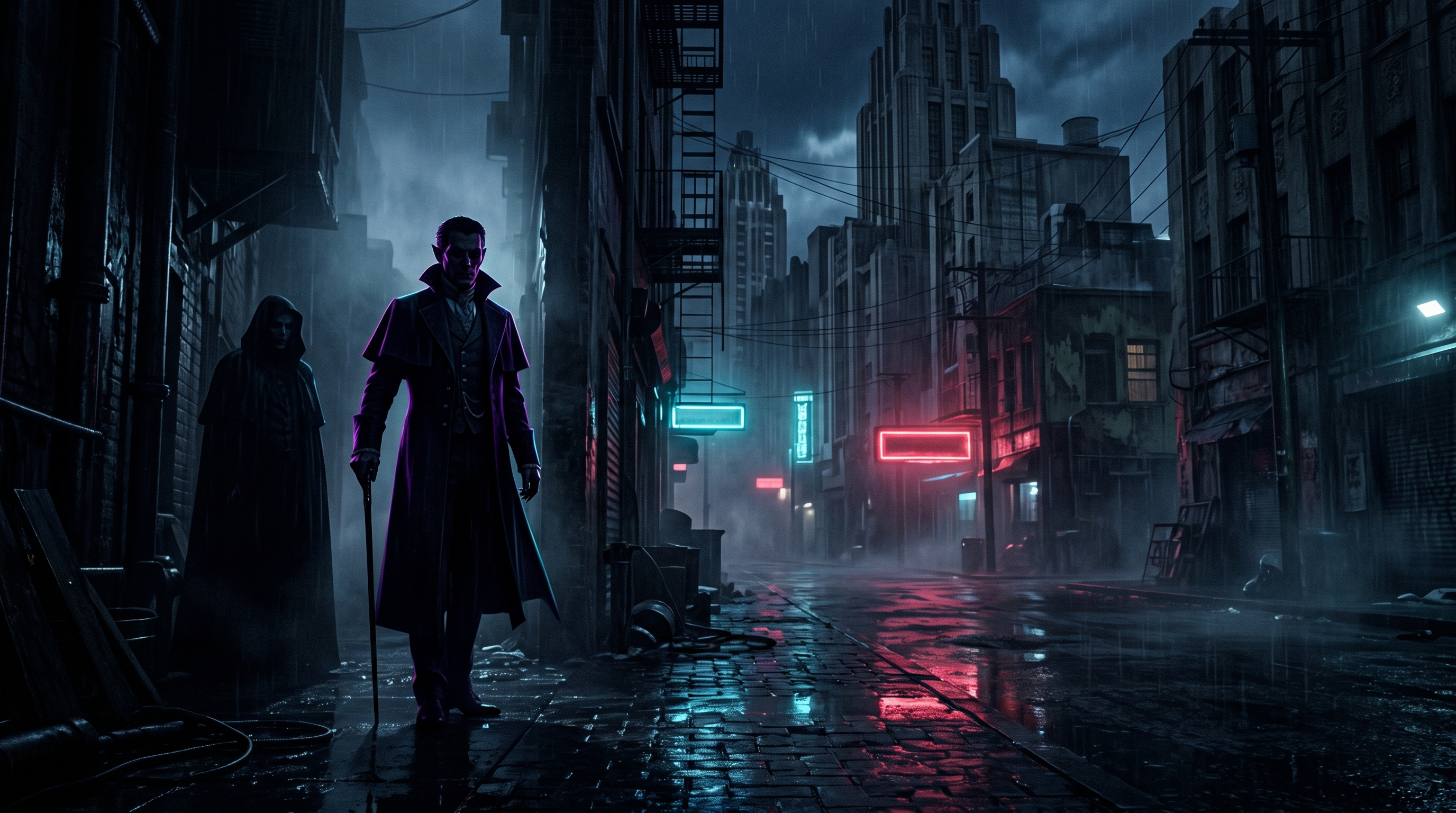
Vampire: The Masquerade - Bloodlines in VR: The Flawed Masterpiece Gets a Headset
There are games that age gracefully, and then there is Vampire: The Masquerade - Bloodlines — a title that launched broken, was rescued by its community, and has persisted as one of the most beloved RPGs ever made. Troika Games’ 2004 immersive sim trades polish for ambition, offering a seedy, choice-drenched tour through Los Angeles’ vampire underworld that still has no equal two decades later. Playing it in VR via VorpX injection does not fix its problems. What it does is bring you face-to-face with the game’s singular atmosphere, for better and occasionally for worse.
What This VR Option Actually Is
This is a VorpX injection driver implementation, which means stereoscopic 3D rendering and head tracking layered over a game that was never built for virtual reality. There are no motion controls. There is no hand presence. The UI remains flat, floating at a fixed distance. What you get is the original PC experience viewed through a headset, with the ability to look around naturally and a convincing sense of depth in the game’s environments.
VorpX ships with community profiles for Bloodlines, so you are not starting from scratch. The injection driver hooks into the Source engine and provides a functional baseline, but the experience is not plug-and-play. Expect to spend time adjusting field of view, managing camera behavior, and accepting that certain sequences will break immersion entirely.
How It Plays
Controls
Keyboard and mouse or gamepad only. VorpX does not translate Bloodlines into a motion control experience, and honestly, that is probably for the best. The game’s interface — dense with dialogue trees, inventory screens, and context menus — would be miserable to navigate with VR pointers. A gamepad provides the most comfortable experience, keeping your hands relaxed while your head handles the looking.
Comfort
Moderate intensity with specific pain points. The head tracking itself is smooth once calibrated, though some users report initial sensitivity that requires dialing down. The real issues emerge during dialogue and cutscenes. Bloodlines loves to zoom tight on NPC faces during conversations, which in VR means sudden, disorienting proximity to character models. Console commands can mitigate this, but not eliminate it. The game also switches to third-person during feeding and certain actions — an immersion break that no injection driver can solve.
Performance
Moderate demand. Bloodlines runs on a modified Source engine and was never demanding by modern standards. VorpX adds overhead, but the game should run comfortably on mid-range hardware. The unofficial community patch is effectively mandatory for stability and restored content.
Stability
Mostly playable with caveats. The core experience works, but injection drivers are inherently fragile. Users report occasional crashes, texture loading issues, and the dreaded “VorpX stopped hooking” scenario where the game launches flat. The haunted Ocean House Hotel — already notorious for its tension — adds motion-sensitive horror that can test both your nerves and your setup.
What Works Well
The atmosphere, mainly. Bloodlines creates one of the most compelling urban fantasy settings in gaming, and viewing it in stereoscopic 3D with head tracking genuinely enhances the sense of presence. Walking the streets of Santa Monica at night, exploring the anarch haven of Downtown, or descending into the Nosferatu warrens feels different when you are inhabiting the space rather than observing it. The writing, voice acting, and world-building remain unmatched — this is still the same exceptional RPG underneath the VR layer.
For players who have completed the game multiple times, the VR perspective offers a fresh way to revisit familiar territory. The scale of environments, the verticality of the city, and the intimacy of certain encounters all benefit from the headset presentation.
What Does Not Work
The camera system is the biggest obstacle. Bloodlines was designed with a dynamic camera that zooms, shifts, and occasionally yanks control away from the player. In VR, this translates to motion that ranges from mildly annoying to genuinely uncomfortable. Dialogue sequences are particularly rough — you cannot simply disable the zoom without breaking other camera behaviors, and the workaround console commands introduce their own stability risks.
The lack of motion controls is a fundamental limitation, not a complaint about VorpX specifically. The game was built for traditional inputs, and the injection driver respects that. But it means you are playing a twenty-year-old RPG with a twenty-year-old control scheme, just with your head inside it. Terminal hacking, inventory management, and detailed interaction with the environment all require removing your headset or awkwardly peering at flat UI elements.
Who This Is For
Good for: Devoted fans of the original who want a new perspective on a familiar world; players with patience for technical tinkering; anyone who values atmosphere over mechanical novelty in their VR experiences.
Not for: Players seeking native VR interaction; those unwilling to adjust settings and work around limitations; newcomers who should experience the game flat first to appreciate what is actually being enhanced.
The Verdict
Tier: B
Game Quality: A Bloodlines is a genuine masterpiece of RPG design — flawed, unfinished, but possessed of writing, atmosphere, and player agency that modern games still struggle to match. The unofficial patches have transformed it from a broken curiosity into an essential experience.
VR Implementation Quality: C VorpX provides functional stereoscopic 3D and head tracking, but the fundamental mismatch between Bloodlines’ camera design and VR comfort requirements keeps this from being a seamless experience. It works, sometimes beautifully, but never without compromise.
Overall Tier: B This is worth doing if you love the game enough to forgive its friction. The VR layer adds genuine value to an already exceptional RPG, particularly for repeat playthroughs where the technical annoyances matter less than the atmospheric gain. But this is not a transformative experience — it is a cult classic viewed through a new lens, not a game reborn for virtual reality.