
Here’s the thing about putting a 50-hour tactical RPG on a standalone VR headset: it sounds like someone misread the room. VR sessions are typically measured in 30-to-60-minute chunks. Triangle Strategy demands marathons. The original Switch and PC release from 2022 is a slow-burning political war story with grid-based combat, branching narrative paths, and enough dialogue scenes to fill a miniseries. None of that screams “put it on your face.”
And yet, Square Enix and Frima did exactly that, releasing an official VR version for Meta Quest in late 2024. The surprise isn’t that it exists. The surprise is that it works as well as it does.
What This Actually Is
This is not a mod, an injection profile, or a framework experiment. It is an official standalone VR version sold on the Meta Quest Store, built specifically for Quest 2 and up. Frima handled the port, and the core content is identical to the flat version: the same branching story, the same grid battles, the same HD-2D visual style that blends pixel art with 3D environments.
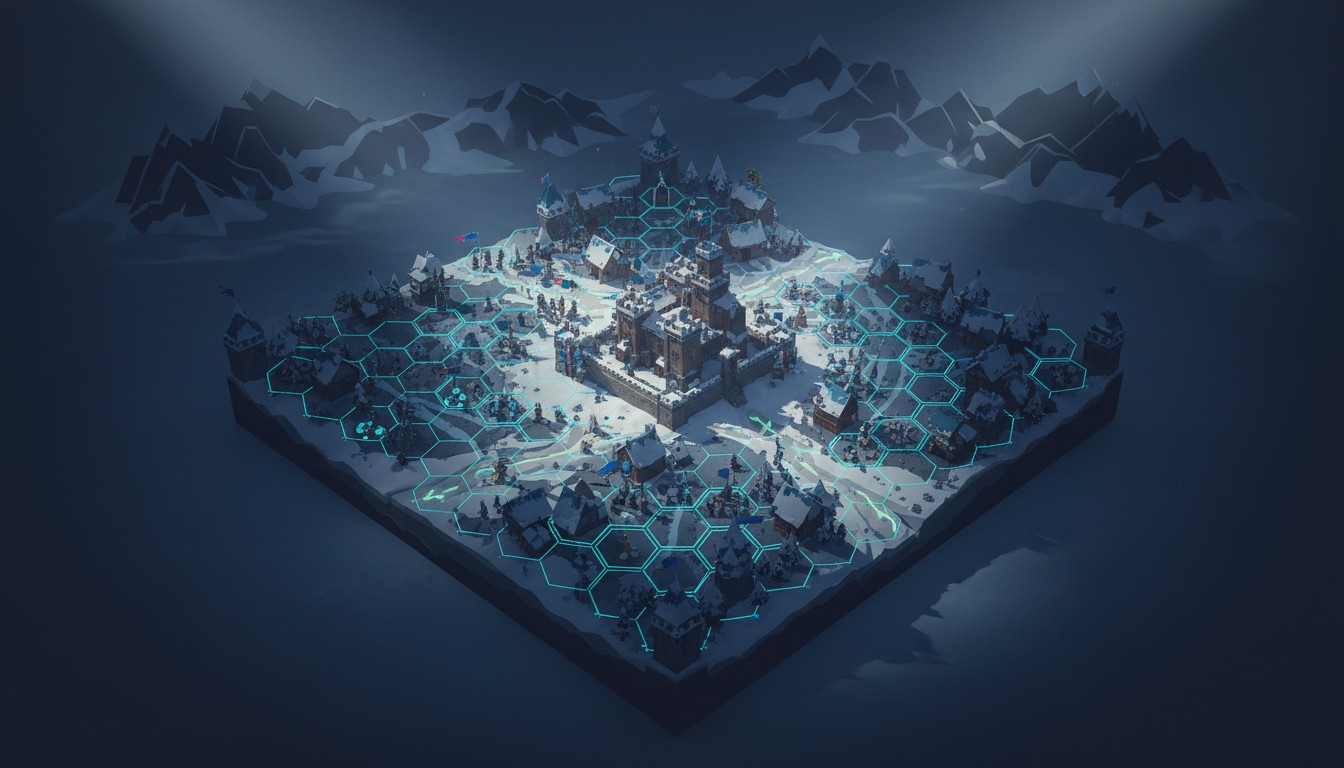
What changed is the presentation. Battles unfold in a 360-degree space you can lean into, rotate, and examine from multiple angles. Mixed reality passthrough on Quest 3 and Quest 3S lets you anchor the battlefield to a real-world surface, giving the whole thing a tabletop wargame feel that fits the genre uncannily well. You can physically grab and reposition units, or simply point and click with your controllers like a hovering cursor.
The cutscenes, however, are where the VR adaptation shows its seams. The game’s extensive 2D narrative sequences play on a floating scroll in a Theater Mode, essentially a virtual flat screen suspended in front of you. It is functional and readable, but it is also a constant reminder that this was never designed for a headset. The game shifts between immersive 3D battlefields and flat-screen dialogue delivery with almost every scene change, and that rhythm never quite normalizes.
The Tactical Tabletop Fantasy, Realized
Where the VR version genuinely earns its keep is in combat. The isometric grid battles translate to stereoscopic 3D better than you might expect. Terrain height, unit positioning, and environmental hazards all gain spatial readability when you can lean around the board like a chess player studying the endgame. The HD-2D aesthetic, already one of the flat version’s strongest features, pops in VR. The diorama-like structures and detailed townscapes benefit from depth and scale in a way that flat screens cannot replicate.
Mixed reality mode is the closest this port comes to a genuine VR selling point. Pinning the battlefield to your coffee table or desk and playing standing or seated in your actual living space is undeniably cool. It is also, unfortunately, limited. You cannot freely resize the map or place it at arbitrary angles, and the passthrough integration is exactly that: an overlay, not an interactive blending of game and environment. The feature is a nice extra, not a transformation.
Controls and the Pointer Problem
The control scheme is where ambition meets compromise. You can select units, navigate menus, and issue commands using motion controllers, but the interaction model is fundamentally pointer-based. Your controller acts like a mouse cursor in 3D space. It works. It is even intuitive for anyone familiar with strategy games. But it is not revolutionary, and it does not leverage what makes VR input interesting. There is no tactile sense of grabbing a sword, no physical gesture for commanding a charge. You point, you click, you wait for the animation.
For a game this sedentary, that is arguably fine. Triangle Strategy is a thinking game, not a moving game. There is no free locomotion, no snap turning, no motion sickness risk to speak of. The comfort profile is about as gentle as VR gets. But the control scheme also underscores the larger truth: this port respects the original design too much to reimagine it for the medium.
The Runtime Reality
The biggest practical question is whether a game this long belongs in a headset at all. Triangle Strategy’s campaign runs well over 50 hours, with extensive replay value across multiple branching story routes. That is a serious commitment for any platform, but in VR it raises genuine comfort concerns that have nothing to do with motion sickness.
Face pressure, lens fog, battery life, and the simple psychological fatigue of wearing a headset for multi-hour stretches all become factors. The game autosaves frequently and breaks naturally between battles, so session management is possible. But the narrative pacing, heavy with extended dialogue and political maneuvering, does not respect the stop-and-start rhythm that VR typically demands. You will find yourself in 20-minute cutscene sequences with no meaningful interaction, staring at a virtual screen while your face slowly reminds you that you are wearing plastic.
Who This Is For
If you have never played Triangle Strategy and you own a Quest, this is a strong way to experience one of the better tactical RPGs of the past few years. The game itself is excellent: strategically satisfying combat, a genuinely branching narrative with meaningful moral choices, and a world worth investing in. The VR presentation adds enough spatial flavor to justify the format, particularly in mixed reality, without compromising the core design.
If you already played the original on Switch or PC, the case is much thinner. The VR-specific additions are minimal. The Theater Mode cutscenes are a downgrade from a native flat screen. The pointer controls are functional but not transformative. You are essentially rebuying the same game for stereoscopic 3D and a passthrough tabletop mode, which is a lot to ask for a full-price title.
For PCVR users, it is worth noting that UEVR community profiles exist for the flat PC version. They are not the focus here, and they do not replicate the official Quest port’s dedicated VR UI and mixed reality features, but they remain an alternative for the technically inclined.
The Bottom Line
Triangle Strategy VR is a good game wrapped in a competent but unambitious VR adaptation. The tactical gameplay naturally suits headset play, the HD-2D visuals gain depth and presence in stereoscopic 3D, and mixed reality passthrough delivers a genuine tabletop-war-game fantasy, however briefly. But the port is too respectful of the original to meaningfully reimagine it, the control scheme barely scratches VR’s potential, and the 50-hour runtime pushes against the practical limits of standalone headset comfort.
It is worth your time if the game is new to you. It is a tougher sell if you have already marched through Norzelia. Square Enix proved that tactical RPGs can live on Quest. What remains to be seen is whether anyone will take the next step and build one that truly belongs there.