
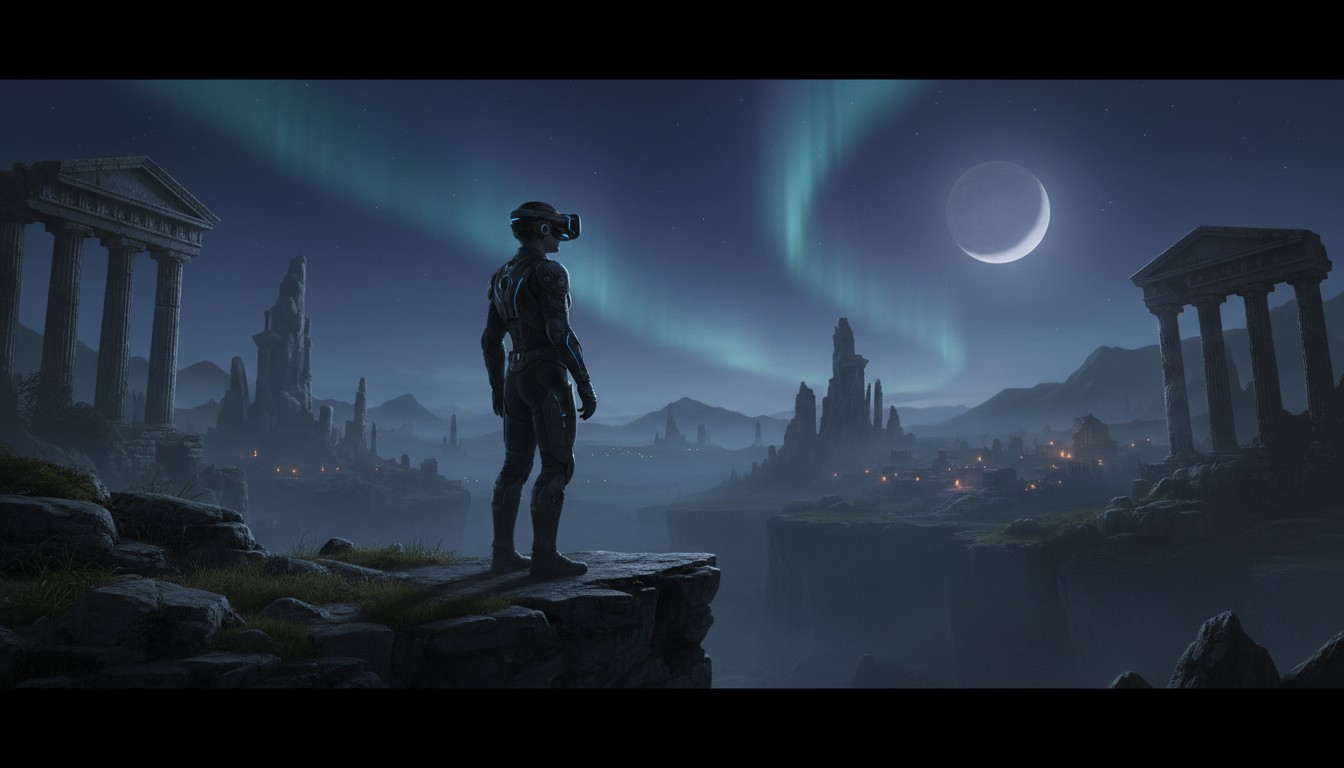
The first time I stood inside the Imperial City sewers and watched torchlight flicker off stone walls in actual stereo depth, I had the same thought every Oblivion player has eventually: holy shit, this actually works.
Not “works” in the abstract sense of “technically runs in a headset.” I mean works in the sense that the fantasy of being inside Cyrodiil — the one you’ve had since 2006 — is suddenly real enough to touch. The rats scurrying past your boots. The draw of a steel blade. The way the sky opens up when you finally climb out of that tunnel and the world spreads out in front of you, actual distance you can feel.
Here’s the thing, though: getting there is not simple. And staying there has conditions.
What This Actually Is
This isn’t a native VR port. Bethesda did not build this for headsets. What you’re playing is the 2025 Oblivion Remastered — the official Unreal Engine 5 re-release with all the DLC, better textures, and actual sprinting — injected into VR via Praydog’s UEVR framework. The Flat2VR community has built profiles that add 6DOF head tracking, stereoscopic 3D, and motion controller support to a game that was never supposed to have any of it.
That distinction matters. UEVR is powerful, but it is fundamentally a hack. The menus are flat-screen overlays floating in front of your face. The text is tiny. The HUD assumes you’re sitting six feet from a monitor, not wearing lenses an inch from your eyes. You can play the entire game this way, and people do, but you will spend the first hour squinting at inventory screens and wondering why Bethesda thought 12-point font was acceptable for a remaster in 2025.
The Setup Reality
Look, I’m not gonna lie. If you expect to buy Oblivion Remastered, click a VR button, and be wandering the Shivering Isles in twenty minutes, you are in for a bad afternoon.
You need the UEVR nightly build, not the stable release. You need the correct community profile for your specific build — Steam and Game Pass use different executables, and the profiles are not interchangeable. You need to run the injector as administrator. You need to drop your graphics settings to Medium or lower before you even start, because Unreal Engine 5 in VR is hungry in a way the original Gamebryo release never was.
Then you need to turn off motion blur, uncap your framerate, disable Lumen ray tracing, and probably kill DLSS Frame Generation if your GPU even supports it. The community has shared user scripts and VRESP profiles that help stabilize performance, but those live in Discord pins, not an installer. This is advanced-setup territory, full stop.
What It Feels Like to Play
Once you’re in, the dungeon experience is genuinely great. Tight corridors, torchlight, close-quarters combat — this is where UEVR shines. Head tracking is smooth, depth is convincing, and swinging a sword with motion controllers feels natural in a way that gamepad play never quite managed. The remaster’s improved lighting and character models hold up surprisingly well in stereo. Indoors, on decent hardware, this is one of the better framework-based VR experiences I’ve seen.
Then you walk outside.
The open world is where the compromise becomes visible. Dense foliage, long draw distances, and UE5’s overhead combine to hammer your frame rate. The same rig that runs dungeons flawlessly starts stuttering when you look across a valley. One community tester running an RTX 4090, an i9-13900, and 64GB of RAM described the outdoor experience as noticeably weaker than interiors, even at Medium settings and 72Hz. If your PC is mid-range, expect to spend a lot of time staring at foliage pop-in while your frametime graph has a panic attack.
Comfort is manageable but not gentle. Smooth locomotion, no teleport option, and a flat UI that occasionally breaks your sense of presence. Disabling motion blur is mandatory if you want your stomach to stay where it belongs. After about forty-five minutes I needed a break — not from nausea specifically, but from the low-grade friction of wrestling with a UI that refuses to acknowledge I am wearing a headset.
What Works and What Doesn’t
The motion controls work, mostly. Early community profiles had crash issues, but later iterations stabilized combat and interaction. You won’t get hand presence or finger tracking — you’re still using thumbsticks to move — but aiming a bow or blocking with a shield feels tactile in a way that transforms the game’s combat.
What doesn’t work is everything Bethesda didn’t build for VR. Dialogue cameras snap to faces in ways that feel claustrophobic up close. Looting requires cursor precision on tiny hitboxes. The map is a flat texture you stare at like a painting. None of this is a dealbreaker if you know what you’re getting into, but none of it is pleasant either.
The Bottom Line
Oblivion in VR is the thing Elder Scrolls fans have wanted for nearly two decades, and the UEVR community has delivered it in a form that is genuinely playable, occasionally breathtaking, and persistently unpolished. It is not the VR-native Elder Scrolls experience we all secretly want. It is a very good flat RPG wearing VR like a jacket that doesn’t quite fit.
If you own a high-end PC, already have UEVR set up for other games, and love Oblivion enough to tolerate some friction, this is absolutely worth your time. The scale of the world, the depth of the dungeons, and the weight of the combat all gain something meaningful in a headset.
If you have a mid-range PC, low tolerance for config files, or you were hoping for a polished, native VR RPG, this is not that. Buy something built for the medium instead. Come back when you have the hardware and the patience — Cyrodiil will still be here.