The Climb in VR: The Drop That Changes Everything
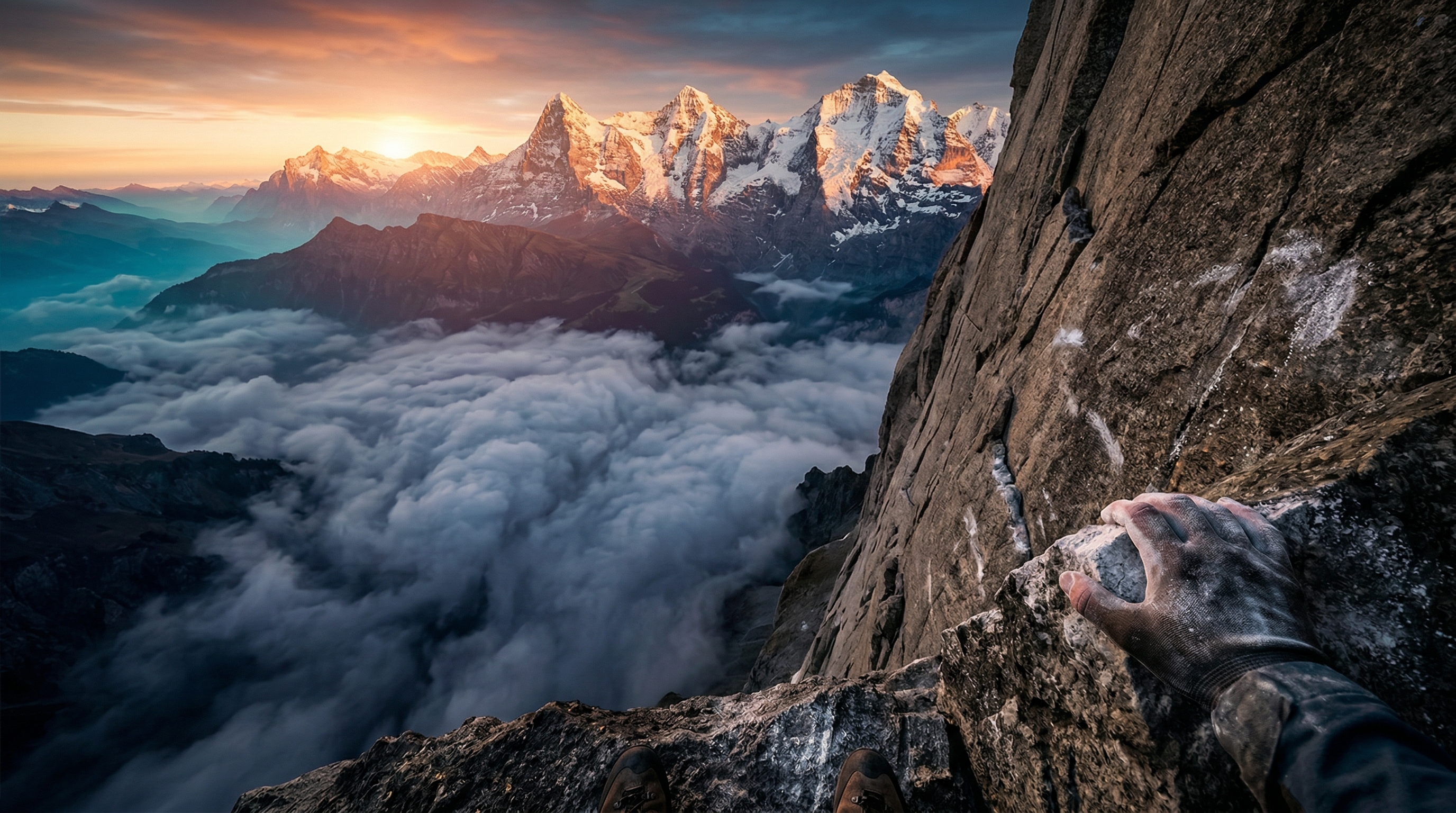
The moment you look down, everything shifts. Your lizard brain insists you’ve made a terrible mistake. You’re hundreds of feet up an Alpine cliff face, clinging to a crumbling grip with chalk-covered hands, and the only thing between you and the void is your own grip strength and a VR headset that suddenly feels like a portal rather than hardware.
Welcome to The Climb.
Crytek’s 2016 release didn’t invent VR climbing, but it perfected the sensation—turning what could have been a mini-game into a full-body experience that captures something essential about virtual reality that flat screens cannot touch. This isn’t about pressing a button to ascend. It’s about reaching, grasping, pulling, and managing the quiet panic that sets in when the summit feels impossibly distant and your forearms are starting to burn.
What This VR Option Actually Is
The Climb is a native VR experience, developed from the ground up for virtual reality by Crytek, the studio behind Crysis and Far Cry. This is not a mod or a port—it’s built explicitly for hand presence and room-scale immersion.
The game launched for PCVR (Oculus Rift) in April 2016, later receiving a Quest port in 2019. A sequel, The Climb 2, arrived in 2021 with city environments and additional mechanics. Neither game received PSVR support, remaining effectively Meta-platform exclusives.
Crytek’s development approach treated VR as the primary medium, not an afterthought. The game runs on CryEngine and leverages the studio’s expertise in rendering vast, detailed environments. Every handhold, every chalk puff, every vertigo-inducing vista exists because the designers understood what VR does differently.
Support status is stable but quiet. The original game received its last major update years ago, but it remains fully functional on modern hardware and headsets. Crytek has not announced further development, but the core experience is complete and polished.
How It Plays
Controls: Physical Climbing, Not Button Mashing
The Climb uses full motion controls for its core interaction: reaching out, gripping ledges, and pulling yourself upward. Each hand operates independently with its own stamina meter. Hold on too long with one arm, and your grip weakens until you either find a ledge for the other hand or risk a fall.
Chalking your hands—literally bringing your virtual hands to your chest to replenish grip—becomes a rhythmic strategic element. You can’t just power through; you must plan routes, identify resting positions, and manage the physical toll of the ascent.
The control scheme is intuitive because it mirrors real movement. There’s no artificial locomotion, no teleportation, no smooth stick movement. You climb by climbing. This is VR at its most physically engaged.
Comfort: Height Is the Challenge
Comfort rating sits at moderate intensity, but this requires nuance. The game doesn’t induce motion sickness through artificial movement—there is none. Instead, the intensity comes from psychological vertigo and the visceral sensation of being high above the ground with no safety net.
Tourist Mode offers a gentler entry point, removing score pressure and survival stakes while keeping the core climbing intact. For VR newcomers or those sensitive to height-induced anxiety, this mode provides the experience without the punishing failure states.
The physical demands deserve mention. Extended sessions strain your neck from constant upward gazing. The game recommends standing play, and for good reason—seated climbing feels disconnected from the embodied tension that makes the experience work.
Performance: CryEngine Demands Respect
The Climb runs on CryEngine, and that heritage shows. On PCVR, the game can be visually stunning—crystalline vistas, detailed rock textures, dynamic lighting across multiple biomes including the Alps, Halong Bay, the American Southwest, and Arctic environments.
Performance demand is moderate to heavy depending on your quality targets. Super sampling settings significantly impact clarity, and maintaining 90fps on high-end headsets may require modern GPU hardware. The Quest port sacrifices visual fidelity but maintains the core gameplay and presence, proving that the mechanics—not the graphics alone—drive the experience.
What Works Well
Presence is unmatched. Few VR games achieve this level of embodied immersion. Looking down from a ledge triggers genuine physiological responses—elevated heart rate, tightness in the chest, the instinctive recoil from open space. The Climb weaponizes VR’s unique capabilities rather than fighting against them.
The mechanics have depth. Stamina management, grip types (standard, technical, crumbling, toxic), route planning, and checkpoint strategy create a skill ceiling that rewards mastery. Bouldering maps strip away the safety net for concentrated challenges.
Visual variety sustains interest. Each environment feels distinct, from the vertigo-inducing exposure of Alpine cliffs to the alien beauty of Arctic formations. The game understands that climbing is as much about the view as the ascent.
Leaderboards and unlocks provide replayability. Ghost racing, cosmetic rewards (gloves, watches, wristbands), and difficulty tiers stretch what could be a short core experience into weeks of competition and self-improvement.
What Doesn’t Work
Content depth is limited. The core climbing mechanic, while expertly realized, is the entire game. Players seeking narrative, varied gameplay systems, or complex progression may find the experience repetitive after the initial thrill.
Physical toll is real. Neck strain from upward gazing is a documented issue. Extended sessions can leave you sore in ways that traditional VR games don’t replicate. This is a feature for some (fitness-adjacent engagement) and a bug for others.
No PSVR support limits accessibility. The game’s Meta-platform exclusivity means PlayStation VR owners cannot access one of the medium’s signature climbing experiences.
The sequel dilemma exists. The Climb 2 adds city environments and refined mechanics, but loses some of the first game’s purity. Players must choose between the original’s focused vision and the sequel’s expanded scope.
Platform Differences
PCVR vs. Quest: The PCVR version delivers superior visual fidelity—higher resolution textures, better lighting, sharper distant detail. The Quest port maintains the core experience with acceptable compromises. Both versions play identically in terms of mechanics and content structure.
The choice depends on your priorities: maximum visual impact (PCVR) or wireless convenience (Quest). Neither version is broken or inferior—they serve different use cases.
Who This Is For
Good for:
- Climbing enthusiasts seeking VR approximation
- Players who value presence and immersion over complex systems
- Fitness-minded users wanting light upper-body engagement
- Those who enjoy self-competitive gameplay (leaderboards, time trials)
- VR newcomers via Tourist Mode’s gentle introduction
Not for:
- Players with severe fear of heights (though some report therapeutic benefits)
- Those seeking narrative-driven or varied gameplay experiences
- Users who cannot stand or tolerate physical strain
- Anyone expecting traditional gaming loops (combat, puzzles, exploration)
The Verdict
Tier: A
Game Quality: A The Climb executes on a focused vision with minimal bloat and maximum polish. It knows what it wants to be—a pure climbing experience—and delivers that with Crytek’s technical expertise and a clear understanding of VR’s strengths.
VR Implementation Quality: A Native VR design from the ground up, full motion controls, and a mechanics system that only works in virtual reality. This is how VR games should be built—not as ports or adaptations, but as native expressions of the medium.
Overall Tier: A The Climb remains essential VR software nearly a decade after release. It demonstrates what happens when a capable studio treats VR as a primary platform rather than an obligation. The experience is singular, polished, and effective—worth owning for anyone serious about what virtual reality can achieve.