
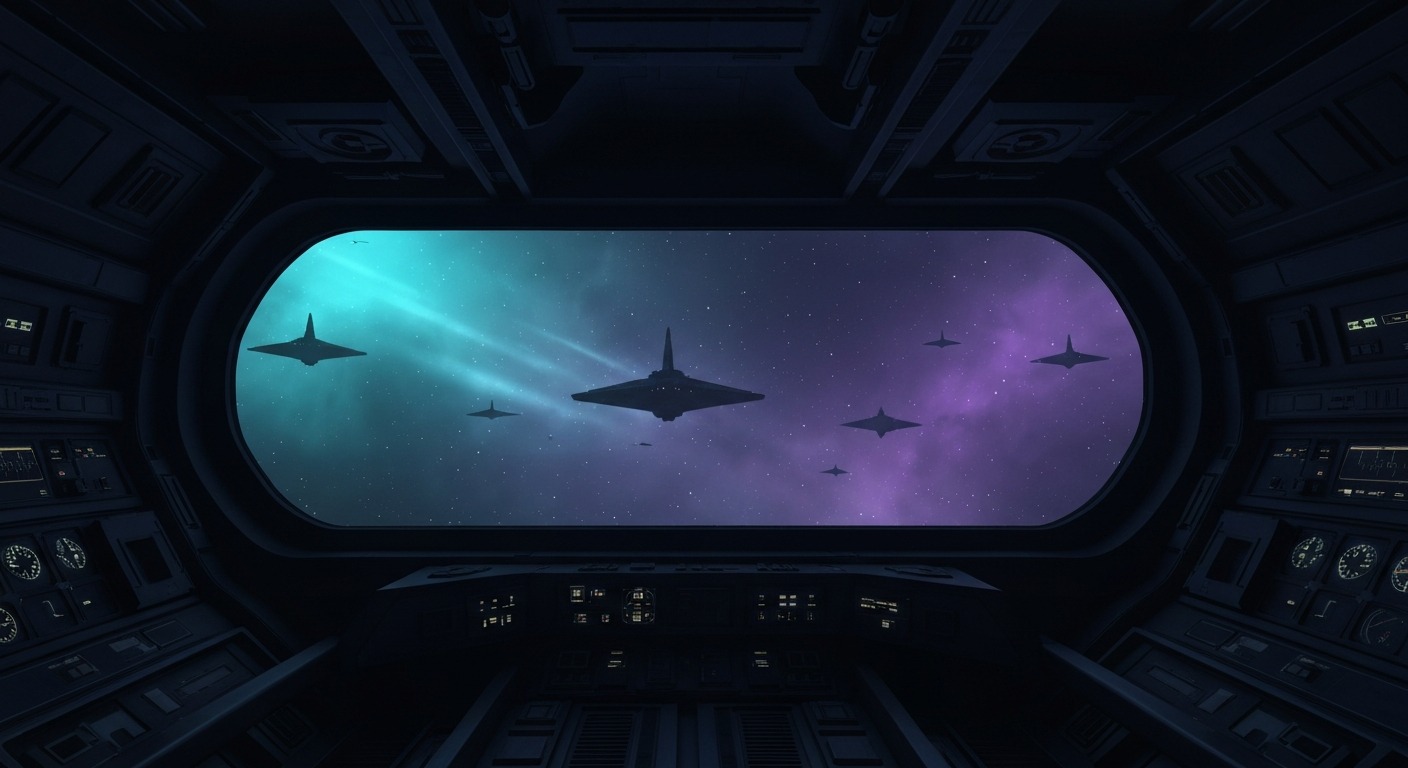
The first time you look down in a TIE Fighter cockpit and see your own gloved hands resting on the flight sticks, something clicks. Not the cheap thrill of novelty — something deeper. You understand, suddenly, why Imperial pilots die in such numbers. That viewport is a letterbox slit. The hull around you is eggshell thin. The Rebellion outside isn’t a threat — it’s a statistical inevitability.
That’s what the TIE Fighter Total Conversion mod gets right that no other Star Wars VR experience has managed. Not Squadrons with its polished but sanitized presentation. Not Vader Immortal with its on-rails combat. This is the real thing — the complete 1994 LucasArts masterpiece, rebuilt inside a modernized engine with full 6DOF cockpit presence and enough content to last you a year.
But here’s the thing: nobody hands this to you. You earn it, one installer screen at a time.
The setup is not a formality. You need a legal copy of X-Wing Alliance — the 1999 sequel, not TIE Fighter itself. You install the X-Wing Alliance Upgrade project through its Installer Manager. Then you layer TFTC on top, choose between Classic and Reimagined versions (they’re separate installs as of v1.4), enable VR through Babu Frik’s Configurator, and pray your HOTAS doesn’t need three hours of axis remapping. I say this with love: this is Advanced Setup territory. The kind where you read a guide, mess something up, read it again, and discover Windows hasn’t had DirectPlay enabled since 2015.
Once you’re in, though? Holy shit.
All thirteen original Tour of Duty campaigns are here. The expansions. Every training mission. The Secret Order progression where you earn tattoos from the Emperor himself for completing hidden objectives. The voice acting — all original, all preserved. The briefing officers still sell their missions with that specific LucasArts gravitas. The medals still pile up in your pilot’s room, which you can now walk around in VR between sorties, inspecting memorabilia in a fully redone HD concourse that the team rebuilt from scratch for v1.4.
The Reimagined campaigns are where the mod really flexes. These aren’t just visual upgrades — they’re redesigned missions with larger battles, more ships on screen, narrative continuity between sorties that the original’s tech couldn’t handle, and in some missions, multiple craft choices. Want to fly an Interceptor instead of a standard TIE when the mission allows? Go ahead. The engine can finally support what the designers probably imagined in 1994.
In VR, the cockpit is the star. You can lean into the instrument panel and read your CMD display. You can look up through that narrow viewport and track enemy fighters by silhouette against the starfield. The head tracking is full 6DOF, not some glued-to-chair approximation. There’s even a cockpit inertia effect that makes the hull feel like it’s resisting g-forces — though if that starts making you queasy, you can kill it in the configurator. Which you might want to, because collision knockback in this engine will spin you hard, and while v1.4 reduced spin severity by 75%, it’s still disorienting when a missile slaps your hull sideways.
Look, I’m not gonna lie about the limitations. This is not Squadrons. There are no motion controls. Your hands don’t exist in the cockpit beyond the flight stick model. The UI is flat-screen text floating in 3D space, which means some menus require you to lean forward and squint. Performance depends heavily on your hardware and the mission — the X-Wing Alliance engine is 32-bit with all the memory limitations that implies, and while v1.4 added 64-bit side processes to mitigate crashes, you’re still pushing a quarter-century-old codebase to render in stereo at VR resolutions. Complex Reimagined battles with dozens of capital ships will make mid-range systems sweat.
The audio, though. The team included four soundtrack options — the original Roland SC-55 MIDI, Gravis Ultrasound, Sound Blaster AWE32 variants, plus a fully remastered orchestral score. There’s also a second remaster by Alexey Savelyev and even the vanilla X-Wing Alliance John Williams score if you want to risk copyright strikes on stream. In VR, with headphones on, hearing that remastered score swell as you launch from a Star Destroyer’s hangar bay — it’s the kind of moment that justifies the whole setup process.
Control-wise, this wants a HOTAS. The community has built profiles for everything from Thrustmaster T.16000Ms to Virpil Constellations to VKB sticks. The built-in Joystick Configurator handles most modern hardware, and there’s a public GitHub repository of community profiles. Gamepad works. Keyboard and mouse works via virtual joystick emulation. But if you’re doing this without at least a basic stick and throttle, you’re missing what makes this special. The original TIE Fighter was built around physical flight controls, and that DNA doesn’t translate gracefully to a mouse.
Who is this really for? It’s for the person who played TIE Fighter in 1994 and never stopped thinking about it. For the flight sim enthusiast who owns a HOTAS and wants something worth using it on. For anyone who looked at Squadrons’ short campaign and thought, “That’s it?” This is 150+ missions. Hundreds of hours. A campaign so dense with hidden objectives, branching priorities, and tactical nuance that modern games don’t even attempt it.
Who should skip it? Anyone who wants to plug in a headset and play in twenty minutes. Anyone without a gaming PC strong enough to run VR smoothly. Anyone prone to motion sickness in cockpit sims — while seated space combat is generally comfortable, the visual intensity of spinning after collisions and the brightness of explosions can be a lot. And anyone expecting modern VR hand presence. This is a seated sim experience, not a tactile one.
The team behind TFTC has been at this for years, and they’re still shipping substantial updates — v1.4 arrived in February 2026 with a rebuilt installer, HD concourse, new skybox rendering, and engine stability improvements that address the 32-bit memory crashes that plagued earlier versions. They have a Discord, a ModDB presence, and a level of ongoing commitment that puts many commercial live-service games to shame.
If you have the patience for the setup and the hardware to run it, this isn’t just the best way to play TIE Fighter in 2026. It’s the best way to play TIE Fighter, period. No official remaster exists. No sequel captured this mission design. The only reason this game is playable in VR at all is because a group of fans refused to let it disappear into abandonware history. Serve the Empire. It’s worth it.