
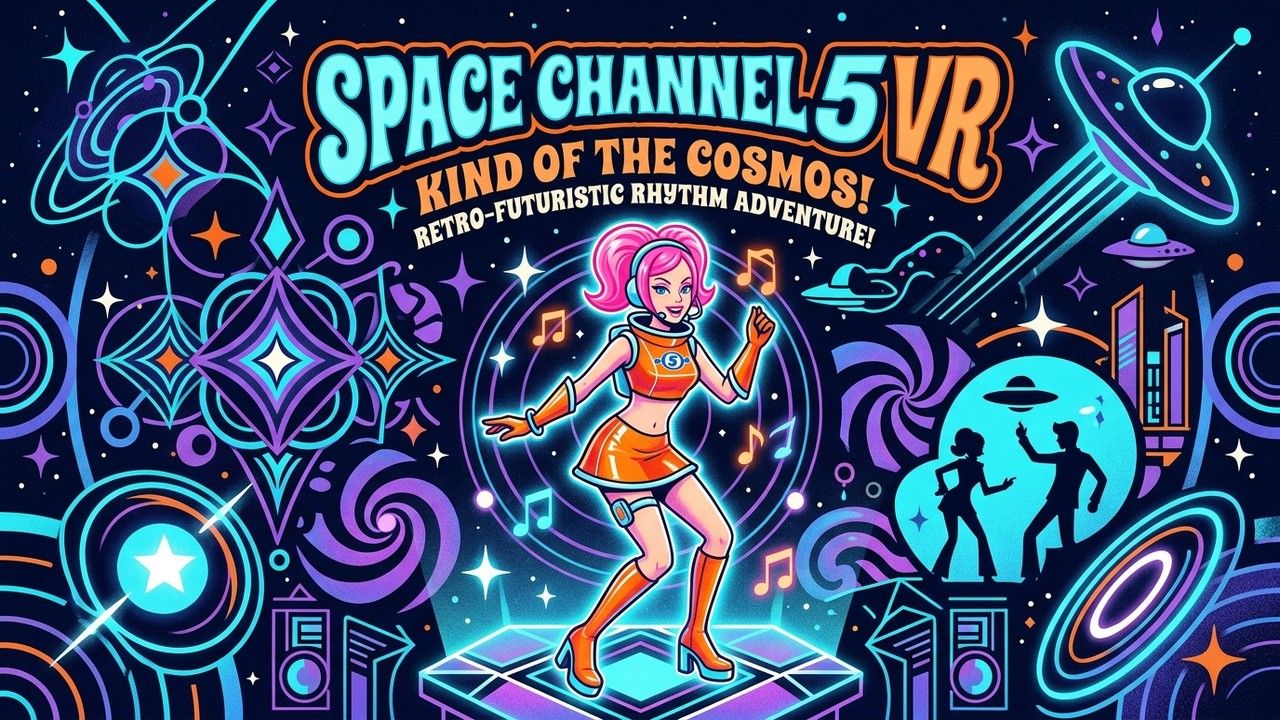
Space Channel 5 VR: Kinda Funky News Flash!
Space Channel 5 VR: Kinda Funky News Flash! is a native VR rhythm game that brings Sega’s cult classic Dreamcast series into virtual reality. Rather than porting the original flat game, developer Grounding Inc. (which includes some original team members) created a new first-person experience that translates the series’ iconic “up, down, left, right, chu” gameplay into full-body motion controls.
The Core Idea
The original Space Channel 5 was a rhythm game about reporter Ulala saving the galaxy through dance battles. In this VR installment, you play as a rookie reporter standing behind Ulala, mimicking alien dance patterns to defeat enemies and boost your viewer ratings. The campy 60s mod aesthetic returns in full force—think Austin Powers in space with better dance moves.
What’s the Same, What’s Different
This isn’t a port of the original games. It’s a new story that lasts roughly 30-60 minutes depending on your skill level. The four story levels follow a simple structure: aliens attack, they demonstrate a dance pattern, you repeat it. Get four patterns wrong and it’s game over.
The key difference from the Dreamcast originals is the control scheme. Instead of pressing directional buttons, you’re physically moving your arms:
- Up/down/left/right: Raise or extend your arms in those directions
- Chu: Bring both arms forward (shooting your “blaster”)
- Pose: Mimic your opponent’s specific stance
- Dodge: Step left or right to avoid attacks
Platform Breakdown
| Platform | Release Date | Price | Notes |
|---|---|---|---|
| PSVR | February 25, 2020 | $39.99 (launch) | Requires PlayStation Camera + two PlayStation Move controllers |
| Quest/Quest 2 | October 13, 2020 | $24.99 | Standalone, no PC required; includes Hatsune Miku DLC |
| Steam/PCVR | December 8, 2020 | $24.99 | Supports various PC VR headsets; includes Hatsune Miku DLC |
The PSVR version launched at a steep $40 price point that was widely criticized. Current pricing on Quest and Steam ($24.99) is more reasonable but still represents mediocre value compared to competitors. The Quest and PC versions launched with bundled Hatsune Miku collaboration content (a new level and costume options) that PSVR players received separately.
Does It Work?
Surprisingly, yes. Multiple sources indicate the motion tracking works well—gyroscopes track even when you move outside the camera’s direct view, and the developers wisely limited the dance vocabulary to about 15 manageable poses rather than overwhelming players with complexity.
That said, there’s a learning curve. The game doesn’t clearly explain that you can hold the “chu” pose to register multiple rapid-fire inputs, or that secret collectibles appear as floating circles you’re supposed to physically reach out and grab.
Content and Value: The Real Problem
Here’s where things get complicated. The story mode is brief—expect roughly 30-60 minutes on your first playthrough. Post-game content includes a 100-stage endurance mode and arcade-style replays, but don’t expect Beat Saber’s endless library of custom songs or deep progression systems.
The value comparison is brutal:
- Beat Saber ($29.99): Dozens of official tracks, hundreds of community maps, endless replayability
- Pistol Whip ($29.99): Campaign mode with multiple scenes, arcade modifiers, high-score chasing
- Space Channel 5 VR ($24.99): ~30-60 minutes of story, a repetitive endurance mode, no custom songs
At its original $40 PSVR launch price, this was arguably the worst value proposition in the headset’s library. At $24.99, it’s merely disappointing rather than insulting—but the content-to-price ratio remains the game’s biggest weakness.
The Aesthetic Question
If you’ve never played Space Channel 5, the campy presentation might feel dated or just plain weird. The dialogue is intentionally cheesy, the plot makes limited sense, and the music—while featuring the iconic “Mexican Flyer” track—sometimes uses lower-quality MIDI versions rather than crisp recordings.
For fans of the original, though, this is authentic Space Channel 5. Ulala is present in full force, the dance moves are faithful, and the overall vibe captures what made the Dreamcast games memorable. The Michael Jackson cameo from the original does not appear here—this is new content, not a remake.
Comfort and Accessibility
Good news on the comfort front: this is a largely stationary experience. You’ll occasionally side-step to dodge, but there’s no artificial locomotion, no snap turning, and minimal camera movement. Motion sickness risk is low.
The bad news: there’s no seated play option on any platform. The side-step dodging requires standing room, and there’s no accessibility toggle to disable it.
The Verdict: C Tier (Score: 60/100)
Space Channel 5 VR successfully translates its rhythm gameplay into VR—something that sounds obvious but rarely works this well. The motion controls feel natural, the aesthetic is preserved, and fans of the series will appreciate the authentic return.
But the content-to-price ratio is genuinely problematic. At 30-60 minutes of primary content, this is closer to a VR experience than a full game. The endurance modes and arcade replays add some longevity, but they don’t solve the fundamental issue: you’re paying full-game prices for snack-sized content.
Why C Tier and not lower?
- The core gameplay works better than most VR rhythm translations
- Low comfort risk makes it accessible to VR newcomers
- Authentic preservation of a cult classic’s aesthetic
Why not higher?
- Content-to-price ratio is among the worst in the genre
- Competitors offer 10x the content for similar money
- No meaningful post-game progression or modding support
- No seated accessibility option
Recommendation: Worth playing if you’re a Space Channel 5 fan or find it on sale below $15. For rhythm game enthusiasts without nostalgia for the series, Beat Saber or Pistol Whip offer substantially more value for similar money. This is a faithful revival that should have been twice as long—or half the price.
Note: This is a native VR release, not a mod. No installation complexity or compatibility concerns beyond standard platform requirements.