Red Dead Redemption 2 in VR: The West at a Price
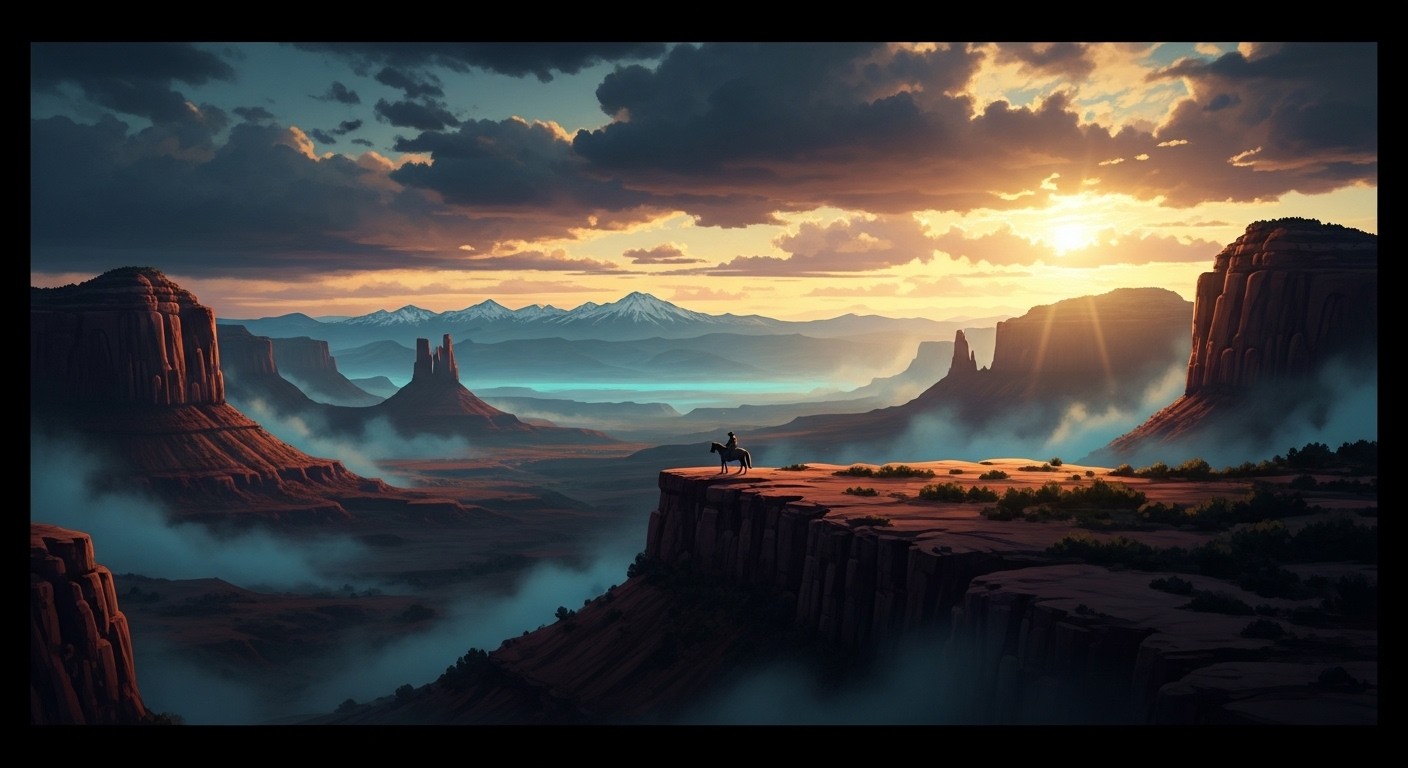
There is a moment in Red Dead Redemption 2, standing on a ridge as the sun sets over the Heartlands, when the VR conversion justifies itself completely. The scope of this world—already staggering on a monitor—becomes something else entirely when viewed stereoscopically. The problem is getting there, and staying there, and accepting what you lose in exchange.
This is not a native VR experience. It is not even a mod in the traditional sense. Luke Ross’s R.E.A.L. VR mod is an injection driver, which means it takes the existing game, intercepts the rendering pipeline, and outputs stereoscopic 3D with head tracking. You do not pick up virtual guns. You do not physically reach for your horse. You play exactly as you would on a monitor, except now the camera moves with your head, and the world has actual depth.
What you get is breathtaking. What you give up is significant.
What This VR Option Actually Is
The R.E.A.L. mod is a Patreon-gated injection driver maintained by Luke Ross. It does not add motion controls, VR-specific interactions, or redesigned UI. It provides:
- Full stereoscopic 3D rendering
- Head tracking for camera control
- Adjustable world scale and convergence
- Gamepad or keyboard/mouse input only
This is fundamentally different from full VR mods like those built on REFramework or UEVR. You are still playing a flat game, just one that responds to your head movements and displays in actual 3D. Think of it as the most immersive way to play a non-VR game—not a transformation into something native.
The mod requires ongoing Patreon support to access current builds. This creates a dynamic where the mod is actively maintained but behind a paywall. Updates to the base game can break compatibility, and fixes depend on the modder’s release schedule.
How It Plays
Red Dead Redemption 2 was built for third-person exploration and contextual cinematic moments. In VR, you are constantly negotiating between the game’s design and the medium’s demands.
Controls: You play with a gamepad or keyboard and mouse. There are no motion controllers. Aiming uses traditional stick or mouse input, with head tracking sometimes assisting camera orientation depending on your settings. The disconnect between your physical head movement and the character’s deliberate animations is constant and occasionally jarring.
Comfort: This is where the experience becomes divisive. Rockstar’s camera work is aggressive—cinematic pans, forced movement during story moments, and a third-person perspective that places the camera close to the character. In VR, this creates significant comfort challenges. The game is playable for experienced VR users, but it demands strong VR legs and a willingness to take breaks. Newcomers to VR should not start here.
Performance: This is one of the most demanding PC games ever made, and VR compounds that. Even on high-end hardware, you will be making compromises. The mod adds overhead to an already heavy renderer. Stable framerate is critical for comfort in VR, and achieving it requires substantial hardware investment and settings adjustment. Expect to trade visual fidelity for stability.
Stability: The mod is generally stable but fragile to game updates. When Rockstar patches RDR2, compatibility can break until the mod receives an update. This is the reality of injection-based VR: you are tethered to both the game’s update schedule and the modder’s maintenance schedule.
What Works Well
World Presence: The scale of RDR2’s world is genuinely transformed in VR. Mountains feel massive. Forests feel enveloping. The density of detail—every tree, every rock, every campsite—creates a sense of place that approaches something transportive. This is the primary reason to attempt this conversion.
Cinematic Moments: Story beats and set pieces gain impact when viewed with proper depth. Cutscenes that felt like movies on a monitor become something closer to immersive theater. The game’s already exceptional lighting and environmental design shine when viewed stereoscopically.
Exploration: Simply existing in this world—hunting, camping, wandering—works better than the main narrative. The slower pace and player-controlled camera make for more comfortable, more rewarding sessions.
What Doesn’t Work
Combat and Action: The disconnect between head tracking and gunplay becomes most apparent during shootouts. Precision aiming with a gamepad while your head controls camera positioning is awkward. The game’s auto-aim assistance becomes almost necessary, which undermines the skill-based satisfaction of the combat.
Forced Camera Movement: Rockstar’s cinematic approach frequently wrests control of the camera for dramatic effect. In VR, this is not dramatic—it is disorienting. Story moments that should land emotionally instead trigger physical discomfort.
UI and Text: Menus, map screens, and on-screen text were designed for monitors. They are readable in VR but often positioned awkwardly, sized poorly, or require deliberate head positioning to view clearly. The friction is constant.
Third-Person Perspective: Playing a third-person game in VR is inherently strange. You are following a character you can look around, but you are not inhabiting them. For some, this creates a dreamlike detachment. For others, it breaks immersion completely.
Who This Is For
Good for:
- Experienced VR users with strong comfort tolerance
- Players who prioritize world exploration over action
- Players who have already experienced RDR2 and want to revisit it differently
- Hardware enthusiasts willing to tune for performance
Not for:
- VR newcomers or those sensitive to motion
- Players seeking motion-controlled interaction
- Players who want the definitive RDR2 experience
- Those unwilling to manage mod updates and compatibility
The Verdict
Tier: B
Game Quality: S Red Dead Redemption 2 is a landmark achievement in open-world design, narrative ambition, and environmental storytelling. Even years after release, it remains among the most fully realized virtual worlds in gaming. This rating reflects the underlying game, not the VR conversion.
VR Implementation Quality: C The R.E.A.L. mod provides functional stereoscopic 3D and head tracking, but it does not resolve the fundamental mismatches between Rockstar’s design and VR’s demands. The implementation is competent for what it is—an injection driver—but what it is imposes hard limits on comfort and interaction. It transforms viewing; it does not transform playing.
Overall Tier: B This is an experience defined by tradeoffs. The world presence is genuinely extraordinary, arguably unmatched in VR gaming. But the comfort cost, input limitations, and setup friction mean only a specific audience will find the exchange worthwhile. If you have the hardware, the VR legs, and the patience, this is a memorable way to experience an exceptional game. For most players, the flat version remains the better recommendation.
Last verified: 2026-04-12